

86
urban microclimate variance. They pertain to both geometric (morphological) and
semantic (material-related) urban features and are captured within a formal and systematic framework.
3.6 A Systematic Framework for the Representation
of Urban Variables
Within the UHI project, a systematic framework was developed (Mahdavi et al.
2013) to assess – for a specific urban location, hereafter referred to as urban unit of
observation (U2O) – the urban heat island phenomenon, to specify potential mitigation measures, and to evaluate such measures via adequate empirically-based calculation methods. The framework involves the following steps:
(i) Definition of “Urban Units of Observation” (U2O): These are properly
bounded areas within an urban setting selected as the target and beneficiary of
candidate UHI mitigation measures;
(ii) Description of the status quo of U2O in terms of a structured set of geometric
and physical properties;
(iii) Specification of the existing extent of UHI in terms of proper indicators;
(iv) Specification of the candidate mitigation measures in terms of projected
changes to the geometric and/or physical properties captured in step ii above;
(v) Prediction of the effect of mitigation measures using empirically-based calculation methods;
(vi) Expression of the mitigation measures’ impact in terms of predicted changes in
the extent of UHI.
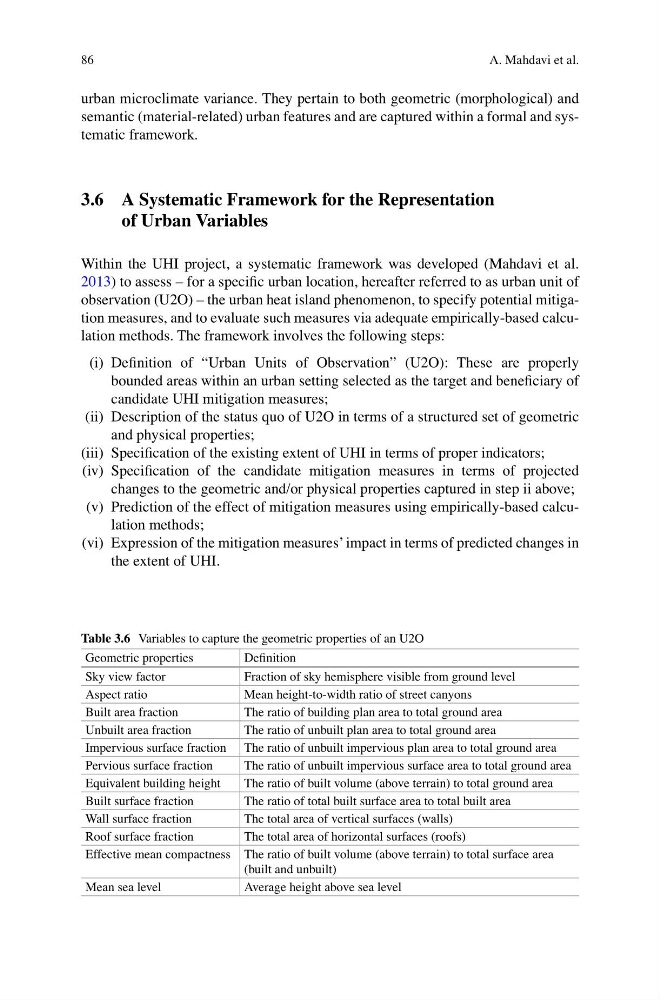
Table 3.6 Variables to capture the geometric properties of an U2O
Geometric properties
Definition
Sky view factor
Fraction of sky hemisphere visible from ground level
Aspect ratio
Mean height-to-width ratio of street canyons
Built area fraction
The ratio of building plan area to total ground area
Unbuilt area fraction
The ratio of unbuilt plan area to total ground area
Impervious surface fraction The ratio of unbuilt impervious plan area to total ground area
Pervious surface fraction
The ratio of unbuilt impervious surface area to total ground area
Equivalent building height
The ratio of built volume (above terrain) to total ground area
Built surface fraction
The ratio of total built surface area to total built area
Wall surface fraction
The total area of vertical surfaces (walls)
Roof surface fraction
The total area of horizontal surfaces (roofs)
Effective mean compactness The ratio of built volume (above terrain) to total surface area
(built and unbuilt)
Mean sea level
Average height above sea level
A. Mahdavi et al.
urban microclimate variance. They pertain to both geometric (morphological) and
semantic (material-related) urban features and are captured within a formal and systematic framework.
3.6 A Systematic Framework for the Representation
of Urban Variables
Within the UHI project, a systematic framework was developed (Mahdavi et al.
2013) to assess – for a specific urban location, hereafter referred to as urban unit of
observation (U2O) – the urban heat island phenomenon, to specify potential mitigation measures, and to evaluate such measures via adequate empirically-based calculation methods. The framework involves the following steps:
(i) Definition of “Urban Units of Observation” (U2O): These are properly
bounded areas within an urban setting selected as the target and beneficiary of
candidate UHI mitigation measures;
(ii) Description of the status quo of U2O in terms of a structured set of geometric
and physical properties;
(iii) Specification of the existing extent of UHI in terms of proper indicators;
(iv) Specification of the candidate mitigation measures in terms of projected
changes to the geometric and/or physical properties captured in step ii above;
(v) Prediction of the effect of mitigation measures using empirically-based calculation methods;
(vi) Expression of the mitigation measures’ impact in terms of predicted changes in
the extent of UHI.
Table 3.6 Variables to capture the geometric properties of an U2O
Geometric properties
Definition
Sky view factor
Fraction of sky hemisphere visible from ground level
Aspect ratio
Mean height-to-width ratio of street canyons
Built area fraction
The ratio of building plan area to total ground area
Unbuilt area fraction
The ratio of unbuilt plan area to total ground area
Impervious surface fraction The ratio of unbuilt impervious plan area to total ground area
Pervious surface fraction
The ratio of unbuilt impervious surface area to total ground area
Equivalent building height
The ratio of built volume (above terrain) to total ground area
Built surface fraction
The ratio of total built surface area to total built area
Wall surface fraction
The total area of vertical surfaces (walls)
Roof surface fraction
The total area of horizontal surfaces (roofs)
Effective mean compactness The ratio of built volume (above terrain) to total surface area
(built and unbuilt)
Mean sea level
Average height above sea level
A. Mahdavi et al.