

79
these effects, computational tools must consider them concurrently and in an integrated fashion. Hence detailed and complex simulation approaches are needed
that have the potential to incorporate multiple aspects including hygro-thermal
processes and related human comfort issues. The resulting improved predictive
performance of proper computational tools would thus provide valuable feedback
to planers and decision makers in confronting the UHI phenomenon.
An increasing number of tools are becoming available for microclimatic modelling of urban areas (Mirzaei and Haghighat 2010). Some tools are rather limited in
terms of the range of pertinent variables they consider. Other, more detailed tools
display limitations in terms of domain size and resolution. Nonetheless, numerical
models still present a valuable resource for the assessment of complex thermal
processes in the urban field. Within the context of this contribution, we focus on a
state of art CFD-based numeric simulation environment ENVI-met (Huttner and
Bruse 2009). This tool was selected as it has the capability to simulate the urban
micro- climate while considering a relatively comprehensive range of factors (building shapes, vegetation, different surface properties). The high-resolution output
generated by this tool includes air, soil, and surface temperature, air and soil humidity,
wind speed and direction, short wave and long wave radiation fluxes, and other
important microclimatic information.
Project partners undertook an extensive modelling effort including the following
steps. First, a specific area within each city was selected. The idea was to select
areas that are either targeted for the implementation of mitigation measures or
represent likely candidates for such measures (“pilot action areas”). Second, these
areas were specified in detail with regard to required model input information (i.e.,
geometric and semantic properties). Third, the existing microclimatic circumstances
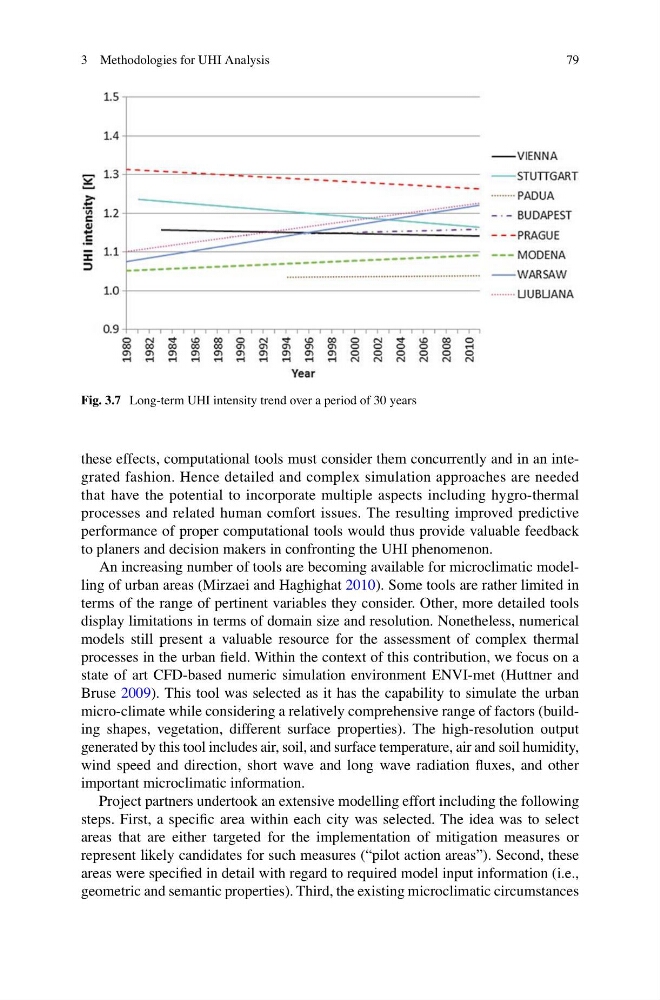
Fig. 3.7 Long-term UHI intensity trend over a period of 30 years
3 Methodologies for UHI Analysis
these effects, computational tools must consider them concurrently and in an integrated fashion. Hence detailed and complex simulation approaches are needed
that have the potential to incorporate multiple aspects including hygro-thermal
processes and related human comfort issues. The resulting improved predictive
performance of proper computational tools would thus provide valuable feedback
to planers and decision makers in confronting the UHI phenomenon.
An increasing number of tools are becoming available for microclimatic modelling of urban areas (Mirzaei and Haghighat 2010). Some tools are rather limited in
terms of the range of pertinent variables they consider. Other, more detailed tools
display limitations in terms of domain size and resolution. Nonetheless, numerical
models still present a valuable resource for the assessment of complex thermal
processes in the urban field. Within the context of this contribution, we focus on a
state of art CFD-based numeric simulation environment ENVI-met (Huttner and
Bruse 2009). This tool was selected as it has the capability to simulate the urban
micro- climate while considering a relatively comprehensive range of factors (building shapes, vegetation, different surface properties). The high-resolution output
generated by this tool includes air, soil, and surface temperature, air and soil humidity,
wind speed and direction, short wave and long wave radiation fluxes, and other
important microclimatic information.
Project partners undertook an extensive modelling effort including the following
steps. First, a specific area within each city was selected. The idea was to select
areas that are either targeted for the implementation of mitigation measures or
represent likely candidates for such measures (“pilot action areas”). Second, these
areas were specified in detail with regard to required model input information (i.e.,
geometric and semantic properties). Third, the existing microclimatic circumstances
Fig. 3.7 Long-term UHI intensity trend over a period of 30 years
3 Methodologies for UHI Analysis