

is suggested by the high pH (NaF) of non-allophanic Andisols (Shoji et al. 1985).
Figure 4.13 was constructed using data from A horizon soils of typical
non-allophanic Andisols excluding the uppermost A horizons with fresh organic
matter, which cannot yet be Al-humus.
4.4 Andisols: Soils Dominated by Non-crystalline Inorganic
Constituents
Non-crystalline inorganic constituents are important to both the parent materials and
soil formation products of Andisols. The major parent material of Andisols is
volcanic ash, and the major constituent of the volcanic ash is volcanic glass
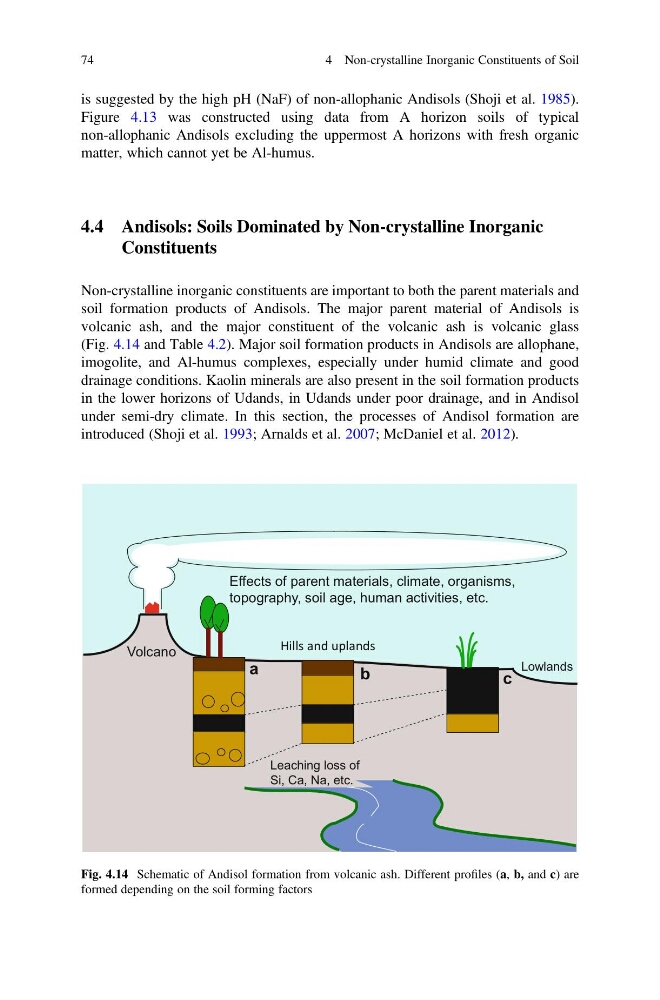
(Fig. 4.14 and Table 4.2). Major soil formation products in Andisols are allophane,
imogolite, and Al-humus complexes, especially under humid climate and good
drainage conditions. Kaolin minerals are also present in the soil formation products
in the lower horizons of Udands, in Udands under poor drainage, and in Andisol
under semi-dry climate. In this section, the processes of Andisol formation are
introduced (Shoji et al. 1993; Arnalds et al. 2007; McDaniel et al. 2012).
Effects of parent materials, climate, organisms,
topography, soil age, human activities, etc.
Lowlands
Hills and uplands
Volcano
Leaching loss of
Si, Ca, Na, etc.
a
b
c
Fig. 4.14 Schematic of Andisol formation from volcanic ash. Different profiles (a, b, and c) are
formed depending on the soil forming factors
74
4 Non-crystalline Inorganic Constituents of Soil
Figure 4.13 was constructed using data from A horizon soils of typical
non-allophanic Andisols excluding the uppermost A horizons with fresh organic
matter, which cannot yet be Al-humus.
4.4 Andisols: Soils Dominated by Non-crystalline Inorganic
Constituents
Non-crystalline inorganic constituents are important to both the parent materials and
soil formation products of Andisols. The major parent material of Andisols is
volcanic ash, and the major constituent of the volcanic ash is volcanic glass
(Fig. 4.14 and Table 4.2). Major soil formation products in Andisols are allophane,
imogolite, and Al-humus complexes, especially under humid climate and good
drainage conditions. Kaolin minerals are also present in the soil formation products
in the lower horizons of Udands, in Udands under poor drainage, and in Andisol
under semi-dry climate. In this section, the processes of Andisol formation are
introduced (Shoji et al. 1993; Arnalds et al. 2007; McDaniel et al. 2012).
Effects of parent materials, climate, organisms,
topography, soil age, human activities, etc.
Lowlands
Hills and uplands
Volcano
Leaching loss of
Si, Ca, Na, etc.
a
b
c
Fig. 4.14 Schematic of Andisol formation from volcanic ash. Different profiles (a, b, and c) are
formed depending on the soil forming factors
74
4 Non-crystalline Inorganic Constituents of Soil