

The distribution of Andisols is largely determined by the locations of volcanic
regions. The major volcanic regions in the world are the Circum-Pacific volcanic
zone, the Hawaiian Islands, the Sumatra-Java-Lesser Sunda Islands, Eastern Africa,
the Mediterranean area, Iceland, the Azores, and the Canary Islands (Sievert et al.
2010; Machida 2002a). In the case of huge volcanic eruptions, which occur intermittently, interspersed with dormant periods of hundreds or thousands of years, a
large amount of volcanic ash affects wide areas (Machida 2002a). Volcanic ash
deposits in these areas are important parent materials of soils.
Figure 4.14 shows a schematic of Andisol formation from volcanic ash. Highly
explosive eruptions are caused by viscous, Si-rich magma, which form non-colored
volcanic glass. In the mid-latitudes, volcanic ash is mainly distributed on the eastern
side of volcanoes owing to the influence of the strong westerly winds, whereas at low
latitudes the ash is found either all around the volcano or slightly to the western side
owing to the influence of the weak trade winds.
Volcanic ash deposits on the slopes of volcanoes are further transported by water
as volcanic mudflows (lahar). In the case of the Mt. Pinatubo ash deposit in 1991, a
large amount of volcanic ash was transported to lower elevations along large rivers
during the rainy season (Fig. 2.7). Mudflows continued to occur for several years
after the eruption.
The occurrence of intermittent huge eruptions accompanied by large ash falls is
evident from the thaptic property in the vicinity of a volcano. The thaptic property is
the existence of a buried Andisol profile under a new volcanic ash soil profile,
forming a multisequum profile (Fig. 4.14a, b). Within the volcanic ash-affected area,
the amount of ash fall and the size of the ash particles decreases as the distance from
the volcano increases. As a result of thin and cumulative deposition of volcanic ash,
a thick humus-rich A horizon, which is a characteristic of the Pachic subgroup in
USDA Soil Taxonomy, is formed (Fig. 4.14c). Andisols are typically formed on hills
and uplands with good drainage. Leaching losses of Si from volcanic ash cause
higher Si concentrations in the rivers in the vicinity of volcanoes than in those in
non-volcanic areas. Although volcanic ash also falls in the lowlands, marshes, or
basins with restricted drainage areas, the weathering of volcanic glass is slow and
halloysite is formed, possibly because high Si concentrations are maintained in the
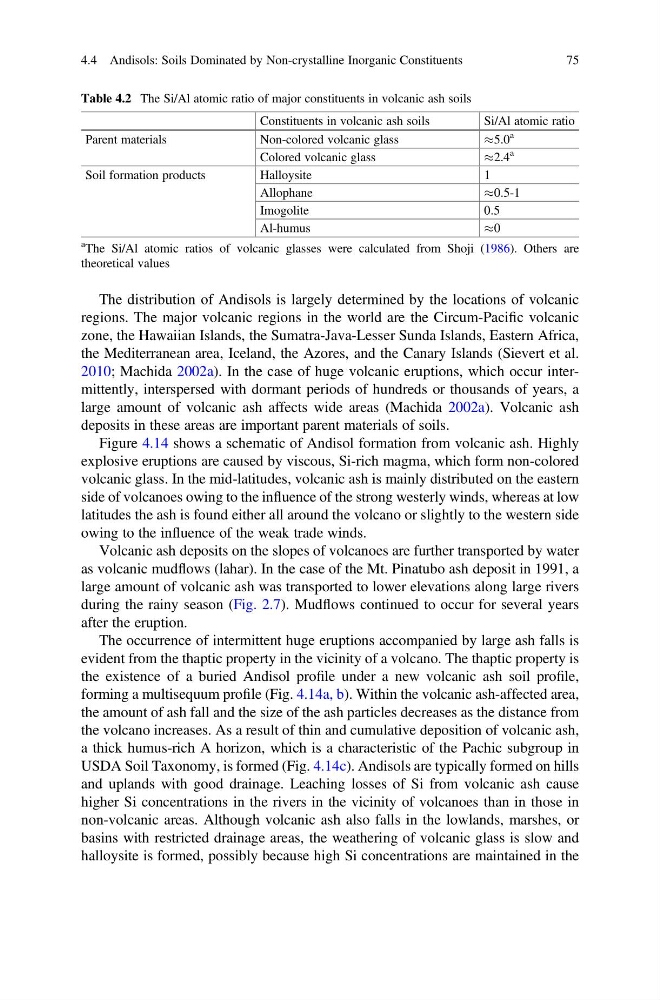
Table 4.2 The Si/Al atomic ratio of major constituents in volcanic ash soils
Constituents in volcanic ash soils
Si/Al atomic ratio
Parent materials
Non-colored volcanic glass
%5.0
a
Colored volcanic glass
%2.4
a
Soil formation products
Halloysite
1
Allophane
%0.5-1
Imogolite
0.5
Al-humus
%0
a The Si/Al atomic ratios of volcanic glasses were calculated from Shoji (1986). Others are
theoretical values
4.4 Andisols: Soils Dominated by Non-crystalline Inorganic Constituents
75
regions. The major volcanic regions in the world are the Circum-Pacific volcanic
zone, the Hawaiian Islands, the Sumatra-Java-Lesser Sunda Islands, Eastern Africa,
the Mediterranean area, Iceland, the Azores, and the Canary Islands (Sievert et al.
2010; Machida 2002a). In the case of huge volcanic eruptions, which occur intermittently, interspersed with dormant periods of hundreds or thousands of years, a
large amount of volcanic ash affects wide areas (Machida 2002a). Volcanic ash
deposits in these areas are important parent materials of soils.
Figure 4.14 shows a schematic of Andisol formation from volcanic ash. Highly
explosive eruptions are caused by viscous, Si-rich magma, which form non-colored
volcanic glass. In the mid-latitudes, volcanic ash is mainly distributed on the eastern
side of volcanoes owing to the influence of the strong westerly winds, whereas at low
latitudes the ash is found either all around the volcano or slightly to the western side
owing to the influence of the weak trade winds.
Volcanic ash deposits on the slopes of volcanoes are further transported by water
as volcanic mudflows (lahar). In the case of the Mt. Pinatubo ash deposit in 1991, a
large amount of volcanic ash was transported to lower elevations along large rivers
during the rainy season (Fig. 2.7). Mudflows continued to occur for several years
after the eruption.
The occurrence of intermittent huge eruptions accompanied by large ash falls is
evident from the thaptic property in the vicinity of a volcano. The thaptic property is
the existence of a buried Andisol profile under a new volcanic ash soil profile,
forming a multisequum profile (Fig. 4.14a, b). Within the volcanic ash-affected area,
the amount of ash fall and the size of the ash particles decreases as the distance from
the volcano increases. As a result of thin and cumulative deposition of volcanic ash,
a thick humus-rich A horizon, which is a characteristic of the Pachic subgroup in
USDA Soil Taxonomy, is formed (Fig. 4.14c). Andisols are typically formed on hills
and uplands with good drainage. Leaching losses of Si from volcanic ash cause
higher Si concentrations in the rivers in the vicinity of volcanoes than in those in
non-volcanic areas. Although volcanic ash also falls in the lowlands, marshes, or
basins with restricted drainage areas, the weathering of volcanic glass is slow and
halloysite is formed, possibly because high Si concentrations are maintained in the
Table 4.2 The Si/Al atomic ratio of major constituents in volcanic ash soils
Constituents in volcanic ash soils
Si/Al atomic ratio
Parent materials
Non-colored volcanic glass
%5.0
a
Colored volcanic glass
%2.4
a
Soil formation products
Halloysite
1
Allophane
%0.5-1
Imogolite
0.5
Al-humus
%0
a The Si/Al atomic ratios of volcanic glasses were calculated from Shoji (1986). Others are
theoretical values
4.4 Andisols: Soils Dominated by Non-crystalline Inorganic Constituents
75