

4.3.1 Allophane and Imogolite
Allophane and imogolite (Yoshinaga 1986; Wada 1989; Harsh et al. 2002) are
typical weathering products of volcanic glass under a humid climate and welldrained conditions; they are also found in the spodic horizon soils. Allophane has
a spherical structure and is hollow inside with some holes in its wall (Fig. 4.8a).
Allophane is a non-crystalline aluminosilicate with a Si:Al atomic ratio of 1:2〜1:1.
The range of diameters of allophane spherules is 3–5 nm. Imogolite has a tubular
structure and a Si:Al atomic ratio of 1:1 (Fig. 4.8b). The diameter of an imogolite
tube is 2 nm.
The outside of allophane and imogolite resembles a gibbsite sheet (Fig. 4.8c). The
dehydration of three H 2 O molecules from the three front OH groups and the three
OH groups of Si(OH) 4 yields the aluminosilicate wall of allophane (Fig. 4.8c).
Because there is no Si-O-Si bond, allophane and imogolite are nesosilicates. The
Si-OH groups point towards the inside of the spherules and tubes, as shown in
Fig. 4.8a, b, respectively. Allophane having a Si:Al ratio of 1:2 is called Al-rich
allophane and is the major type found in Andisols. When the atomic Si:Al ratio of
allophane approaches 1, it is considered Si-rich allophane, the Si dimer is thought to
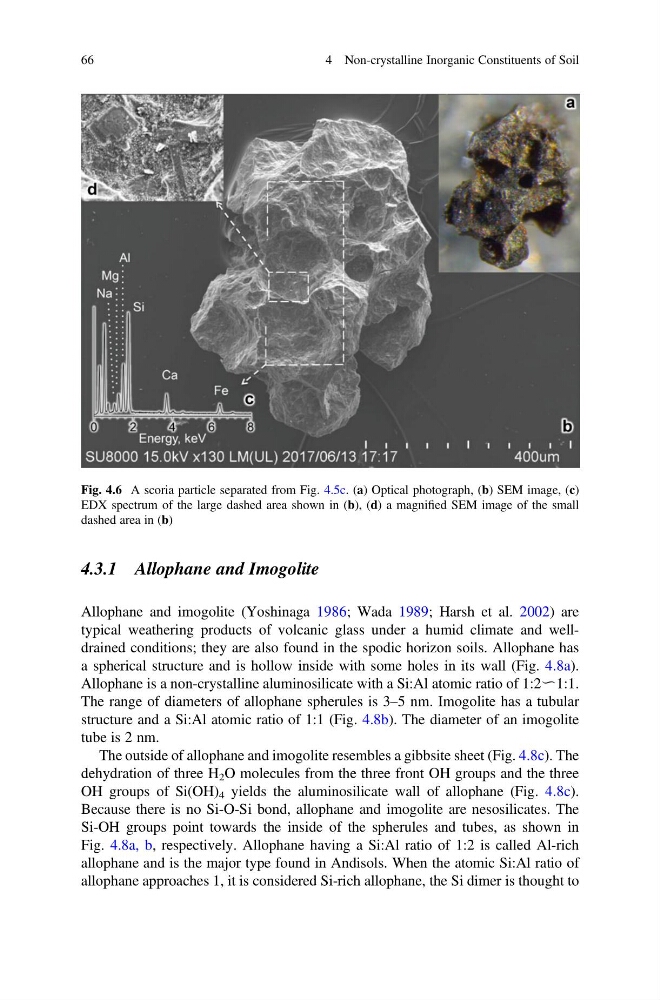
Fig. 4.6 A scoria particle separated from Fig. 4.5c. (a) Optical photograph, (b) SEM image, (c)
EDX spectrum of the large dashed area shown in (b), (d) a magnified SEM image of the small
dashed area in (b)
66
4 Non-crystalline Inorganic Constituents of Soil
Allophane and imogolite (Yoshinaga 1986; Wada 1989; Harsh et al. 2002) are
typical weathering products of volcanic glass under a humid climate and welldrained conditions; they are also found in the spodic horizon soils. Allophane has
a spherical structure and is hollow inside with some holes in its wall (Fig. 4.8a).
Allophane is a non-crystalline aluminosilicate with a Si:Al atomic ratio of 1:2〜1:1.
The range of diameters of allophane spherules is 3–5 nm. Imogolite has a tubular
structure and a Si:Al atomic ratio of 1:1 (Fig. 4.8b). The diameter of an imogolite
tube is 2 nm.
The outside of allophane and imogolite resembles a gibbsite sheet (Fig. 4.8c). The
dehydration of three H 2 O molecules from the three front OH groups and the three
OH groups of Si(OH) 4 yields the aluminosilicate wall of allophane (Fig. 4.8c).
Because there is no Si-O-Si bond, allophane and imogolite are nesosilicates. The
Si-OH groups point towards the inside of the spherules and tubes, as shown in
Fig. 4.8a, b, respectively. Allophane having a Si:Al ratio of 1:2 is called Al-rich
allophane and is the major type found in Andisols. When the atomic Si:Al ratio of
allophane approaches 1, it is considered Si-rich allophane, the Si dimer is thought to
Fig. 4.6 A scoria particle separated from Fig. 4.5c. (a) Optical photograph, (b) SEM image, (c)
EDX spectrum of the large dashed area shown in (b), (d) a magnified SEM image of the small
dashed area in (b)
66
4 Non-crystalline Inorganic Constituents of Soil