

4.2.2 Sponge-Like Volcanic Glass
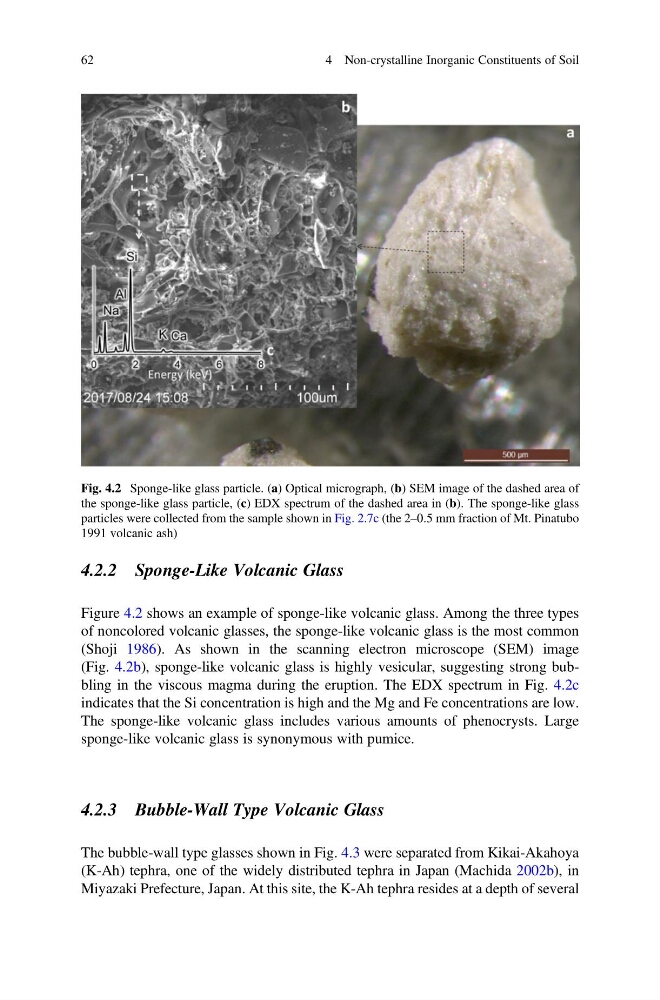
Figure 4.2 shows an example of sponge-like volcanic glass. Among the three types
of noncolored volcanic glasses, the sponge-like volcanic glass is the most common
(Shoji 1986). As shown in the scanning electron microscope (SEM) image
(Fig. 4.2b), sponge-like volcanic glass is highly vesicular, suggesting strong bubbling in the viscous magma during the eruption. The EDX spectrum in Fig. 4.2c
indicates that the Si concentration is high and the Mg and Fe concentrations are low.
The sponge-like volcanic glass includes various amounts of phenocrysts. Large
sponge-like volcanic glass is synonymous with pumice.
4.2.3 Bubble-Wall Type Volcanic Glass
The bubble-wall type glasses shown in Fig. 4.3 were separated from Kikai-Akahoya
(K-Ah) tephra, one of the widely distributed tephra in Japan (Machida 2002b), in
Miyazaki Prefecture, Japan. At this site, the K-Ah tephra resides at a depth of several
Fig. 4.2 Sponge-like glass particle. (a) Optical micrograph, (b) SEM image of the dashed area of
the sponge-like glass particle, (c) EDX spectrum of the dashed area in (b). The sponge-like glass
particles were collected from the sample shown in Fig. 2.7c (the 2–0.5 mm fraction of Mt. Pinatubo
1991 volcanic ash)
62
4 Non-crystalline Inorganic Constituents of Soil
Figure 4.2 shows an example of sponge-like volcanic glass. Among the three types
of noncolored volcanic glasses, the sponge-like volcanic glass is the most common
(Shoji 1986). As shown in the scanning electron microscope (SEM) image
(Fig. 4.2b), sponge-like volcanic glass is highly vesicular, suggesting strong bubbling in the viscous magma during the eruption. The EDX spectrum in Fig. 4.2c
indicates that the Si concentration is high and the Mg and Fe concentrations are low.
The sponge-like volcanic glass includes various amounts of phenocrysts. Large
sponge-like volcanic glass is synonymous with pumice.
4.2.3 Bubble-Wall Type Volcanic Glass
The bubble-wall type glasses shown in Fig. 4.3 were separated from Kikai-Akahoya
(K-Ah) tephra, one of the widely distributed tephra in Japan (Machida 2002b), in
Miyazaki Prefecture, Japan. At this site, the K-Ah tephra resides at a depth of several
Fig. 4.2 Sponge-like glass particle. (a) Optical micrograph, (b) SEM image of the dashed area of
the sponge-like glass particle, (c) EDX spectrum of the dashed area in (b). The sponge-like glass
particles were collected from the sample shown in Fig. 2.7c (the 2–0.5 mm fraction of Mt. Pinatubo
1991 volcanic ash)
62
4 Non-crystalline Inorganic Constituents of Soil