

6.2.6 Variation in pH of Tsunami Deposits and Original Soils
Soil pH is one of the important variables which relate with many other soil properties. The pH(H 2 O) values of the air-dried fine-earth fraction of paddy field soils in
Japan typically ranges between 5.4 and 5.9 (Oda et al. 1987). The pH value of
negatively charged soil decreases with the addition of salts, as exemplified by pH
(KCl). As shown in Fig. 6.13a, the frequency distributions of pH(H 2 O) values of the
tsunami deposits and original soils are different, despite the muddy tsunami deposit
being derived mostly from the farmland. The tsunami deposits were suspended once
in seawater, which has a salt concentration of approximately 0.6 mol L
À1 . The wide
distribution of the pH(H 2 O) values is due to differences in subsequent drainage
conditions. Under well-drained conditions, the tsunami deposits were effectively
washed by rainwater and the pH(H 2 O) value became high. This is mainly due to the
coordination of H
+ on the negative variable-charge site with a decrease in the
electrolyte concentration in the liquid phase. As a result, OH
À remains in the liquid
phase and increases the pH value. The amount of rain between tsunami inundation
and soil sampling was 70–100 mm (Fig. 6.13b).
If the drainage was poor after immersion in seawater, the pH(H 2 O) value was kept
low owing to high salt concentration. As the pH(KCl) value is determined in 1 mol L
À1
KCl, which is not very much different from the concentration in seawater, the
difference (ΔpH) between the pH(H 2 O) and pH(KCl) values tended to be small in
the majority of the muddy tsunami deposits due to restricted drainage (Table 6.2). In
K G =0.015
SAR [ (mmol L -1 ) 0.5 ]
ESP
100-ESP
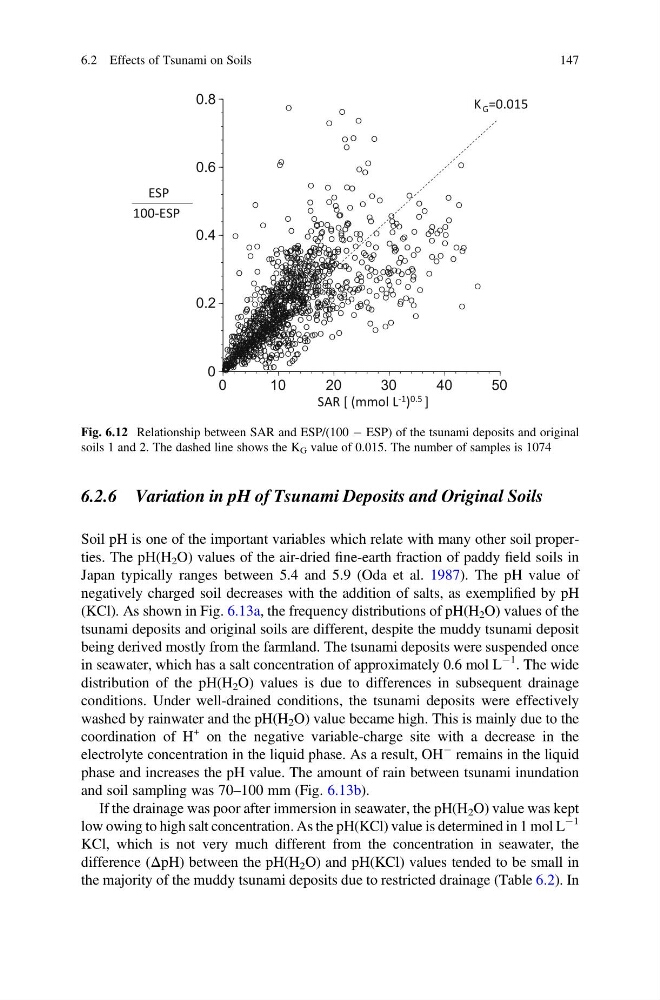
Fig. 6.12 Relationship between SAR and ESP/(100 À ESP) of the tsunami deposits and original
soils 1 and 2. The dashed line shows the K G value of 0.015. The number of samples is 1074
6.2 Effects of Tsunami on Soils
147
Soil pH is one of the important variables which relate with many other soil properties. The pH(H 2 O) values of the air-dried fine-earth fraction of paddy field soils in
Japan typically ranges between 5.4 and 5.9 (Oda et al. 1987). The pH value of
negatively charged soil decreases with the addition of salts, as exemplified by pH
(KCl). As shown in Fig. 6.13a, the frequency distributions of pH(H 2 O) values of the
tsunami deposits and original soils are different, despite the muddy tsunami deposit
being derived mostly from the farmland. The tsunami deposits were suspended once
in seawater, which has a salt concentration of approximately 0.6 mol L
À1 . The wide
distribution of the pH(H 2 O) values is due to differences in subsequent drainage
conditions. Under well-drained conditions, the tsunami deposits were effectively
washed by rainwater and the pH(H 2 O) value became high. This is mainly due to the
coordination of H
+ on the negative variable-charge site with a decrease in the
electrolyte concentration in the liquid phase. As a result, OH
À remains in the liquid
phase and increases the pH value. The amount of rain between tsunami inundation
and soil sampling was 70–100 mm (Fig. 6.13b).
If the drainage was poor after immersion in seawater, the pH(H 2 O) value was kept
low owing to high salt concentration. As the pH(KCl) value is determined in 1 mol L
À1
KCl, which is not very much different from the concentration in seawater, the
difference (ΔpH) between the pH(H 2 O) and pH(KCl) values tended to be small in
the majority of the muddy tsunami deposits due to restricted drainage (Table 6.2). In
K G =0.015
SAR [ (mmol L -1 ) 0.5 ]
ESP
100-ESP
Fig. 6.12 Relationship between SAR and ESP/(100 À ESP) of the tsunami deposits and original
soils 1 and 2. The dashed line shows the K G value of 0.015. The number of samples is 1074
6.2 Effects of Tsunami on Soils
147