

plot distributions are slightly diverse. The changes in the charge fractions of
exchangeable cations are related to those ions in the solution phase in Figs. 6.10
and 6.11.
The relationships of the charge fractions of the four ions (Ca
2+
, Mg
2+
, K
+
, and Na
+
)
between water-soluble (1:5 water extract) and exchangeable forms are plotted in
Fig. 6.10. The charge fraction of exchangeable Na
+ increased gradually with an
increase in the charge fraction of water-soluble Na
+
, whereas the charge fraction of
exchangeable Ca
2+ decreased steeply with a decrease in the charge fraction of watersoluble Ca
2+ . Although the distribution ranges of the charge fractions of K
+ and Mg
2+
are narrower than those of Na
+ and Ca
2+ , the charge fractions of exchangeable K
+ and
Mg
2+ increased with increases in the charge fractions of water-soluble K
+ and Mg
2+ .
These cation exchange reactions suggest that the high charge fraction of exchangeable Ca
2+ for soils weakly affected by seawater is due to the high charge fraction of
water-soluble Ca
2+ .
The relationship between the water-soluble and exchangeable cations of the
muddy tsunami deposit (Fig. 6.11) lacks high charge fraction plots of both watersoluble and exchangeable Ca
2+ and low charge fraction plots of both water-soluble
and exchangeable Na
+ in comparison with those for original soil 2 (Fig. 6.10). In
Fig. 6.11, under the high charge fraction of water-soluble Na
+ , the charge fractions
of exchangeable Ca
2+ and Mg
2+ still maintain slightly higher levels than those of
exchangeable Na
+
. Plots similar to those of Fig. 6.11 were obtained from the sandy
Original soil
layer 2
Ca 2+
Mg 2+
K +
Equivalent fraction of exchangeable Na +
Equivalent fractions of
exchangeable Ca 2+
, Mg 2+
and K +
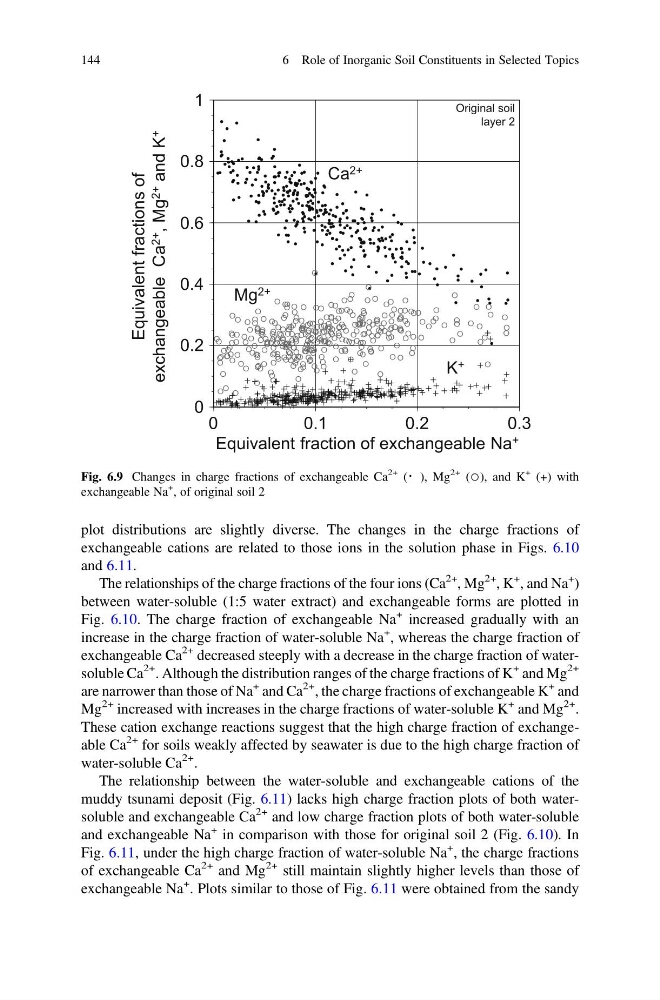
Fig. 6.9 Changes in charge fractions of exchangeable Ca
2+ (・), Mg
2+ (○), and K
+ (+) with
exchangeable Na
+ , of original soil 2
144
6 Role of Inorganic Soil Constituents in Selected Topics
exchangeable cations are related to those ions in the solution phase in Figs. 6.10
and 6.11.
The relationships of the charge fractions of the four ions (Ca
2+
, Mg
2+
, K
+
, and Na
+
)
between water-soluble (1:5 water extract) and exchangeable forms are plotted in
Fig. 6.10. The charge fraction of exchangeable Na
+ increased gradually with an
increase in the charge fraction of water-soluble Na
+
, whereas the charge fraction of
exchangeable Ca
2+ decreased steeply with a decrease in the charge fraction of watersoluble Ca
2+ . Although the distribution ranges of the charge fractions of K
+ and Mg
2+
are narrower than those of Na
+ and Ca
2+ , the charge fractions of exchangeable K
+ and
Mg
2+ increased with increases in the charge fractions of water-soluble K
+ and Mg
2+ .
These cation exchange reactions suggest that the high charge fraction of exchangeable Ca
2+ for soils weakly affected by seawater is due to the high charge fraction of
water-soluble Ca
2+ .
The relationship between the water-soluble and exchangeable cations of the
muddy tsunami deposit (Fig. 6.11) lacks high charge fraction plots of both watersoluble and exchangeable Ca
2+ and low charge fraction plots of both water-soluble
and exchangeable Na
+ in comparison with those for original soil 2 (Fig. 6.10). In
Fig. 6.11, under the high charge fraction of water-soluble Na
+ , the charge fractions
of exchangeable Ca
2+ and Mg
2+ still maintain slightly higher levels than those of
exchangeable Na
+
. Plots similar to those of Fig. 6.11 were obtained from the sandy
Original soil
layer 2
Ca 2+
Mg 2+
K +
Equivalent fraction of exchangeable Na +
Equivalent fractions of
exchangeable Ca 2+
, Mg 2+
and K +
Fig. 6.9 Changes in charge fractions of exchangeable Ca
2+ (・), Mg
2+ (○), and K
+ (+) with
exchangeable Na
+ , of original soil 2
144
6 Role of Inorganic Soil Constituents in Selected Topics