

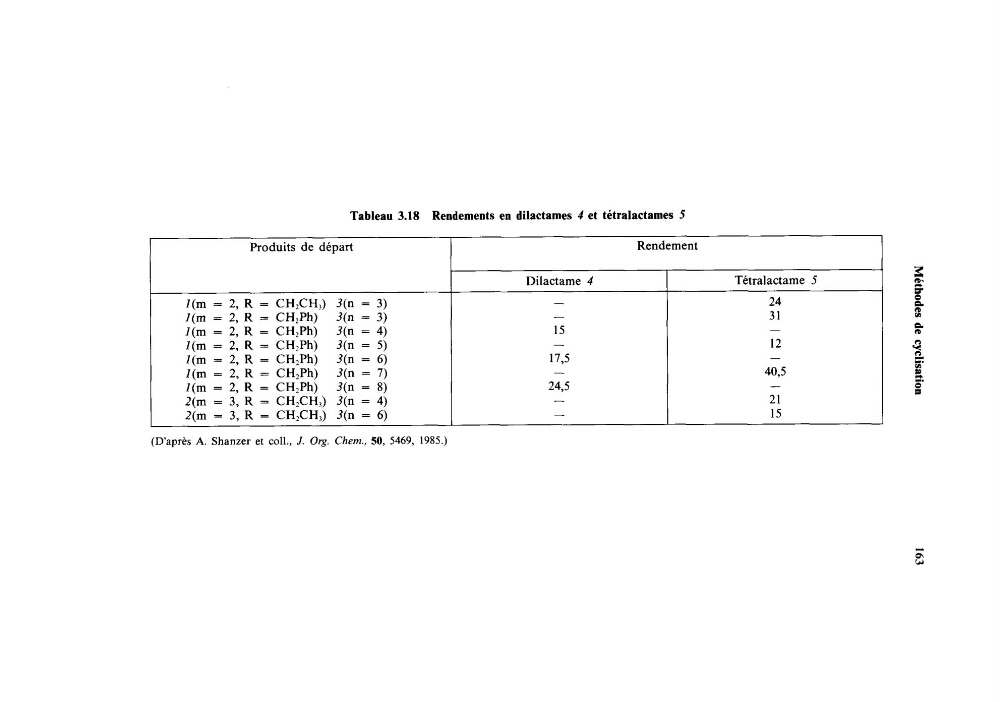
Tableau 3.18 Rendements en dilactames 4 et tetralactames 5
Produits de départ
I(m = 2, R = CH,CH,) 3(n = 3)
i(m = 2, R = CH,Ph) 3(n = 3)
i(m = 2, R = CH,Ph) 3(n = 4)
i(m = 2, R = CH,Ph) 3(n = 5)
i(m = 2, R = CH,Ph) 3(n = 6)
i(m = 2, R = CH,Ph) 3(n = 7)
i(m = 2, R = CH,Ph) 3(n = 8)
2(m = 3, R = CH,CH,) 3(n = 4)
2(m = 3, R = CH,CH,) 3(n = 6)
Rendement
Dilactame 4
Tétralactame 5
-
24
-
31
15
-
12
17,5
-
40,5
24,5
-
-
21
-
15
-
-
(D’après A. Shanzer et coll., J. OF. Chem., 50, 5469, 1985.)
Produits de départ
I(m = 2, R = CH,CH,) 3(n = 3)
i(m = 2, R = CH,Ph) 3(n = 3)
i(m = 2, R = CH,Ph) 3(n = 4)
i(m = 2, R = CH,Ph) 3(n = 5)
i(m = 2, R = CH,Ph) 3(n = 6)
i(m = 2, R = CH,Ph) 3(n = 7)
i(m = 2, R = CH,Ph) 3(n = 8)
2(m = 3, R = CH,CH,) 3(n = 4)
2(m = 3, R = CH,CH,) 3(n = 6)
Rendement
Dilactame 4
Tétralactame 5
-
24
-
31
15
-
12
17,5
-
40,5
24,5
-
-
21
-
15
-
-
(D’après A. Shanzer et coll., J. OF. Chem., 50, 5469, 1985.)