

566
NUCLEOSIDES, NUCLEOTIDES AND NUCLEIC ACIDS
A + G C + T
C
AGTCGGAACGTA
A
G
T
C
G
G
A
A
C
G
T
A
G
3´
5´
deduced sequence is:
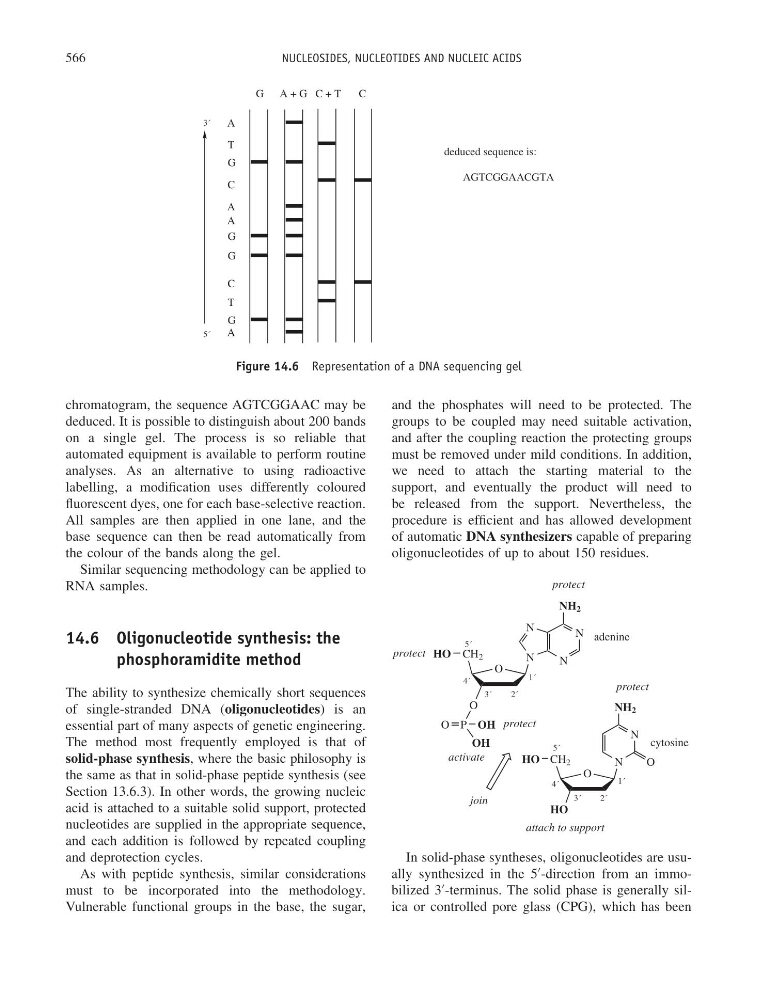
Figure 14.6 Representation of a DNA sequencing gel
chromatogram, the sequence AGTCGGAAC may be
deduced. It is possible to distinguish about 200 bands
on a single gel. The process is so reliable that
automated equipment is available to perform routine
analyses. As an alternative to using radioactive
labelling, a modification uses differently coloured
fluorescent dyes, one for each base-selective reaction.
All samples are then applied in one lane, and the
base sequence can then be read automatically from
the colour of the bands along the gel.
Similar sequencing methodology can be applied to
RNA samples.
14.6 Oligonucleotide synthesis: the
phosphoramidite method
The ability to synthesize chemically short sequences
of single-stranded DNA (oligonucleotides) is an
essential part of many aspects of genetic engineering.
The method most frequently employed is that of
solid-phase synthesis, where the basic philosophy is
the same as that in solid-phase peptide synthesis (see
Section 13.6.3). In other words, the growing nucleic
acid is attached to a suitable solid support, protected
nucleotides are supplied in the appropriate sequence,
and each addition is followed by repeated coupling
and deprotection cycles.
As with peptide synthesis, similar considerations
must to be incorporated into the methodology.
Vulnerable functional groups in the base, the sugar,
and the phosphates will need to be protected. The
groups to be coupled may need suitable activation,
and after the coupling reaction the protecting groups
must be removed under mild conditions. In addition,
we need to attach the starting material to the
support, and eventually the product will need to
be released from the support. Nevertheless, the
procedure is efficient and has allowed development
of automatic DNA synthesizers capable of preparing
oligonucleotides of up to about 150 residues.
HO
O
CH 2
N
N
N
N
adenine
1´
2´
3´
4´
5´
NH 2
protect
protect
O
N
N
O
NH 2
HO CH 2
HO
cytosine
protect
attach to support
join
1´
2´
3´
4´
5´
OH
P
O
O
OH protect
activate
In solid-phase syntheses, oligonucleotides are usually synthesized in the 5
-direction from an immobilized 3
-terminus. The solid phase is generally silica or controlled pore glass (CPG), which has been
NUCLEOSIDES, NUCLEOTIDES AND NUCLEIC ACIDS
A + G C + T
C
AGTCGGAACGTA
A
G
T
C
G
G
A
A
C
G
T
A
G
3´
5´
deduced sequence is:
Figure 14.6 Representation of a DNA sequencing gel
chromatogram, the sequence AGTCGGAAC may be
deduced. It is possible to distinguish about 200 bands
on a single gel. The process is so reliable that
automated equipment is available to perform routine
analyses. As an alternative to using radioactive
labelling, a modification uses differently coloured
fluorescent dyes, one for each base-selective reaction.
All samples are then applied in one lane, and the
base sequence can then be read automatically from
the colour of the bands along the gel.
Similar sequencing methodology can be applied to
RNA samples.
14.6 Oligonucleotide synthesis: the
phosphoramidite method
The ability to synthesize chemically short sequences
of single-stranded DNA (oligonucleotides) is an
essential part of many aspects of genetic engineering.
The method most frequently employed is that of
solid-phase synthesis, where the basic philosophy is
the same as that in solid-phase peptide synthesis (see
Section 13.6.3). In other words, the growing nucleic
acid is attached to a suitable solid support, protected
nucleotides are supplied in the appropriate sequence,
and each addition is followed by repeated coupling
and deprotection cycles.
As with peptide synthesis, similar considerations
must to be incorporated into the methodology.
Vulnerable functional groups in the base, the sugar,
and the phosphates will need to be protected. The
groups to be coupled may need suitable activation,
and after the coupling reaction the protecting groups
must be removed under mild conditions. In addition,
we need to attach the starting material to the
support, and eventually the product will need to
be released from the support. Nevertheless, the
procedure is efficient and has allowed development
of automatic DNA synthesizers capable of preparing
oligonucleotides of up to about 150 residues.
HO
O
CH 2
N
N
N
N
adenine
1´
2´
3´
4´
5´
NH 2
protect
protect
O
N
N
O
NH 2
HO CH 2
HO
cytosine
protect
attach to support
join
1´
2´
3´
4´
5´
OH
P
O
O
OH protect
activate
In solid-phase syntheses, oligonucleotides are usually synthesized in the 5
-direction from an immobilized 3
-terminus. The solid phase is generally silica or controlled pore glass (CPG), which has been