

556
NUCLEOSIDES, NUCLEOTIDES AND NUCLEIC ACIDS
A
T
T
A
C
G
G
C
A
T
A
T
A
U
C
G
G
C
G
A
T
T
A
U
C
G
C
G
C
G
A
T
T
A
C
G
G
C
C
A
G
U
coding strand
template strand
5´
3´
5´
3´
3´
5´
mRNA
DNA
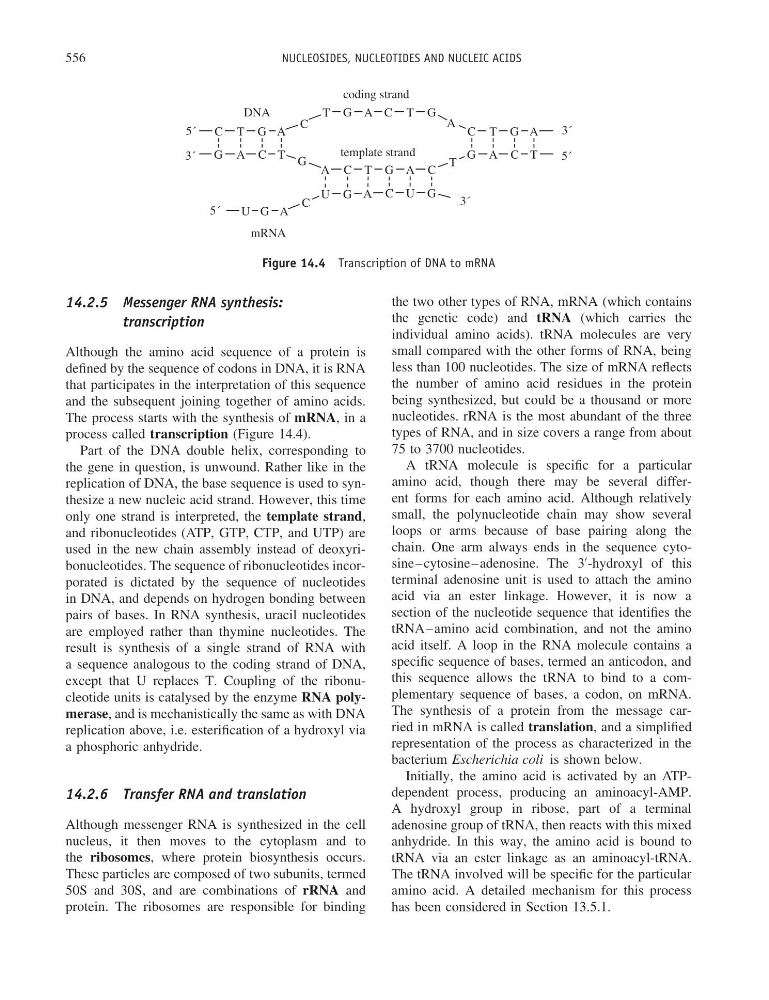
Figure 14.4 Transcription of DNA to mRNA
14.2.5 Messenger RNA synthesis:
transcription
Although the amino acid sequence of a protein is
defined by the sequence of codons in DNA, it is RNA
that participates in the interpretation of this sequence
and the subsequent joining together of amino acids.
The process starts with the synthesis of mRNA, in a
process called transcription (Figure 14.4).
Part of the DNA double helix, corresponding to
the gene in question, is unwound. Rather like in the
replication of DNA, the base sequence is used to synthesize a new nucleic acid strand. However, this time
only one strand is interpreted, the template strand,
and ribonucleotides (ATP, GTP, CTP, and UTP) are
used in the new chain assembly instead of deoxyribonucleotides. The sequence of ribonucleotides incorporated is dictated by the sequence of nucleotides
in DNA, and depends on hydrogen bonding between
pairs of bases. In RNA synthesis, uracil nucleotides
are employed rather than thymine nucleotides. The
result is synthesis of a single strand of RNA with
a sequence analogous to the coding strand of DNA,
except that U replaces T. Coupling of the ribonucleotide units is catalysed by the enzyme RNA polymerase, and is mechanistically the same as with DNA
replication above, i.e. esterification of a hydroxyl via
a phosphoric anhydride.
14.2.6 Transfer RNA and translation
Although messenger RNA is synthesized in the cell
nucleus, it then moves to the cytoplasm and to
the ribosomes, where protein biosynthesis occurs.
These particles are composed of two subunits, termed
50S and 30S, and are combinations of rRNA and
protein. The ribosomes are responsible for binding
the two other types of RNA, mRNA (which contains
the genetic code) and tRNA (which carries the
individual amino acids). tRNA molecules are very
small compared with the other forms of RNA, being
less than 100 nucleotides. The size of mRNA reflects
the number of amino acid residues in the protein
being synthesized, but could be a thousand or more
nucleotides. rRNA is the most abundant of the three
types of RNA, and in size covers a range from about
75 to 3700 nucleotides.
A tRNA molecule is specific for a particular
amino acid, though there may be several different forms for each amino acid. Although relatively
small, the polynucleotide chain may show several
loops or arms because of base pairing along the
chain. One arm always ends in the sequence cytosine–cytosine–adenosine. The 3
-hydroxyl of this
terminal adenosine unit is used to attach the amino
acid via an ester linkage. However, it is now a
section of the nucleotide sequence that identifies the
tRNA–amino acid combination, and not the amino
acid itself. A loop in the RNA molecule contains a
specific sequence of bases, termed an anticodon, and
this sequence allows the tRNA to bind to a complementary sequence of bases, a codon, on mRNA.
The synthesis of a protein from the message carried in mRNA is called translation, and a simplified
representation of the process as characterized in the
bacterium Escherichia coli is shown below.
Initially, the amino acid is activated by an ATPdependent process, producing an aminoacyl-AMP.
A hydroxyl group in ribose, part of a terminal
adenosine group of tRNA, then reacts with this mixed
anhydride. In this way, the amino acid is bound to
tRNA via an ester linkage as an aminoacyl-tRNA.
The tRNA involved will be specific for the particular
amino acid. A detailed mechanism for this process
has been considered in Section 13.5.1.
NUCLEOSIDES, NUCLEOTIDES AND NUCLEIC ACIDS
A
T
T
A
C
G
G
C
A
T
A
T
A
U
C
G
G
C
G
A
T
T
A
U
C
G
C
G
C
G
A
T
T
A
C
G
G
C
C
A
G
U
coding strand
template strand
5´
3´
5´
3´
3´
5´
mRNA
DNA
Figure 14.4 Transcription of DNA to mRNA
14.2.5 Messenger RNA synthesis:
transcription
Although the amino acid sequence of a protein is
defined by the sequence of codons in DNA, it is RNA
that participates in the interpretation of this sequence
and the subsequent joining together of amino acids.
The process starts with the synthesis of mRNA, in a
process called transcription (Figure 14.4).
Part of the DNA double helix, corresponding to
the gene in question, is unwound. Rather like in the
replication of DNA, the base sequence is used to synthesize a new nucleic acid strand. However, this time
only one strand is interpreted, the template strand,
and ribonucleotides (ATP, GTP, CTP, and UTP) are
used in the new chain assembly instead of deoxyribonucleotides. The sequence of ribonucleotides incorporated is dictated by the sequence of nucleotides
in DNA, and depends on hydrogen bonding between
pairs of bases. In RNA synthesis, uracil nucleotides
are employed rather than thymine nucleotides. The
result is synthesis of a single strand of RNA with
a sequence analogous to the coding strand of DNA,
except that U replaces T. Coupling of the ribonucleotide units is catalysed by the enzyme RNA polymerase, and is mechanistically the same as with DNA
replication above, i.e. esterification of a hydroxyl via
a phosphoric anhydride.
14.2.6 Transfer RNA and translation
Although messenger RNA is synthesized in the cell
nucleus, it then moves to the cytoplasm and to
the ribosomes, where protein biosynthesis occurs.
These particles are composed of two subunits, termed
50S and 30S, and are combinations of rRNA and
protein. The ribosomes are responsible for binding
the two other types of RNA, mRNA (which contains
the genetic code) and tRNA (which carries the
individual amino acids). tRNA molecules are very
small compared with the other forms of RNA, being
less than 100 nucleotides. The size of mRNA reflects
the number of amino acid residues in the protein
being synthesized, but could be a thousand or more
nucleotides. rRNA is the most abundant of the three
types of RNA, and in size covers a range from about
75 to 3700 nucleotides.
A tRNA molecule is specific for a particular
amino acid, though there may be several different forms for each amino acid. Although relatively
small, the polynucleotide chain may show several
loops or arms because of base pairing along the
chain. One arm always ends in the sequence cytosine–cytosine–adenosine. The 3
-hydroxyl of this
terminal adenosine unit is used to attach the amino
acid via an ester linkage. However, it is now a
section of the nucleotide sequence that identifies the
tRNA–amino acid combination, and not the amino
acid itself. A loop in the RNA molecule contains a
specific sequence of bases, termed an anticodon, and
this sequence allows the tRNA to bind to a complementary sequence of bases, a codon, on mRNA.
The synthesis of a protein from the message carried in mRNA is called translation, and a simplified
representation of the process as characterized in the
bacterium Escherichia coli is shown below.
Initially, the amino acid is activated by an ATPdependent process, producing an aminoacyl-AMP.
A hydroxyl group in ribose, part of a terminal
adenosine group of tRNA, then reacts with this mixed
anhydride. In this way, the amino acid is bound to
tRNA via an ester linkage as an aminoacyl-tRNA.
The tRNA involved will be specific for the particular
amino acid. A detailed mechanism for this process
has been considered in Section 13.5.1.