

514
AMINO ACIDS, PEPTIDES AND PROTEINS
HO 2 C
H 2 N
R
R
R
S S
S S
O 2 C
NH 3
O
H
N
HN
N
O
H
H
O
H
CH 2
N-terminus
C-terminus
hydrophobic
interaction
disulfide
bridge
disulfide bridge
α-helix
(hydrogen
bonds)
α-helix
(hydrogen bonds)
β-pleated sheet
(hydrogen bonds)
hydrogen
bonding
hydrogen
bonding
electrostatic
interaction
S
S
disulfide
bridge
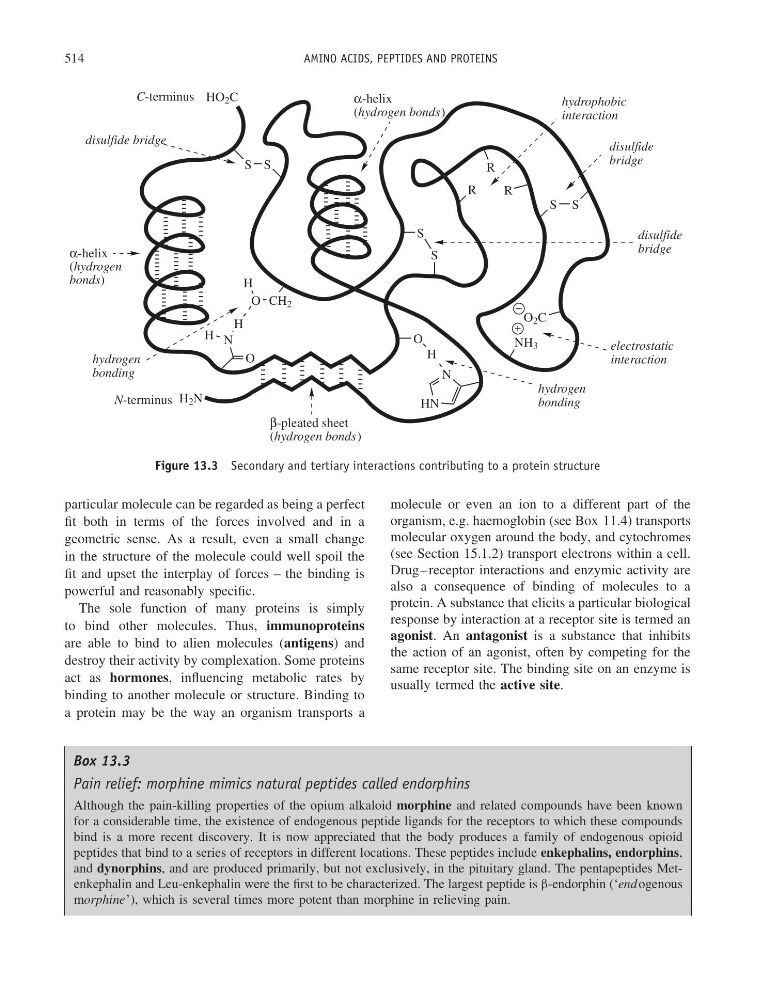
Figure 13.3 Secondary and tertiary interactions contributing to a protein structure
particular molecule can be regarded as being a perfect
fit both in terms of the forces involved and in a
geometric sense. As a result, even a small change
in the structure of the molecule could well spoil the
fit and upset the interplay of forces – the binding is
powerful and reasonably specific.
The sole function of many proteins is simply
to bind other molecules. Thus, immunoproteins
are able to bind to alien molecules (antigens) and
destroy their activity by complexation. Some proteins
act as hormones, influencing metabolic rates by
binding to another molecule or structure. Binding to
a protein may be the way an organism transports a
molecule or even an ion to a different part of the
organism, e.g. haemoglobin (see Box 11.4) transports
molecular oxygen around the body, and cytochromes
(see Section 15.1.2) transport electrons within a cell.
Drug–receptor interactions and enzymic activity are
also a consequence of binding of molecules to a
protein. A substance that elicits a particular biological
response by interaction at a receptor site is termed an
agonist. An antagonist is a substance that inhibits
the action of an agonist, often by competing for the
same receptor site. The binding site on an enzyme is
usually termed the active site.
Box 13.3
Pain relief: morphine mimics natural peptides called endorphins
Although the pain-killing properties of the opium alkaloid morphine and related compounds have been known
for a considerable time, the existence of endogenous peptide ligands for the receptors to which these compounds
bind is a more recent discovery. It is now appreciated that the body produces a family of endogenous opioid
peptides that bind to a series of receptors in different locations. These peptides include enkephalins, endorphins,
and dynorphins, and are produced primarily, but not exclusively, in the pituitary gland. The pentapeptides Metenkephalin and Leu-enkephalin were the first to be characterized. The largest peptide is β-endorphin (‘end ogenous
morphine’), which is several times more potent than morphine in relieving pain.
AMINO ACIDS, PEPTIDES AND PROTEINS
HO 2 C
H 2 N
R
R
R
S S
S S
O 2 C
NH 3
O
H
N
HN
N
O
H
H
O
H
CH 2
N-terminus
C-terminus
hydrophobic
interaction
disulfide
bridge
disulfide bridge
α-helix
(hydrogen
bonds)
α-helix
(hydrogen bonds)
β-pleated sheet
(hydrogen bonds)
hydrogen
bonding
hydrogen
bonding
electrostatic
interaction
S
S
disulfide
bridge
Figure 13.3 Secondary and tertiary interactions contributing to a protein structure
particular molecule can be regarded as being a perfect
fit both in terms of the forces involved and in a
geometric sense. As a result, even a small change
in the structure of the molecule could well spoil the
fit and upset the interplay of forces – the binding is
powerful and reasonably specific.
The sole function of many proteins is simply
to bind other molecules. Thus, immunoproteins
are able to bind to alien molecules (antigens) and
destroy their activity by complexation. Some proteins
act as hormones, influencing metabolic rates by
binding to another molecule or structure. Binding to
a protein may be the way an organism transports a
molecule or even an ion to a different part of the
organism, e.g. haemoglobin (see Box 11.4) transports
molecular oxygen around the body, and cytochromes
(see Section 15.1.2) transport electrons within a cell.
Drug–receptor interactions and enzymic activity are
also a consequence of binding of molecules to a
protein. A substance that elicits a particular biological
response by interaction at a receptor site is termed an
agonist. An antagonist is a substance that inhibits
the action of an agonist, often by competing for the
same receptor site. The binding site on an enzyme is
usually termed the active site.
Box 13.3
Pain relief: morphine mimics natural peptides called endorphins
Although the pain-killing properties of the opium alkaloid morphine and related compounds have been known
for a considerable time, the existence of endogenous peptide ligands for the receptors to which these compounds
bind is a more recent discovery. It is now appreciated that the body produces a family of endogenous opioid
peptides that bind to a series of receptors in different locations. These peptides include enkephalins, endorphins,
and dynorphins, and are produced primarily, but not exclusively, in the pituitary gland. The pentapeptides Metenkephalin and Leu-enkephalin were the first to be characterized. The largest peptide is β-endorphin (‘end ogenous
morphine’), which is several times more potent than morphine in relieving pain.