

SIX-MEMBERED AROMATIC HETEROCYCLES
407
pyridine
pyrrole
nonbonding
molecular orbitals
antibonding
molecular orbitals
bonding
molecular orbitals
Energy
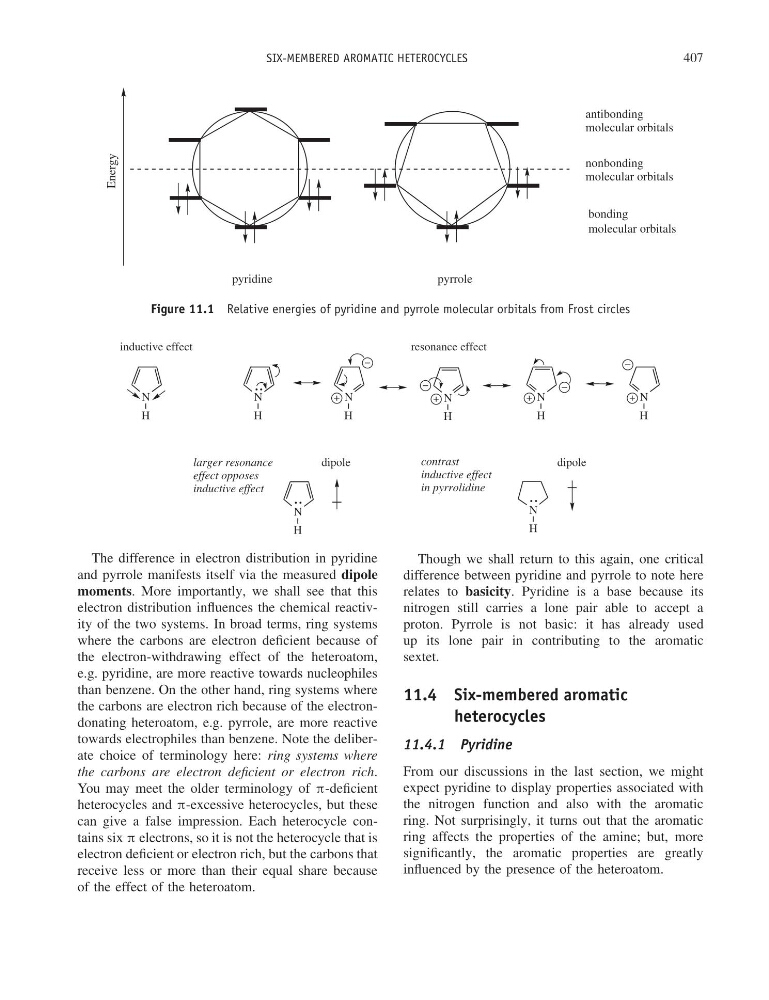
Figure 11.1 Relative energies of pyridine and pyrrole molecular orbitals from Frost circles
N
H
N
H
N
H
N
H
N
H
N
H
dipole
N
dipole
N
H
inductive effect
resonance effect
larger resonance
effect opposes
inductive effect
contrast
inductive effect
in pyrrolidine
H
The difference in electron distribution in pyridine
and pyrrole manifests itself via the measured dipole
moments. More importantly, we shall see that this
electron distribution influences the chemical reactivity of the two systems. In broad terms, ring systems
where the carbons are electron deficient because of
the electron-withdrawing effect of the heteroatom,
e.g. pyridine, are more reactive towards nucleophiles
than benzene. On the other hand, ring systems where
the carbons are electron rich because of the electrondonating heteroatom, e.g. pyrrole, are more reactive
towards electrophiles than benzene. Note the deliberate choice of terminology here: ring systems where
the carbons are electron deficient or electron rich.
You may meet the older terminology of π-deficient
heterocycles and π-excessive heterocycles, but these
can give a false impression. Each heterocycle contains six π electrons, so it is not the heterocycle that is
electron deficient or electron rich, but the carbons that
receive less or more than their equal share because
of the effect of the heteroatom.
Though we shall return to this again, one critical
difference between pyridine and pyrrole to note here
relates to basicity. Pyridine is a base because its
nitrogen still carries a lone pair able to accept a
proton. Pyrrole is not basic: it has already used
up its lone pair in contributing to the aromatic
sextet.
11.4 Six-membered aromatic
heterocycles
11.4.1 Pyridine
From our discussions in the last section, we might
expect pyridine to display properties associated with
the nitrogen function and also with the aromatic
ring. Not surprisingly, it turns out that the aromatic
ring affects the properties of the amine; but, more
significantly, the aromatic properties are greatly
influenced by the presence of the heteroatom.
407
pyridine
pyrrole
nonbonding
molecular orbitals
antibonding
molecular orbitals
bonding
molecular orbitals
Energy
Figure 11.1 Relative energies of pyridine and pyrrole molecular orbitals from Frost circles
N
H
N
H
N
H
N
H
N
H
N
H
dipole
N
dipole
N
H
inductive effect
resonance effect
larger resonance
effect opposes
inductive effect
contrast
inductive effect
in pyrrolidine
H
The difference in electron distribution in pyridine
and pyrrole manifests itself via the measured dipole
moments. More importantly, we shall see that this
electron distribution influences the chemical reactivity of the two systems. In broad terms, ring systems
where the carbons are electron deficient because of
the electron-withdrawing effect of the heteroatom,
e.g. pyridine, are more reactive towards nucleophiles
than benzene. On the other hand, ring systems where
the carbons are electron rich because of the electrondonating heteroatom, e.g. pyrrole, are more reactive
towards electrophiles than benzene. Note the deliberate choice of terminology here: ring systems where
the carbons are electron deficient or electron rich.
You may meet the older terminology of π-deficient
heterocycles and π-excessive heterocycles, but these
can give a false impression. Each heterocycle contains six π electrons, so it is not the heterocycle that is
electron deficient or electron rich, but the carbons that
receive less or more than their equal share because
of the effect of the heteroatom.
Though we shall return to this again, one critical
difference between pyridine and pyrrole to note here
relates to basicity. Pyridine is a base because its
nitrogen still carries a lone pair able to accept a
proton. Pyrrole is not basic: it has already used
up its lone pair in contributing to the aromatic
sextet.
11.4 Six-membered aromatic
heterocycles
11.4.1 Pyridine
From our discussions in the last section, we might
expect pyridine to display properties associated with
the nitrogen function and also with the aromatic
ring. Not surprisingly, it turns out that the aromatic
ring affects the properties of the amine; but, more
significantly, the aromatic properties are greatly
influenced by the presence of the heteroatom.