

NUCLEOPHILIC SUBSTITUTION REACTIONS
203
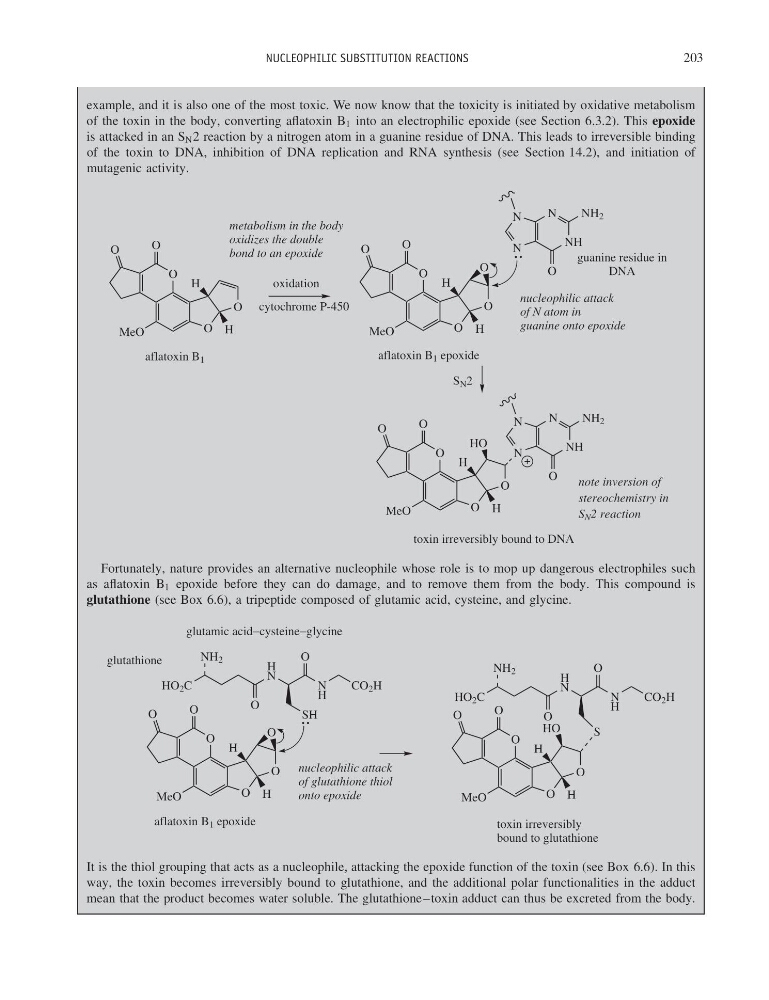
example, and it is also one of the most toxic. We now know that the toxicity is initiated by oxidative metabolism
of the toxin in the body, converting aflatoxin B 1 into an electrophilic epoxide (see Section 6.3.2). This epoxide
is attacked in an S N 2 reaction by a nitrogen atom in a guanine residue of DNA. This leads to irreversible binding
of the toxin to DNA, inhibition of DNA replication and RNA synthesis (see Section 14.2), and initiation of
mutagenic activity.
O
O
H
O
H
MeO
O
O
O
O
H
O
H
MeO
O
O
O
aflatoxin B 1
NH
N
N
N
NH 2
O
aflatoxin B 1 epoxide
guanine residue in
DNA
oxidation
metabolism in the body
oxidizes the double
bond to an epoxide
nucleophilic attack
of N atom in
guanine onto epoxide
cytochrome P-450
O
O
H
O
H
MeO
O
O
HO
NH
N
N
N
NH 2
O
toxin irreversibly bound to DNA
note inversion of
stereochemistry in
S N 2 reaction
S N 2
Fortunately, nature provides an alternative nucleophile whose role is to mop up dangerous electrophiles such
as aflatoxin B 1 epoxide before they can do damage, and to remove them from the body. This compound is
glutathione (see Box 6.6), a tripeptide composed of glutamic acid, cysteine, and glycine.
glutamic acid−cysteine−glycine
glutathione
O
H
O
H
O
HO 2 C
H
N
N
H
CO 2 H
NH 2
O
SH
O
O
MeO
O
O
O
H
O
H
O
MeO
O
O
HO
HO 2 C
H
N
N
H
CO 2 H
NH 2
O
S
O
toxin irreversibly
bound to glutathione
nucleophilic attack
of glutathione thiol
onto epoxide
aflatoxin B 1 epoxide
It is the thiol grouping that acts as a nucleophile, attacking the epoxide function of the toxin (see Box 6.6). In this
way, the toxin becomes irreversibly bound to glutathione, and the additional polar functionalities in the adduct
mean that the product becomes water soluble. The glutathione–toxin adduct can thus be excreted from the body.
203
example, and it is also one of the most toxic. We now know that the toxicity is initiated by oxidative metabolism
of the toxin in the body, converting aflatoxin B 1 into an electrophilic epoxide (see Section 6.3.2). This epoxide
is attacked in an S N 2 reaction by a nitrogen atom in a guanine residue of DNA. This leads to irreversible binding
of the toxin to DNA, inhibition of DNA replication and RNA synthesis (see Section 14.2), and initiation of
mutagenic activity.
O
O
H
O
H
MeO
O
O
O
O
H
O
H
MeO
O
O
O
aflatoxin B 1
NH
N
N
N
NH 2
O
aflatoxin B 1 epoxide
guanine residue in
DNA
oxidation
metabolism in the body
oxidizes the double
bond to an epoxide
nucleophilic attack
of N atom in
guanine onto epoxide
cytochrome P-450
O
O
H
O
H
MeO
O
O
HO
NH
N
N
N
NH 2
O
toxin irreversibly bound to DNA
note inversion of
stereochemistry in
S N 2 reaction
S N 2
Fortunately, nature provides an alternative nucleophile whose role is to mop up dangerous electrophiles such
as aflatoxin B 1 epoxide before they can do damage, and to remove them from the body. This compound is
glutathione (see Box 6.6), a tripeptide composed of glutamic acid, cysteine, and glycine.
glutamic acid−cysteine−glycine
glutathione
O
H
O
H
O
HO 2 C
H
N
N
H
CO 2 H
NH 2
O
SH
O
O
MeO
O
O
O
H
O
H
O
MeO
O
O
HO
HO 2 C
H
N
N
H
CO 2 H
NH 2
O
S
O
toxin irreversibly
bound to glutathione
nucleophilic attack
of glutathione thiol
onto epoxide
aflatoxin B 1 epoxide
It is the thiol grouping that acts as a nucleophile, attacking the epoxide function of the toxin (see Box 6.6). In this
way, the toxin becomes irreversibly bound to glutathione, and the additional polar functionalities in the adduct
mean that the product becomes water soluble. The glutathione–toxin adduct can thus be excreted from the body.