

H C
H
H
OH
C
H 3
C
H
H
OH
Ethanol
(Ethyl alcohol)
Methanol
(Methyl alcohol)
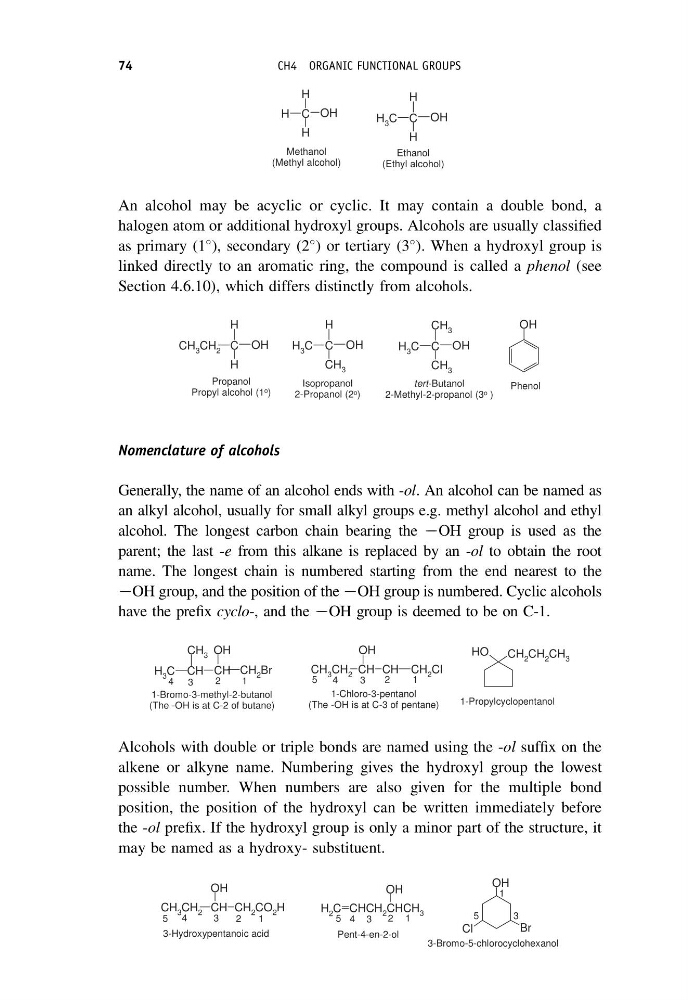
An alcohol may be acyclic or cyclic. It may contain a double bond, a
halogen atom or additional hydroxyl groups. Alcohols are usually classified
as primary (1
), secondary (2
) or tertiary (3
). When a hydroxyl group is
linked directly to an aromatic ring, the compound is called a phenol (see
Section 4.6.10), which differs distinctly from alcohols.
OH
CH 3 CH 2 C
H
H
OH
C
H 3
C
H
CH 3
OH
C
H 3
C
CH 3
CH 3
OH
Isopropanol
2-Propanol (2 o )
tert-Butanol
2-Methyl-2-propanol (3 o )
Phenol
Propanol
Propyl alcohol (1 o )
Nomenclature of alcohols
Generally, the name of an alcohol ends with -ol. An alcohol can be named as
an alkyl alcohol, usually for small alkyl groups e.g. methyl alcohol and ethyl
alcohol. The longest carbon chain bearing the À ÀOH group is used as the
parent; the last -e from this alkane is replaced by an -ol to obtain the root
name. The longest chain is numbered starting from the end nearest to the
À ÀOH group, and the position of the À ÀOH group is numbered. Cyclic alcohols
have the prefix cyclo-, and the À ÀOH group is deemed to be on C-1.
O
H
CH 2 CH 2 CH 3
CH
OH
CH 3
C
H 3
CH 2 Br
CH CH
CH 3 CH 2
OH
CH 2 Cl
1-Propylcyclopentanol
1
2
3
4
1-Bromo-3-methyl-2-butanol
(The -OH is at C-2 of butane)
CH
1
2
3
4
1-Chloro-3-pentanol
(The -OH is at C-3 of pentane)
5
Alcohols with double or triple bonds are named using the -ol suffix on the
alkene or alkyne name. Numbering gives the hydroxyl group the lowest
possible number. When numbers are also given for the multiple bond
position, the position of the hydroxyl can be written immediately before
the -ol prefix. If the hydroxyl group is only a minor part of the structure, it
may be named as a hydroxy- substituent.
OH
C
H 2 CHCH 2 CHCH 3
OH
OH
Br
Cl
CH
CH 3 CH 2
CH 2 CO 2 H
Pent-4-en-2-ol
3-Hydroxypentanoic acid
1
2
3
4
1
2
3
4
5
5
3-Bromo-5-chlorocyclohexanol
1
5
3
74
CH4 ORGANIC FUNCTIONAL GROUPS
H
H
OH
C
H 3
C
H
H
OH
Ethanol
(Ethyl alcohol)
Methanol
(Methyl alcohol)
An alcohol may be acyclic or cyclic. It may contain a double bond, a
halogen atom or additional hydroxyl groups. Alcohols are usually classified
as primary (1
), secondary (2
) or tertiary (3
). When a hydroxyl group is
linked directly to an aromatic ring, the compound is called a phenol (see
Section 4.6.10), which differs distinctly from alcohols.
OH
CH 3 CH 2 C
H
H
OH
C
H 3
C
H
CH 3
OH
C
H 3
C
CH 3
CH 3
OH
Isopropanol
2-Propanol (2 o )
tert-Butanol
2-Methyl-2-propanol (3 o )
Phenol
Propanol
Propyl alcohol (1 o )
Nomenclature of alcohols
Generally, the name of an alcohol ends with -ol. An alcohol can be named as
an alkyl alcohol, usually for small alkyl groups e.g. methyl alcohol and ethyl
alcohol. The longest carbon chain bearing the À ÀOH group is used as the
parent; the last -e from this alkane is replaced by an -ol to obtain the root
name. The longest chain is numbered starting from the end nearest to the
À ÀOH group, and the position of the À ÀOH group is numbered. Cyclic alcohols
have the prefix cyclo-, and the À ÀOH group is deemed to be on C-1.
O
H
CH 2 CH 2 CH 3
CH
OH
CH 3
C
H 3
CH 2 Br
CH CH
CH 3 CH 2
OH
CH 2 Cl
1-Propylcyclopentanol
1
2
3
4
1-Bromo-3-methyl-2-butanol
(The -OH is at C-2 of butane)
CH
1
2
3
4
1-Chloro-3-pentanol
(The -OH is at C-3 of pentane)
5
Alcohols with double or triple bonds are named using the -ol suffix on the
alkene or alkyne name. Numbering gives the hydroxyl group the lowest
possible number. When numbers are also given for the multiple bond
position, the position of the hydroxyl can be written immediately before
the -ol prefix. If the hydroxyl group is only a minor part of the structure, it
may be named as a hydroxy- substituent.
OH
C
H 2 CHCH 2 CHCH 3
OH
OH
Br
Cl
CH
CH 3 CH 2
CH 2 CO 2 H
Pent-4-en-2-ol
3-Hydroxypentanoic acid
1
2
3
4
1
2
3
4
5
5
3-Bromo-5-chlorocyclohexanol
1
5
3
74
CH4 ORGANIC FUNCTIONAL GROUPS