

Test for hydrocyanic acid (HCN)
The liberation of hydrocyanic acid due to complete hydrolysis of cyanogenic glycosides can be determined by a simple colour test using sodium
picrate paper (yellow), which turns red (sodium isopurpurate) in contact
with HCN.
Pharmaceutical uses and toxicity
The extracts of plants that contain cyanogenic glycosides are used as
flavouring agents in many pharmaceutical preparations. Amygdalin has
been used in the treatment of cancer (HCN liberated in stomach kills
malignant cells), and also as a cough suppressant in various preparations.
Excessive ingestion of cyanogenic glycosides can be fatal. Some foodstuffs containing cyanogenic glycosides can cause poisoning (severe gastric
irritations and damage) if not properly handled.
6.4.4 Anthracene/anthraquinone glycosides
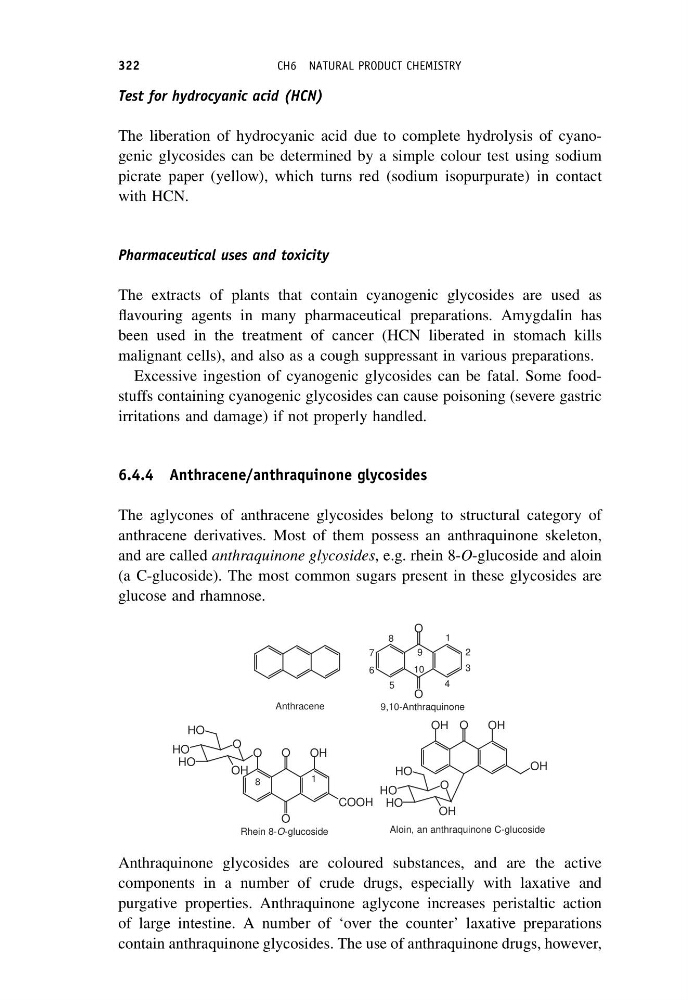
The aglycones of anthracene glycosides belong to structural category of
anthracene derivatives. Most of them possess an anthraquinone skeleton,
and are called anthraquinone glycosides, e.g. rhein 8-O-glucoside and aloin
(a C-glucoside). The most common sugars present in these glycosides are
glucose and rhamnose.
O
O
Anthracene
9,10-Anthraquinone
1
2
3
4
5
6
7
8
9
10
O
OH
O
H
O
H
O
H
O
O
O
OH
COOH
Rhein 8-O-glucoside
1
8
O
OH
OH
OH
O
OH
O
H
O
H
O
H
Aloin, an anthraquinone C-glucoside
Anthraquinone glycosides are coloured substances, and are the active
components in a number of crude drugs, especially with laxative and
purgative properties. Anthraquinone aglycone increases peristaltic action
of large intestine. A number of ‘over the counter’ laxative preparations
contain anthraquinone glycosides. The use of anthraquinone drugs, however,
322
CH6 NATURAL PRODUCT CHEMISTRY
The liberation of hydrocyanic acid due to complete hydrolysis of cyanogenic glycosides can be determined by a simple colour test using sodium
picrate paper (yellow), which turns red (sodium isopurpurate) in contact
with HCN.
Pharmaceutical uses and toxicity
The extracts of plants that contain cyanogenic glycosides are used as
flavouring agents in many pharmaceutical preparations. Amygdalin has
been used in the treatment of cancer (HCN liberated in stomach kills
malignant cells), and also as a cough suppressant in various preparations.
Excessive ingestion of cyanogenic glycosides can be fatal. Some foodstuffs containing cyanogenic glycosides can cause poisoning (severe gastric
irritations and damage) if not properly handled.
6.4.4 Anthracene/anthraquinone glycosides
The aglycones of anthracene glycosides belong to structural category of
anthracene derivatives. Most of them possess an anthraquinone skeleton,
and are called anthraquinone glycosides, e.g. rhein 8-O-glucoside and aloin
(a C-glucoside). The most common sugars present in these glycosides are
glucose and rhamnose.
O
O
Anthracene
9,10-Anthraquinone
1
2
3
4
5
6
7
8
9
10
O
OH
O
H
O
H
O
H
O
O
O
OH
COOH
Rhein 8-O-glucoside
1
8
O
OH
OH
OH
O
OH
O
H
O
H
O
H
Aloin, an anthraquinone C-glucoside
Anthraquinone glycosides are coloured substances, and are the active
components in a number of crude drugs, especially with laxative and
purgative properties. Anthraquinone aglycone increases peristaltic action
of large intestine. A number of ‘over the counter’ laxative preparations
contain anthraquinone glycosides. The use of anthraquinone drugs, however,
322
CH6 NATURAL PRODUCT CHEMISTRY