

Preparation of carboxylic acids and ketones
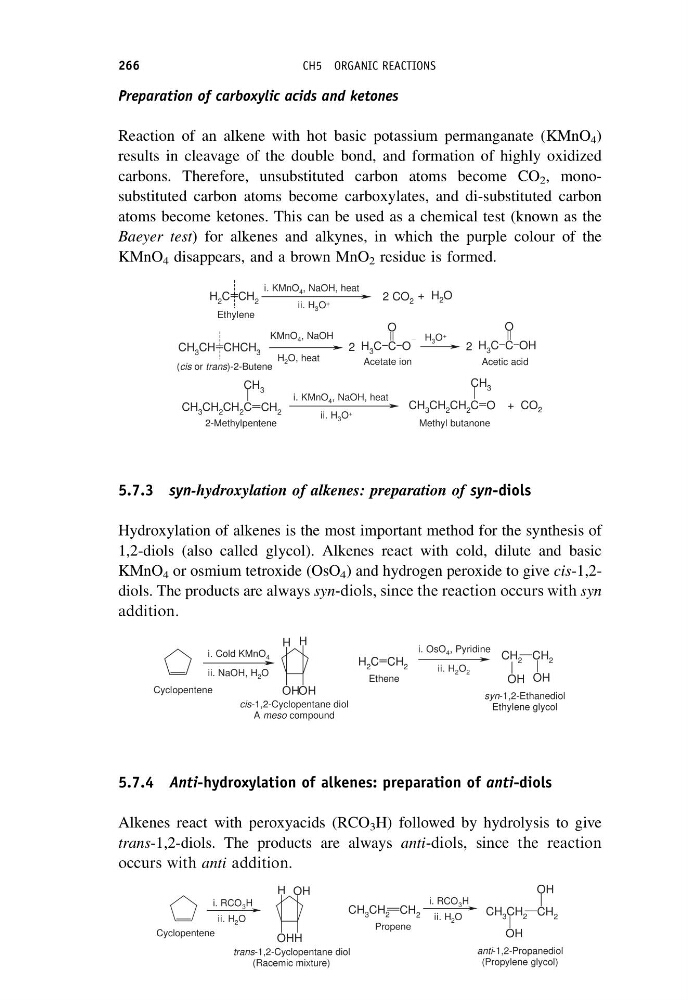
Reaction of an alkene with hot basic potassium permanganate (KMnO 4 )
results in cleavage of the double bond, and formation of highly oxidized
carbons. Therefore, unsubstituted carbon atoms become CO 2 , monosubstituted carbon atoms become carboxylates, and di-substituted carbon
atoms become ketones. This can be used as a chemical test (known as the
Baeyer test) for alkenes and alkynes, in which the purple colour of the
KMnO 4 disappears, and a brown MnO 2 residue is formed.
CH 3 CH 2 CH 2 C CH 2
CH 3 CH 2 CH 2 C O
CH 3
CH 3 CH CHCH 3
C
H 3 C OH
O
C
H 2 CH 2
C
H 3 C O
O
CH 3
i. KMnO 4 , NaOH, heat
ii. H 3 O +
2-Methylpentene
Methyl butanone
(cis or trans)-2-Butene
KMnO 4 , NaOH
H 2 O, heat
Acetate ion
2
Acetic acid
+ H 2 O
Ethylene
H 3 O +
i. KMnO 4 , NaOH, heat
ii. H 3 O +
2 CO 2
2
+ CO 2
5.7.3 syn-hydroxylation of alkenes: preparation of syn-diols
Hydroxylation of alkenes is the most important method for the synthesis of
1,2-diols (also called glycol). Alkenes react with cold, dilute and basic
KMnO 4 or osmium tetroxide (OsO 4 ) and hydrogen peroxide to give cis-1,2diols. The products are always syn-diols, since the reaction occurs with syn
addition.
OH
H
OH
H
C
H 2 CH 2
CH 2 CH 2
OH OH
i. Cold KMnO 4
cis-1,2-Cyclopentane diol
A meso compound
i. OsO 4 , Pyridine
ii. H 2 O 2
Ethene
syn-1,2-Ethanediol
Ethylene glycol
ii. NaOH, H 2 O
Cyclopentene
5.7.4 Anti-hydroxylation of alkenes: preparation of anti-diols
Alkenes react with peroxyacids (RCO 3 H) followed by hydrolysis to give
trans-1,2-diols. The products are always anti-diols, since the reaction
occurs with anti addition.
OHH
OH
H
CH 3 CH 2 CH 2
OH
CH 2
OH
CH 3 CH 2
i. RCO 3 H
trans-1,2-Cyclopentane diol
(Racemic mixture)
ii. H 2 O
Cyclopentene
Propene
anti-1,2-Propanediol
(Propylene glycol)
i. RCO 3 H
ii. H 2 O
266
CH5 ORGANIC REACTIONS
Reaction of an alkene with hot basic potassium permanganate (KMnO 4 )
results in cleavage of the double bond, and formation of highly oxidized
carbons. Therefore, unsubstituted carbon atoms become CO 2 , monosubstituted carbon atoms become carboxylates, and di-substituted carbon
atoms become ketones. This can be used as a chemical test (known as the
Baeyer test) for alkenes and alkynes, in which the purple colour of the
KMnO 4 disappears, and a brown MnO 2 residue is formed.
CH 3 CH 2 CH 2 C CH 2
CH 3 CH 2 CH 2 C O
CH 3
CH 3 CH CHCH 3
C
H 3 C OH
O
C
H 2 CH 2
C
H 3 C O
O
CH 3
i. KMnO 4 , NaOH, heat
ii. H 3 O +
2-Methylpentene
Methyl butanone
(cis or trans)-2-Butene
KMnO 4 , NaOH
H 2 O, heat
Acetate ion
2
Acetic acid
+ H 2 O
Ethylene
H 3 O +
i. KMnO 4 , NaOH, heat
ii. H 3 O +
2 CO 2
2
+ CO 2
5.7.3 syn-hydroxylation of alkenes: preparation of syn-diols
Hydroxylation of alkenes is the most important method for the synthesis of
1,2-diols (also called glycol). Alkenes react with cold, dilute and basic
KMnO 4 or osmium tetroxide (OsO 4 ) and hydrogen peroxide to give cis-1,2diols. The products are always syn-diols, since the reaction occurs with syn
addition.
OH
H
OH
H
C
H 2 CH 2
CH 2 CH 2
OH OH
i. Cold KMnO 4
cis-1,2-Cyclopentane diol
A meso compound
i. OsO 4 , Pyridine
ii. H 2 O 2
Ethene
syn-1,2-Ethanediol
Ethylene glycol
ii. NaOH, H 2 O
Cyclopentene
5.7.4 Anti-hydroxylation of alkenes: preparation of anti-diols
Alkenes react with peroxyacids (RCO 3 H) followed by hydrolysis to give
trans-1,2-diols. The products are always anti-diols, since the reaction
occurs with anti addition.
OHH
OH
H
CH 3 CH 2 CH 2
OH
CH 2
OH
CH 3 CH 2
i. RCO 3 H
trans-1,2-Cyclopentane diol
(Racemic mixture)
ii. H 2 O
Cyclopentene
Propene
anti-1,2-Propanediol
(Propylene glycol)
i. RCO 3 H
ii. H 2 O
266
CH5 ORGANIC REACTIONS