

CH 3
CH 3 CH 2 C CH 2
CH 3
CH 3 CH 2 CHCH 3
2-Methyl-1-butene
+ H 2
Pt-C or
2-Methylbutane
Pd-C
CH 3
CH 3
+ H 2
Raney Ni
Methylcyclohexane
3-Methylcyclohexene
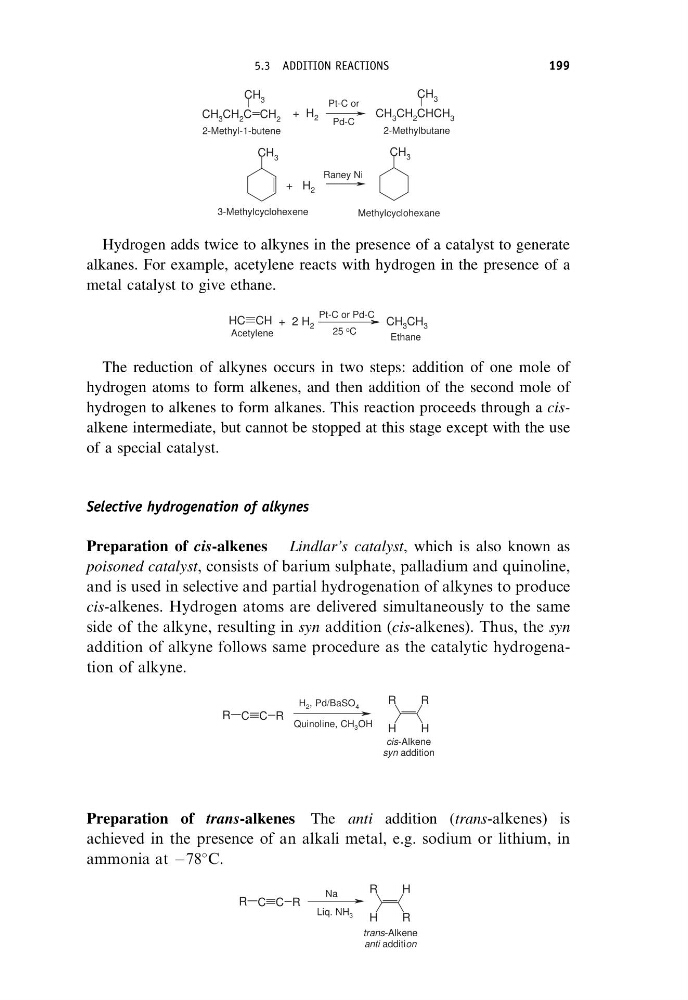
Hydrogen adds twice to alkynes in the presence of a catalyst to generate
alkanes. For example, acetylene reacts with hydrogen in the presence of a
metal catalyst to give ethane.
CH
C
H
+ 2 H 2
Pt-C or Pd-C
Ethane
25 o C
Acetylene
CH 3 CH 3
The reduction of alkynes occurs in two steps: addition of one mole of
hydrogen atoms to form alkenes, and then addition of the second mole of
hydrogen to alkenes to form alkanes. This reaction proceeds through a cisalkene intermediate, but cannot be stopped at this stage except with the use
of a special catalyst.
Selective hydrogenation of alkynes
Preparation of cis-alkenes Lindlar’s catalyst, which is also known as
poisoned catalyst, consists of barium sulphate, palladium and quinoline,
and is used in selective and partial hydrogenation of alkynes to produce
cis-alkenes. Hydrogen atoms are delivered simultaneously to the same
side of the alkyne, resulting in syn addition (cis-alkenes). Thus, the syn
addition of alkyne follows same procedure as the catalytic hydrogenation of alkyne.
C
C
R
R
R
R
H
H
H 2 , Pd/BaSO 4
Quinoline, CH 3 OH
cis-Alkene
syn addition
Preparation of trans-alkenes The anti addition (trans-alkenes) is
achieved in the presence of an alkali metal, e.g. sodium or lithium, in
ammonia at À78
C.
C
C
R
R
R
H
H
R
Liq. NH 3
trans-Alkene
anti addition
Na
5.3 ADDITION REACTIONS
199
CH 3 CH 2 C CH 2
CH 3
CH 3 CH 2 CHCH 3
2-Methyl-1-butene
+ H 2
Pt-C or
2-Methylbutane
Pd-C
CH 3
CH 3
+ H 2
Raney Ni
Methylcyclohexane
3-Methylcyclohexene
Hydrogen adds twice to alkynes in the presence of a catalyst to generate
alkanes. For example, acetylene reacts with hydrogen in the presence of a
metal catalyst to give ethane.
CH
C
H
+ 2 H 2
Pt-C or Pd-C
Ethane
25 o C
Acetylene
CH 3 CH 3
The reduction of alkynes occurs in two steps: addition of one mole of
hydrogen atoms to form alkenes, and then addition of the second mole of
hydrogen to alkenes to form alkanes. This reaction proceeds through a cisalkene intermediate, but cannot be stopped at this stage except with the use
of a special catalyst.
Selective hydrogenation of alkynes
Preparation of cis-alkenes Lindlar’s catalyst, which is also known as
poisoned catalyst, consists of barium sulphate, palladium and quinoline,
and is used in selective and partial hydrogenation of alkynes to produce
cis-alkenes. Hydrogen atoms are delivered simultaneously to the same
side of the alkyne, resulting in syn addition (cis-alkenes). Thus, the syn
addition of alkyne follows same procedure as the catalytic hydrogenation of alkyne.
C
C
R
R
R
R
H
H
H 2 , Pd/BaSO 4
Quinoline, CH 3 OH
cis-Alkene
syn addition
Preparation of trans-alkenes The anti addition (trans-alkenes) is
achieved in the presence of an alkali metal, e.g. sodium or lithium, in
ammonia at À78
C.
C
C
R
R
R
H
H
R
Liq. NH 3
trans-Alkene
anti addition
Na
5.3 ADDITION REACTIONS
199