

H
H
H
H
H
H
H
H
H
H
H
E
E +
+ H +
Electrophile
+
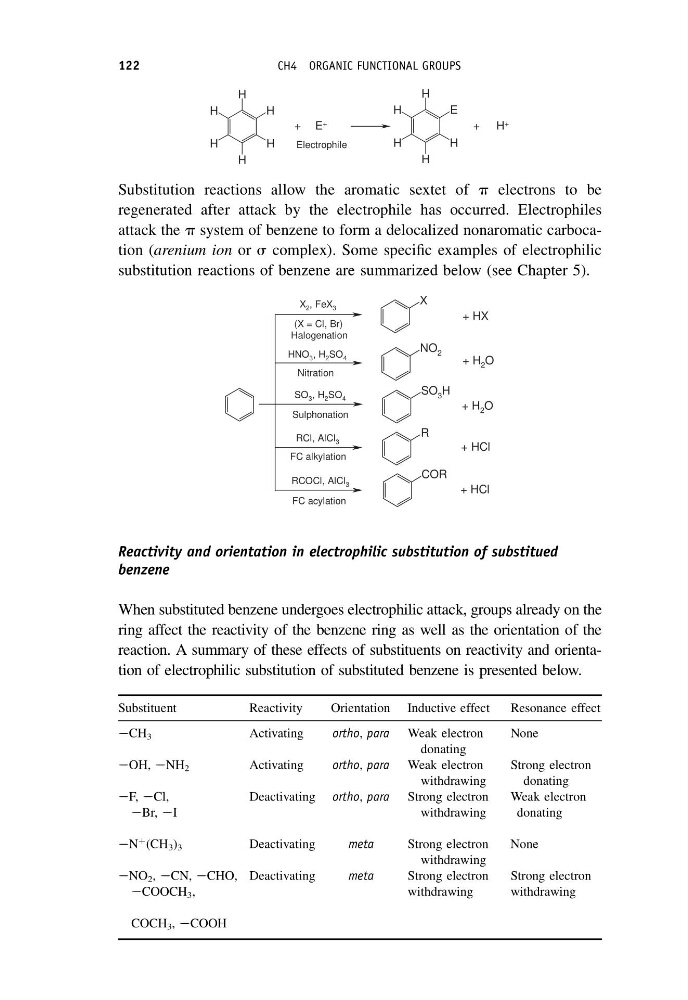
Substitution reactions allow the aromatic sextet of p electrons to be
regenerated after attack by the electrophile has occurred. Electrophiles
attack the p system of benzene to form a delocalized nonaromatic carbocation (arenium ion or s complex). Some specific examples of electrophilic
substitution reactions of benzene are summarized below (see Chapter 5).
X
NO 2
SO 3 H
R
COR
X 2 , FeX 3
(X = Cl, Br)
Halogenation
HNO 3 , H 2 SO 4
Nitration
SO 3 , H 2 SO 4
Sulphonation
RCl, AlCl 3
FC alkylation
RCOCl, AlCl 3
FC acylation
+ HX
+ H 2 O
+ H 2 O
+ HCl
+ HCl
Reactivity and orientation in electrophilic substitution of substitued
benzene
When substituted benzene undergoes electrophilic attack, groups already on the
ring affect the reactivity of the benzene ring as well as the orientation of the
reaction. A summary of these effects of substituents on reactivity and orientation of electrophilic substitution of substituted benzene is presented below.
Substituent
Reactivity
Orientation Inductive effect
Resonance effect
À ÀCH 3
Activating
ortho, para Weak electron
None
donating
À ÀOH, À ÀNH 2
Activating
ortho, para Weak electron
Strong electron
withdrawing
donating
À ÀF, À ÀCl,
Deactivating ortho, para Strong electron
Weak electron
À ÀBr, À ÀI
withdrawing
donating
À ÀN þ (CH 3 ) 3
Deactivating
meta
Strong electron
None
withdrawing
À ÀNO 2 , À ÀCN, À ÀCHO, Deactivating
meta
Strong electron
Strong electron
À ÀCOOCH 3 ,
withdrawing
withdrawing
COCH 3 , À ÀCOOH
122
CH4 ORGANIC FUNCTIONAL GROUPS
H
H
H
H
H
H
H
H
H
H
E
E +
+ H +
Electrophile
+
Substitution reactions allow the aromatic sextet of p electrons to be
regenerated after attack by the electrophile has occurred. Electrophiles
attack the p system of benzene to form a delocalized nonaromatic carbocation (arenium ion or s complex). Some specific examples of electrophilic
substitution reactions of benzene are summarized below (see Chapter 5).
X
NO 2
SO 3 H
R
COR
X 2 , FeX 3
(X = Cl, Br)
Halogenation
HNO 3 , H 2 SO 4
Nitration
SO 3 , H 2 SO 4
Sulphonation
RCl, AlCl 3
FC alkylation
RCOCl, AlCl 3
FC acylation
+ HX
+ H 2 O
+ H 2 O
+ HCl
+ HCl
Reactivity and orientation in electrophilic substitution of substitued
benzene
When substituted benzene undergoes electrophilic attack, groups already on the
ring affect the reactivity of the benzene ring as well as the orientation of the
reaction. A summary of these effects of substituents on reactivity and orientation of electrophilic substitution of substituted benzene is presented below.
Substituent
Reactivity
Orientation Inductive effect
Resonance effect
À ÀCH 3
Activating
ortho, para Weak electron
None
donating
À ÀOH, À ÀNH 2
Activating
ortho, para Weak electron
Strong electron
withdrawing
donating
À ÀF, À ÀCl,
Deactivating ortho, para Strong electron
Weak electron
À ÀBr, À ÀI
withdrawing
donating
À ÀN þ (CH 3 ) 3
Deactivating
meta
Strong electron
None
withdrawing
À ÀNO 2 , À ÀCN, À ÀCHO, Deactivating
meta
Strong electron
Strong electron
À ÀCOOCH 3 ,
withdrawing
withdrawing
COCH 3 , À ÀCOOH
122
CH4 ORGANIC FUNCTIONAL GROUPS