

5G Mobile Networks: Requirements, Enabling Technologies, and Research Activities 39
MIMO is an antenna technology for wireless communications in which multiple
antennas are used to transmit and receive data. In fact, the MIMO concept has been
commonly utilized in current 4G networks, which refers to multi‐user MIMO communication [14], where several users are simultaneously served by a multiple‐antenna
base station; whereas, massive MIMO is defined as a multi‐user MIMO system, where
the number of base station’s antennas and the number of users are large [15]. Such a
feature as having more antennas at the base station promises to increase the network
capacity and density. More importantly, massive MIMO is said to significantly enhance
spectral and energy efficiency [15]. These reasons make massive MIMO an essential
technology for 5G [16]. Figure 2.4 depicts the concept of massive MIMO. Apart from
the benefits of massive MIMO, there are still several research questions that need to be
addressed, such as mitigation of plot contamination, channel estimation, implementation‐aware algorithmic design, etc.
2.3.1.3 Ultra‐Dense Small Cells
Another way of increasing the network density and improving the throughput is to
densify the number of wireless nodes, which have a smaller coverage range than the
macro‐cell base stations used in the 3G and 4G legacy systems. The technical solution
behind this idea is denoted as the small cell technology. As defined by the Small Cell
Forum, the “small cells” is an umbrella term for operator‐controlled, low‐powered radio
access nodes with a coverage range in between ten to several hundreds of meters,
including those that operate in licensed spectrum and unlicensed carrier‐grade WiFi.
An example of small cell deployment is shown in Figure 2.5.
With small cells, the size of the cell is reduced, meaning they bring the network much
closer to the user, thus better serving high traffic areas such as indoor and hotspot
areas. In addition, the higher number of low‐powered transmission points on the small
cell network enables better use of available frequency resource, thus improving the
spectral efficiency. Furthermore, the 5G system will be constructed in a heterogeneous
fashion, where macro and small cells are co‐located and maybe connected to each other
Hundreds of antennas
Tens of users
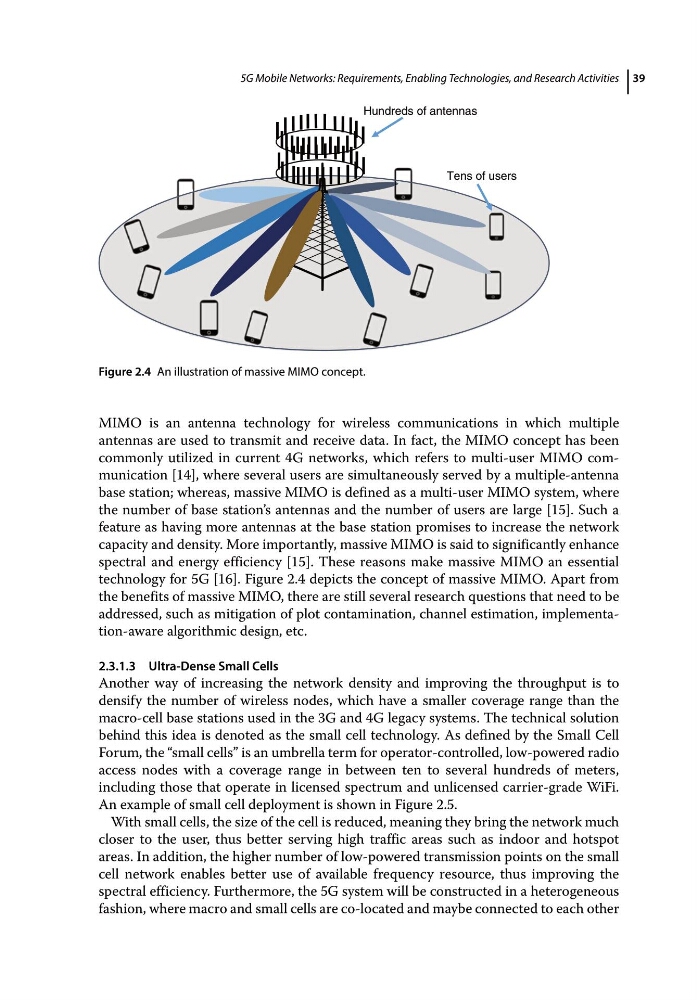
Figure 2.4 An illustration of massive MIMO concept.
MIMO is an antenna technology for wireless communications in which multiple
antennas are used to transmit and receive data. In fact, the MIMO concept has been
commonly utilized in current 4G networks, which refers to multi‐user MIMO communication [14], where several users are simultaneously served by a multiple‐antenna
base station; whereas, massive MIMO is defined as a multi‐user MIMO system, where
the number of base station’s antennas and the number of users are large [15]. Such a
feature as having more antennas at the base station promises to increase the network
capacity and density. More importantly, massive MIMO is said to significantly enhance
spectral and energy efficiency [15]. These reasons make massive MIMO an essential
technology for 5G [16]. Figure 2.4 depicts the concept of massive MIMO. Apart from
the benefits of massive MIMO, there are still several research questions that need to be
addressed, such as mitigation of plot contamination, channel estimation, implementation‐aware algorithmic design, etc.
2.3.1.3 Ultra‐Dense Small Cells
Another way of increasing the network density and improving the throughput is to
densify the number of wireless nodes, which have a smaller coverage range than the
macro‐cell base stations used in the 3G and 4G legacy systems. The technical solution
behind this idea is denoted as the small cell technology. As defined by the Small Cell
Forum, the “small cells” is an umbrella term for operator‐controlled, low‐powered radio
access nodes with a coverage range in between ten to several hundreds of meters,
including those that operate in licensed spectrum and unlicensed carrier‐grade WiFi.
An example of small cell deployment is shown in Figure 2.5.
With small cells, the size of the cell is reduced, meaning they bring the network much
closer to the user, thus better serving high traffic areas such as indoor and hotspot
areas. In addition, the higher number of low‐powered transmission points on the small
cell network enables better use of available frequency resource, thus improving the
spectral efficiency. Furthermore, the 5G system will be constructed in a heterogeneous
fashion, where macro and small cells are co‐located and maybe connected to each other
Hundreds of antennas
Tens of users
Figure 2.4 An illustration of massive MIMO concept.