

240
S. Swathi Priya et al.
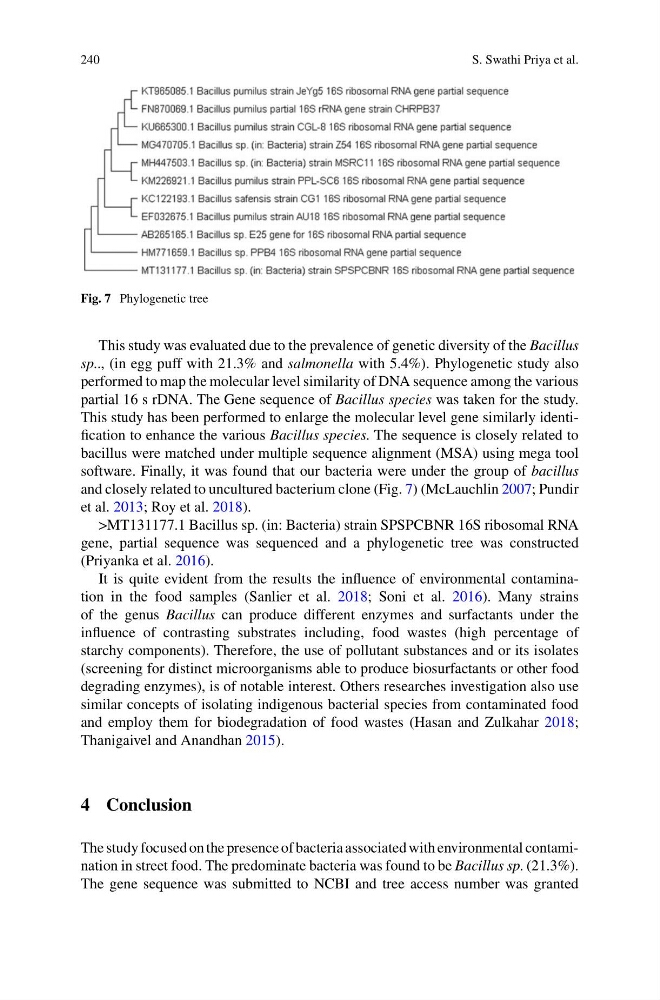
Fig. 7 Phylogenetic tree
This study was evaluated due to the prevalence of genetic diversity of the Bacillus
sp.., (in egg puff with 21.3% and salmonella with 5.4%). Phylogenetic study also
performed to map the molecular level similarity of DNA sequence among the various
partial 16 s rDNA. The Gene sequence of Bacillus species was taken for the study.
This study has been performed to enlarge the molecular level gene similarly identification to enhance the various Bacillus species. The sequence is closely related to
bacillus were matched under multiple sequence alignment (MSA) using mega tool
software. Finally, it was found that our bacteria were under the group of bacillus
and closely related to uncultured bacterium clone (Fig. 7) (McLauchlin 2007; Pundir
et al. 2013; Roy et al. 2018).
>MT131177.1 Bacillus sp. (in: Bacteria) strain SPSPCBNR 16S ribosomal RNA
gene, partial sequence was sequenced and a phylogenetic tree was constructed
(Priyanka et al. 2016).
It is quite evident from the results the influence of environmental contamination in the food samples (Sanlier et al. 2018; Soni et al. 2016). Many strains
of the genus Bacillus can produce different enzymes and surfactants under the
influence of contrasting substrates including, food wastes (high percentage of
starchy components). Therefore, the use of pollutant substances and or its isolates
(screening for distinct microorganisms able to produce biosurfactants or other food
degrading enzymes), is of notable interest. Others researches investigation also use
similar concepts of isolating indigenous bacterial species from contaminated food
and employ them for biodegradation of food wastes (Hasan and Zulkahar 2018;
Thanigaivel and Anandhan 2015).
4 Conclusion
The study focused on the presence of bacteria associated with environmental contamination in street food. The predominate bacteria was found to be Bacillus sp. (21.3%).
The gene sequence was submitted to NCBI and tree access number was granted
S. Swathi Priya et al.
Fig. 7 Phylogenetic tree
This study was evaluated due to the prevalence of genetic diversity of the Bacillus
sp.., (in egg puff with 21.3% and salmonella with 5.4%). Phylogenetic study also
performed to map the molecular level similarity of DNA sequence among the various
partial 16 s rDNA. The Gene sequence of Bacillus species was taken for the study.
This study has been performed to enlarge the molecular level gene similarly identification to enhance the various Bacillus species. The sequence is closely related to
bacillus were matched under multiple sequence alignment (MSA) using mega tool
software. Finally, it was found that our bacteria were under the group of bacillus
and closely related to uncultured bacterium clone (Fig. 7) (McLauchlin 2007; Pundir
et al. 2013; Roy et al. 2018).
>MT131177.1 Bacillus sp. (in: Bacteria) strain SPSPCBNR 16S ribosomal RNA
gene, partial sequence was sequenced and a phylogenetic tree was constructed
(Priyanka et al. 2016).
It is quite evident from the results the influence of environmental contamination in the food samples (Sanlier et al. 2018; Soni et al. 2016). Many strains
of the genus Bacillus can produce different enzymes and surfactants under the
influence of contrasting substrates including, food wastes (high percentage of
starchy components). Therefore, the use of pollutant substances and or its isolates
(screening for distinct microorganisms able to produce biosurfactants or other food
degrading enzymes), is of notable interest. Others researches investigation also use
similar concepts of isolating indigenous bacterial species from contaminated food
and employ them for biodegradation of food wastes (Hasan and Zulkahar 2018;
Thanigaivel and Anandhan 2015).
4 Conclusion
The study focused on the presence of bacteria associated with environmental contamination in street food. The predominate bacteria was found to be Bacillus sp. (21.3%).
The gene sequence was submitted to NCBI and tree access number was granted