

Experimentation and Evaluation of Biodegradative Kinetic …
179
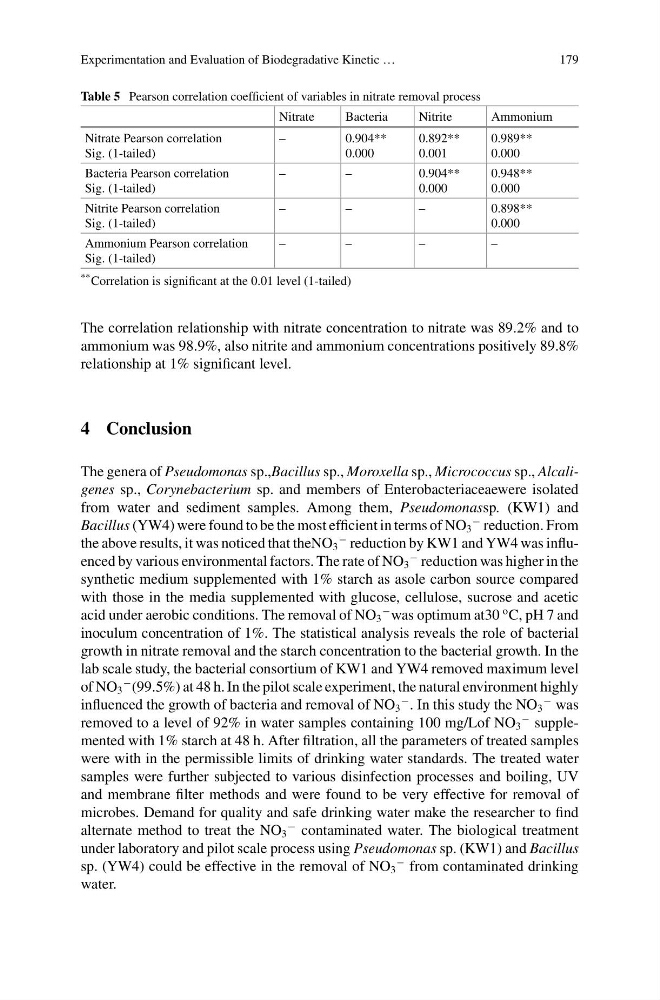
Table 5 Pearson correlation coefficient of variables in nitrate removal process
Nitrate
Bacteria
Nitrite
Ammonium
Nitrate Pearson correlation
Sig. (1-tailed)
–
0.904**
0.000
0.892**
0.001
0.989**
0.000
Bacteria Pearson correlation
Sig. (1-tailed)
–
–
0.904**
0.000
0.948**
0.000
Nitrite Pearson correlation
Sig. (1-tailed)
–
–
–
0.898**
0.000
Ammonium Pearson correlation
Sig. (1-tailed)
–
–
–
–
** Correlation is significant at the 0.01 level (1-tailed)
The correlation relationship with nitrate concentration to nitrate was 89.2% and to
ammonium was 98.9%, also nitrite and ammonium concentrations positively 89.8%
relationship at 1% significant level.
4 Conclusion
The genera of Pseudomonas sp.,Bacillus sp., Moroxella sp., Micrococcus sp., Alcaligenes sp., Corynebacterium sp. and members of Enterobacteriaceaewere isolated
from water and sediment samples. Among them, Pseudomonassp. (KW1) and
Bacillus (YW4) were found to be the most efficient in terms of NO 3
− reduction. From
the above results, it was noticed that theNO 3
− reduction by KW1 and YW4 was influenced by various environmental factors. The rate of NO 3
− reduction was higher in the
synthetic medium supplemented with 1% starch as asole carbon source compared
with those in the media supplemented with glucose, cellulose, sucrose and acetic
acid under aerobic conditions. The removal of NO 3
− was optimum at30
o C, pH 7 and
inoculum concentration of 1%. The statistical analysis reveals the role of bacterial
growth in nitrate removal and the starch concentration to the bacterial growth. In the
lab scale study, the bacterial consortium of KW1 and YW4 removed maximum level
of NO 3
− (99.5%) at 48 h. In the pilot scale experiment, the natural environment highly
influenced the growth of bacteria and removal of NO 3
− . In this study the NO 3
− was
removed to a level of 92% in water samples containing 100 mg/Lof NO 3
− supplemented with 1% starch at 48 h. After filtration, all the parameters of treated samples
were with in the permissible limits of drinking water standards. The treated water
samples were further subjected to various disinfection processes and boiling, UV
and membrane filter methods and were found to be very effective for removal of
microbes. Demand for quality and safe drinking water make the researcher to find
alternate method to treat the NO 3
− contaminated water. The biological treatment
under laboratory and pilot scale process using Pseudomonas sp. (KW1) and Bacillus
sp. (YW4) could be effective in the removal of NO 3
− from contaminated drinking
water.
179
Table 5 Pearson correlation coefficient of variables in nitrate removal process
Nitrate
Bacteria
Nitrite
Ammonium
Nitrate Pearson correlation
Sig. (1-tailed)
–
0.904**
0.000
0.892**
0.001
0.989**
0.000
Bacteria Pearson correlation
Sig. (1-tailed)
–
–
0.904**
0.000
0.948**
0.000
Nitrite Pearson correlation
Sig. (1-tailed)
–
–
–
0.898**
0.000
Ammonium Pearson correlation
Sig. (1-tailed)
–
–
–
–
** Correlation is significant at the 0.01 level (1-tailed)
The correlation relationship with nitrate concentration to nitrate was 89.2% and to
ammonium was 98.9%, also nitrite and ammonium concentrations positively 89.8%
relationship at 1% significant level.
4 Conclusion
The genera of Pseudomonas sp.,Bacillus sp., Moroxella sp., Micrococcus sp., Alcaligenes sp., Corynebacterium sp. and members of Enterobacteriaceaewere isolated
from water and sediment samples. Among them, Pseudomonassp. (KW1) and
Bacillus (YW4) were found to be the most efficient in terms of NO 3
− reduction. From
the above results, it was noticed that theNO 3
− reduction by KW1 and YW4 was influenced by various environmental factors. The rate of NO 3
− reduction was higher in the
synthetic medium supplemented with 1% starch as asole carbon source compared
with those in the media supplemented with glucose, cellulose, sucrose and acetic
acid under aerobic conditions. The removal of NO 3
− was optimum at30
o C, pH 7 and
inoculum concentration of 1%. The statistical analysis reveals the role of bacterial
growth in nitrate removal and the starch concentration to the bacterial growth. In the
lab scale study, the bacterial consortium of KW1 and YW4 removed maximum level
of NO 3
− (99.5%) at 48 h. In the pilot scale experiment, the natural environment highly
influenced the growth of bacteria and removal of NO 3
− . In this study the NO 3
− was
removed to a level of 92% in water samples containing 100 mg/Lof NO 3
− supplemented with 1% starch at 48 h. After filtration, all the parameters of treated samples
were with in the permissible limits of drinking water standards. The treated water
samples were further subjected to various disinfection processes and boiling, UV
and membrane filter methods and were found to be very effective for removal of
microbes. Demand for quality and safe drinking water make the researcher to find
alternate method to treat the NO 3
− contaminated water. The biological treatment
under laboratory and pilot scale process using Pseudomonas sp. (KW1) and Bacillus
sp. (YW4) could be effective in the removal of NO 3
− from contaminated drinking
water.