

178
R. Sundaram et al.
0
2
4
6
8
10
12
14
16
18
0
1 5
3 0
4 5
6 0
7 5
9 0
1 0 5
1 2 0
Colonies (x 10 1
CFU m/L)
Exposure time (min)
UV treatment
Chlorination (0.5 mg/l)
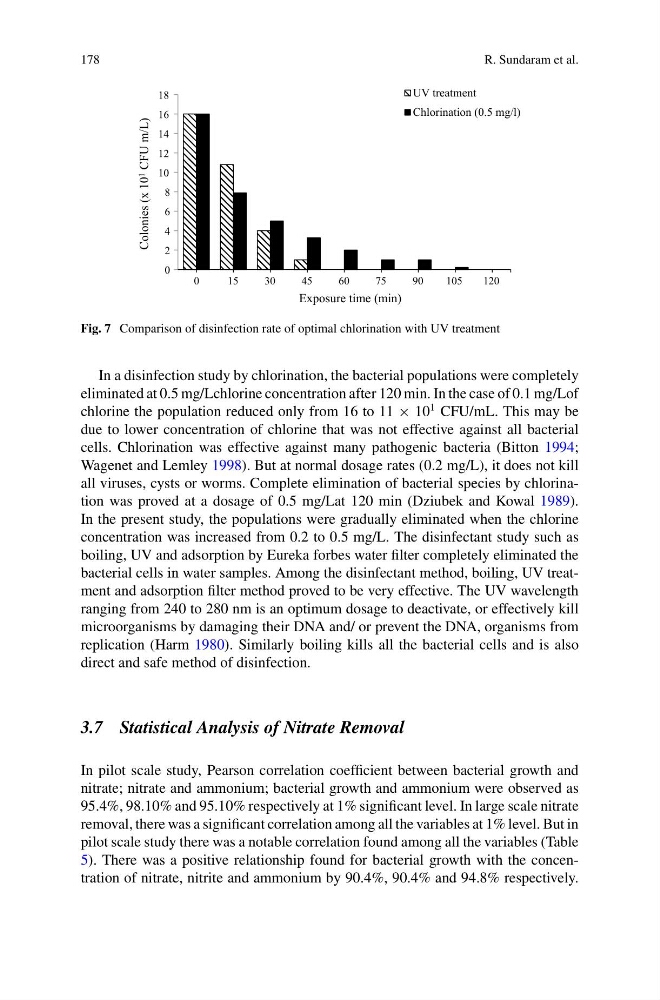
Fig. 7 Comparison of disinfection rate of optimal chlorination with UV treatment
In a disinfection study by chlorination, the bacterial populations were completely
eliminated at 0.5 mg/Lchlorine concentration after 120 min. In the case of 0.1 mg/Lof
chlorine the population reduced only from 16 to 11 × 10
1 CFU/mL. This may be
due to lower concentration of chlorine that was not effective against all bacterial
cells. Chlorination was effective against many pathogenic bacteria (Bitton 1994;
Wagenet and Lemley 1998). But at normal dosage rates (0.2 mg/L), it does not kill
all viruses, cysts or worms. Complete elimination of bacterial species by chlorination was proved at a dosage of 0.5 mg/Lat 120 min (Dziubek and Kowal 1989).
In the present study, the populations were gradually eliminated when the chlorine
concentration was increased from 0.2 to 0.5 mg/L. The disinfectant study such as
boiling, UV and adsorption by Eureka forbes water filter completely eliminated the
bacterial cells in water samples. Among the disinfectant method, boiling, UV treatment and adsorption filter method proved to be very effective. The UV wavelength
ranging from 240 to 280 nm is an optimum dosage to deactivate, or effectively kill
microorganisms by damaging their DNA and/ or prevent the DNA, organisms from
replication (Harm 1980). Similarly boiling kills all the bacterial cells and is also
direct and safe method of disinfection.
3.7 Statistical Analysis of Nitrate Removal
In pilot scale study, Pearson correlation coefficient between bacterial growth and
nitrate; nitrate and ammonium; bacterial growth and ammonium were observed as
95.4%, 98.10% and 95.10% respectively at 1% significant level. In large scale nitrate
removal, there was a significant correlation among all the variables at 1% level. But in
pilot scale study there was a notable correlation found among all the variables (Table
5). There was a positive relationship found for bacterial growth with the concentration of nitrate, nitrite and ammonium by 90.4%, 90.4% and 94.8% respectively.
R. Sundaram et al.
0
2
4
6
8
10
12
14
16
18
0
1 5
3 0
4 5
6 0
7 5
9 0
1 0 5
1 2 0
Colonies (x 10 1
CFU m/L)
Exposure time (min)
UV treatment
Chlorination (0.5 mg/l)
Fig. 7 Comparison of disinfection rate of optimal chlorination with UV treatment
In a disinfection study by chlorination, the bacterial populations were completely
eliminated at 0.5 mg/Lchlorine concentration after 120 min. In the case of 0.1 mg/Lof
chlorine the population reduced only from 16 to 11 × 10
1 CFU/mL. This may be
due to lower concentration of chlorine that was not effective against all bacterial
cells. Chlorination was effective against many pathogenic bacteria (Bitton 1994;
Wagenet and Lemley 1998). But at normal dosage rates (0.2 mg/L), it does not kill
all viruses, cysts or worms. Complete elimination of bacterial species by chlorination was proved at a dosage of 0.5 mg/Lat 120 min (Dziubek and Kowal 1989).
In the present study, the populations were gradually eliminated when the chlorine
concentration was increased from 0.2 to 0.5 mg/L. The disinfectant study such as
boiling, UV and adsorption by Eureka forbes water filter completely eliminated the
bacterial cells in water samples. Among the disinfectant method, boiling, UV treatment and adsorption filter method proved to be very effective. The UV wavelength
ranging from 240 to 280 nm is an optimum dosage to deactivate, or effectively kill
microorganisms by damaging their DNA and/ or prevent the DNA, organisms from
replication (Harm 1980). Similarly boiling kills all the bacterial cells and is also
direct and safe method of disinfection.
3.7 Statistical Analysis of Nitrate Removal
In pilot scale study, Pearson correlation coefficient between bacterial growth and
nitrate; nitrate and ammonium; bacterial growth and ammonium were observed as
95.4%, 98.10% and 95.10% respectively at 1% significant level. In large scale nitrate
removal, there was a significant correlation among all the variables at 1% level. But in
pilot scale study there was a notable correlation found among all the variables (Table
5). There was a positive relationship found for bacterial growth with the concentration of nitrate, nitrite and ammonium by 90.4%, 90.4% and 94.8% respectively.