

Experimentation and Evaluation of Biodegradative Kinetic …
177
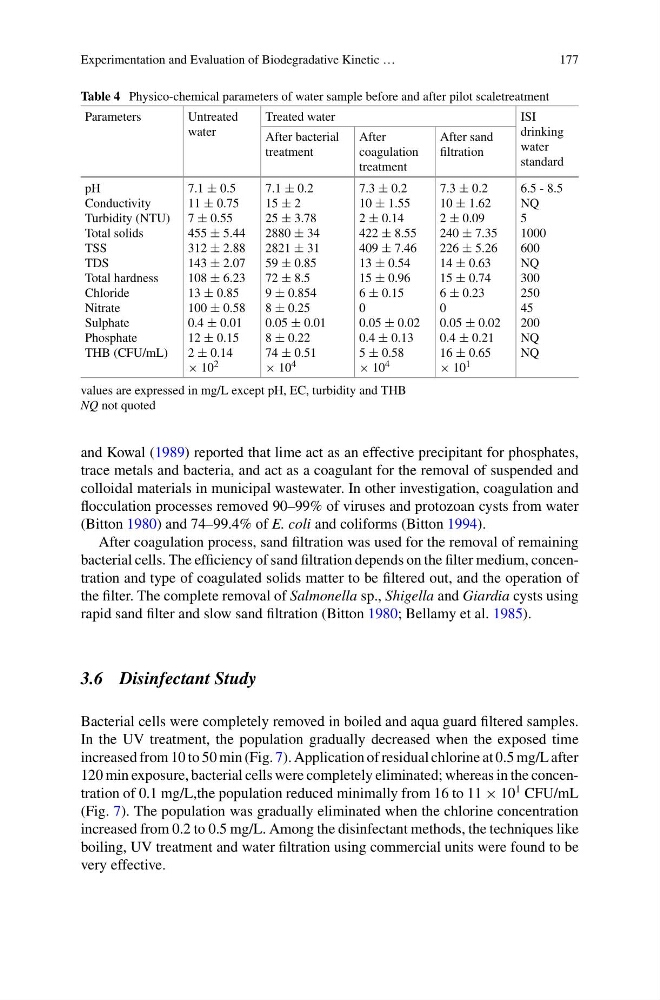
Table 4 Physico-chemical parameters of water sample before and after pilot scaletreatment
Parameters
Untreated
water
Treated water
ISI
drinking
water
standard
After bacterial
treatment
After
coagulation
treatment
After sand
filtration
pH
Conductivity
Turbidity (NTU)
Total solids
TSS
TDS
Total hardness
Chloride
Nitrate
Sulphate
Phosphate
THB (CFU/mL)
7.1 ± 0.5
11 ± 0.75
7 ± 0.55
455 ± 5.44
312 ± 2.88
143 ± 2.07
108 ± 6.23
13 ± 0.85
100 ± 0.58
0.4 ± 0.01
12 ± 0.15
2 ± 0.14
× 10 2
7.1 ± 0.2
15 ± 2
25 ± 3.78
2880 ± 34
2821 ± 31
59 ± 0.85
72 ± 8.5
9 ± 0.854
8 ± 0.25
0.05 ± 0.01
8 ± 0.22
74 ± 0.51
× 10 4
7.3 ± 0.2
10 ± 1.55
2 ± 0.14
422 ± 8.55
409 ± 7.46
13 ± 0.54
15 ± 0.96
6 ± 0.15
0
0.05 ± 0.02
0.4 ± 0.13
5 ± 0.58
× 10 4
7.3 ± 0.2
10 ± 1.62
2 ± 0.09
240 ± 7.35
226 ± 5.26
14 ± 0.63
15 ± 0.74
6 ± 0.23
0
0.05 ± 0.02
0.4 ± 0.21
16 ± 0.65
× 10 1
6.5 - 8.5
NQ
5
1000
600
NQ
300
250
45
200
NQ
NQ
values are expressed in mg/L except pH, EC, turbidity and THB
NQ not quoted
and Kowal (1989) reported that lime act as an effective precipitant for phosphates,
trace metals and bacteria, and act as a coagulant for the removal of suspended and
colloidal materials in municipal wastewater. In other investigation, coagulation and
flocculation processes removed 90–99% of viruses and protozoan cysts from water
(Bitton 1980) and 74–99.4% of E. coli and coliforms (Bitton 1994).
After coagulation process, sand filtration was used for the removal of remaining
bacterial cells. The efficiency of sand filtration depends on the filter medium, concentration and type of coagulated solids matter to be filtered out, and the operation of
the filter. The complete removal of Salmonella sp., Shigella and Giardia cysts using
rapid sand filter and slow sand filtration (Bitton 1980; Bellamy et al. 1985).
3.6 Disinfectant Study
Bacterial cells were completely removed in boiled and aqua guard filtered samples.
In the UV treatment, the population gradually decreased when the exposed time
increased from 10 to 50 min (Fig. 7). Application of residual chlorine at 0.5 mg/L after
120 min exposure, bacterial cells were completely eliminated; whereas in the concentration of 0.1 mg/L,the population reduced minimally from 16 to 11 × 10
1 CFU/mL
(Fig. 7). The population was gradually eliminated when the chlorine concentration
increased from 0.2 to 0.5 mg/L. Among the disinfectant methods, the techniques like
boiling, UV treatment and water filtration using commercial units were found to be
very effective.
177
Table 4 Physico-chemical parameters of water sample before and after pilot scaletreatment
Parameters
Untreated
water
Treated water
ISI
drinking
water
standard
After bacterial
treatment
After
coagulation
treatment
After sand
filtration
pH
Conductivity
Turbidity (NTU)
Total solids
TSS
TDS
Total hardness
Chloride
Nitrate
Sulphate
Phosphate
THB (CFU/mL)
7.1 ± 0.5
11 ± 0.75
7 ± 0.55
455 ± 5.44
312 ± 2.88
143 ± 2.07
108 ± 6.23
13 ± 0.85
100 ± 0.58
0.4 ± 0.01
12 ± 0.15
2 ± 0.14
× 10 2
7.1 ± 0.2
15 ± 2
25 ± 3.78
2880 ± 34
2821 ± 31
59 ± 0.85
72 ± 8.5
9 ± 0.854
8 ± 0.25
0.05 ± 0.01
8 ± 0.22
74 ± 0.51
× 10 4
7.3 ± 0.2
10 ± 1.55
2 ± 0.14
422 ± 8.55
409 ± 7.46
13 ± 0.54
15 ± 0.96
6 ± 0.15
0
0.05 ± 0.02
0.4 ± 0.13
5 ± 0.58
× 10 4
7.3 ± 0.2
10 ± 1.62
2 ± 0.09
240 ± 7.35
226 ± 5.26
14 ± 0.63
15 ± 0.74
6 ± 0.23
0
0.05 ± 0.02
0.4 ± 0.21
16 ± 0.65
× 10 1
6.5 - 8.5
NQ
5
1000
600
NQ
300
250
45
200
NQ
NQ
values are expressed in mg/L except pH, EC, turbidity and THB
NQ not quoted
and Kowal (1989) reported that lime act as an effective precipitant for phosphates,
trace metals and bacteria, and act as a coagulant for the removal of suspended and
colloidal materials in municipal wastewater. In other investigation, coagulation and
flocculation processes removed 90–99% of viruses and protozoan cysts from water
(Bitton 1980) and 74–99.4% of E. coli and coliforms (Bitton 1994).
After coagulation process, sand filtration was used for the removal of remaining
bacterial cells. The efficiency of sand filtration depends on the filter medium, concentration and type of coagulated solids matter to be filtered out, and the operation of
the filter. The complete removal of Salmonella sp., Shigella and Giardia cysts using
rapid sand filter and slow sand filtration (Bitton 1980; Bellamy et al. 1985).
3.6 Disinfectant Study
Bacterial cells were completely removed in boiled and aqua guard filtered samples.
In the UV treatment, the population gradually decreased when the exposed time
increased from 10 to 50 min (Fig. 7). Application of residual chlorine at 0.5 mg/L after
120 min exposure, bacterial cells were completely eliminated; whereas in the concentration of 0.1 mg/L,the population reduced minimally from 16 to 11 × 10
1 CFU/mL
(Fig. 7). The population was gradually eliminated when the chlorine concentration
increased from 0.2 to 0.5 mg/L. Among the disinfectant methods, the techniques like
boiling, UV treatment and water filtration using commercial units were found to be
very effective.