

486
E. Fröhlich et al.
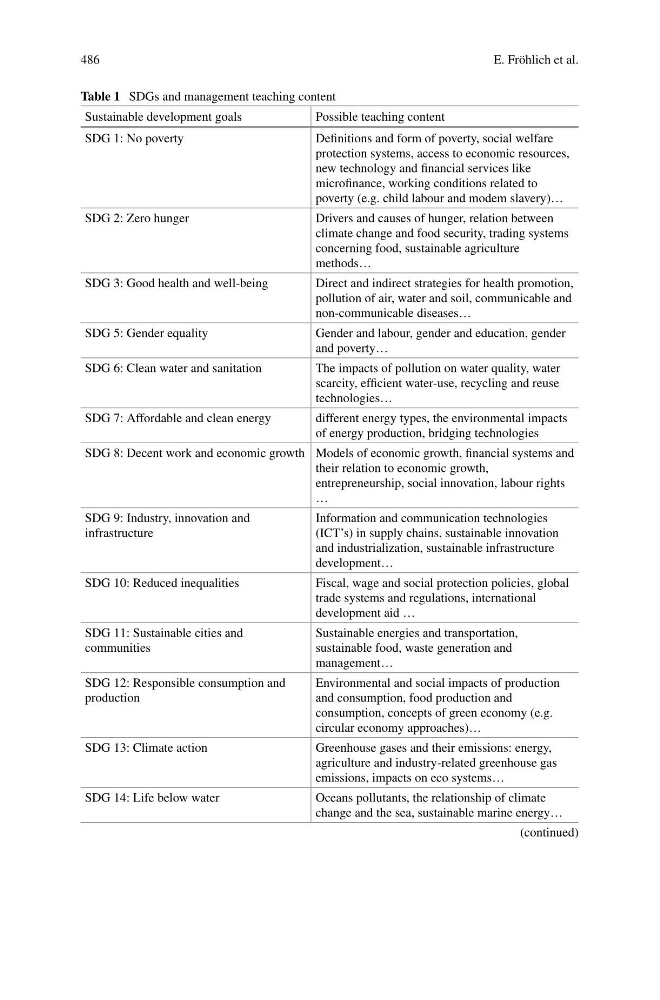
Table 1 SDGs and management teaching content
Sustainable development goals
Possible teaching content
SDG 1: No poverty
Definitions and form of poverty, social welfare
protection systems, access to economic resources,
new technology and financial services like
microfinance, working conditions related to
poverty (e.g. child labour and modem slavery)…
SDG 2: Zero hunger
Drivers and causes of hunger, relation between
climate change and food security, trading systems
concerning food, sustainable agriculture
methods…
SDG 3: Good health and well-being
Direct and indirect strategies for health promotion,
pollution of air, water and soil, communicable and
non-communicable diseases…
SDG 5: Gender equality
Gender and labour, gender and education, gender
and poverty…
SDG 6: Clean water and sanitation
The impacts of pollution on water quality, water
scarcity, efficient water-use, recycling and reuse
technologies…
SDG 7: Affordable and clean energy
different energy types, the environmental impacts
of energy production, bridging technologies
SDG 8: Decent work and economic growth Models of economic growth, financial systems and
their relation to economic growth,
entrepreneurship, social innovation, labour rights
…
SDG 9: Industry, innovation and
infrastructure
Information and communication technologies
(ICT’s) in supply chains, sustainable innovation
and industrialization, sustainable infrastructure
development…
SDG 10: Reduced inequalities
Fiscal, wage and social protection policies, global
trade systems and regulations, international
development aid …
SDG 11: Sustainable cities and
communities
Sustainable energies and transportation,
sustainable food, waste generation and
management…
SDG 12: Responsible consumption and
production
Environmental and social impacts of production
and consumption, food production and
consumption, concepts of green economy (e.g.
circular economy approaches)…
SDG 13: Climate action
Greenhouse gases and their emissions: energy,
agriculture and industry-related greenhouse gas
emissions, impacts on eco systems…
SDG 14: Life below water
Oceans pollutants, the relationship of climate
change and the sea, sustainable marine energy…
(continued)
E. Fröhlich et al.
Table 1 SDGs and management teaching content
Sustainable development goals
Possible teaching content
SDG 1: No poverty
Definitions and form of poverty, social welfare
protection systems, access to economic resources,
new technology and financial services like
microfinance, working conditions related to
poverty (e.g. child labour and modem slavery)…
SDG 2: Zero hunger
Drivers and causes of hunger, relation between
climate change and food security, trading systems
concerning food, sustainable agriculture
methods…
SDG 3: Good health and well-being
Direct and indirect strategies for health promotion,
pollution of air, water and soil, communicable and
non-communicable diseases…
SDG 5: Gender equality
Gender and labour, gender and education, gender
and poverty…
SDG 6: Clean water and sanitation
The impacts of pollution on water quality, water
scarcity, efficient water-use, recycling and reuse
technologies…
SDG 7: Affordable and clean energy
different energy types, the environmental impacts
of energy production, bridging technologies
SDG 8: Decent work and economic growth Models of economic growth, financial systems and
their relation to economic growth,
entrepreneurship, social innovation, labour rights
…
SDG 9: Industry, innovation and
infrastructure
Information and communication technologies
(ICT’s) in supply chains, sustainable innovation
and industrialization, sustainable infrastructure
development…
SDG 10: Reduced inequalities
Fiscal, wage and social protection policies, global
trade systems and regulations, international
development aid …
SDG 11: Sustainable cities and
communities
Sustainable energies and transportation,
sustainable food, waste generation and
management…
SDG 12: Responsible consumption and
production
Environmental and social impacts of production
and consumption, food production and
consumption, concepts of green economy (e.g.
circular economy approaches)…
SDG 13: Climate action
Greenhouse gases and their emissions: energy,
agriculture and industry-related greenhouse gas
emissions, impacts on eco systems…
SDG 14: Life below water
Oceans pollutants, the relationship of climate
change and the sea, sustainable marine energy…
(continued)