

The “Sustainable Development Goals (SDG) Teaching Map” …
485
Collecting and Analysing
Information
Final Result
Analysis of
CBS
Curriculum
Focus
Groups
with
experts
Responsible
Management
Education
Learning
and
Teaching
SDGs
Teaching Map:
SDGs which can
be integrated in
Business School
Curricula
Literature Review
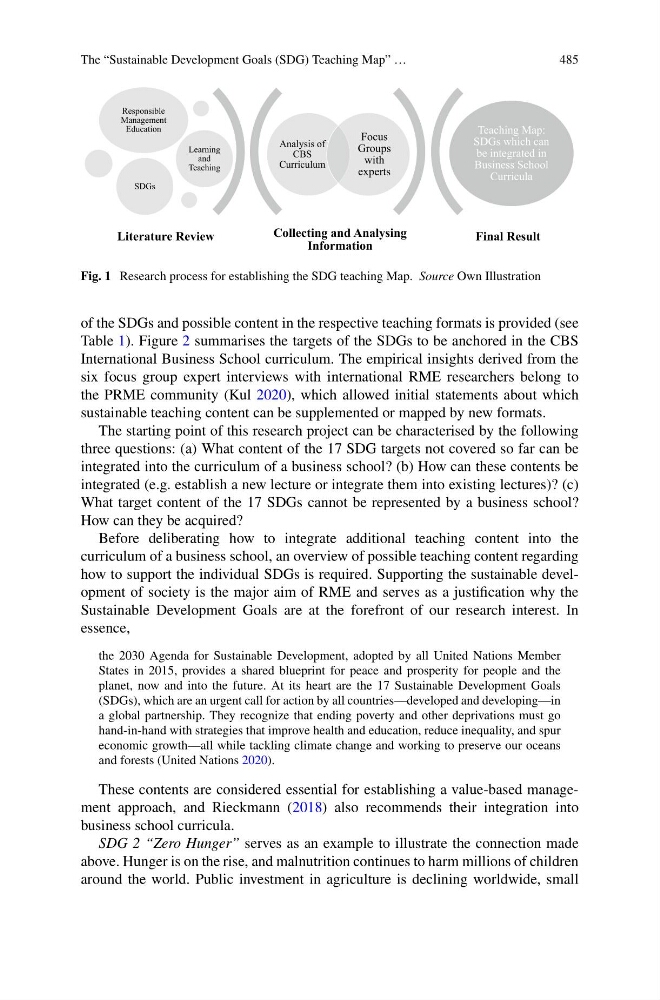
Fig. 1 Research process for establishing the SDG teaching Map. Source Own Illustration
of the SDGs and possible content in the respective teaching formats is provided (see
Table 1). Figure 2 summarises the targets of the SDGs to be anchored in the CBS
International Business School curriculum. The empirical insights derived from the
six focus group expert interviews with international RME researchers belong to
the PRME community (Kul 2020), which allowed initial statements about which
sustainable teaching content can be supplemented or mapped by new formats.
The starting point of this research project can be characterised by the following
three questions: (a) What content of the 17 SDG targets not covered so far can be
integrated into the curriculum of a business school? (b) How can these contents be
integrated (e.g. establish a new lecture or integrate them into existing lectures)? (c)
What target content of the 17 SDGs cannot be represented by a business school?
How can they be acquired?
Before deliberating how to integrate additional teaching content into the
curriculum of a business school, an overview of possible teaching content regarding
how to support the individual SDGs is required. Supporting the sustainable development of society is the major aim of RME and serves as a justification why the
Sustainable Development Goals are at the forefront of our research interest. In
essence,
the 2030 Agenda for Sustainable Development, adopted by all United Nations Member
States in 2015, provides a shared blueprint for peace and prosperity for people and the
planet, now and into the future. At its heart are the 17 Sustainable Development Goals
(SDGs), which are an urgent call for action by all countries—developed and developing—in
a global partnership. They recognize that ending poverty and other deprivations must go
hand-in-hand with strategies that improve health and education, reduce inequality, and spur
economic growth—all while tackling climate change and working to preserve our oceans
and forests (United Nations 2020).
These contents are considered essential for establishing a value-based management approach, and Rieckmann (2018) also recommends their integration into
business school curricula.
SDG 2 “Zero Hunger” serves as an example to illustrate the connection made
above. Hunger is on the rise, and malnutrition continues to harm millions of children
around the world. Public investment in agriculture is declining worldwide, small
485
Collecting and Analysing
Information
Final Result
Analysis of
CBS
Curriculum
Focus
Groups
with
experts
Responsible
Management
Education
Learning
and
Teaching
SDGs
Teaching Map:
SDGs which can
be integrated in
Business School
Curricula
Literature Review
Fig. 1 Research process for establishing the SDG teaching Map. Source Own Illustration
of the SDGs and possible content in the respective teaching formats is provided (see
Table 1). Figure 2 summarises the targets of the SDGs to be anchored in the CBS
International Business School curriculum. The empirical insights derived from the
six focus group expert interviews with international RME researchers belong to
the PRME community (Kul 2020), which allowed initial statements about which
sustainable teaching content can be supplemented or mapped by new formats.
The starting point of this research project can be characterised by the following
three questions: (a) What content of the 17 SDG targets not covered so far can be
integrated into the curriculum of a business school? (b) How can these contents be
integrated (e.g. establish a new lecture or integrate them into existing lectures)? (c)
What target content of the 17 SDGs cannot be represented by a business school?
How can they be acquired?
Before deliberating how to integrate additional teaching content into the
curriculum of a business school, an overview of possible teaching content regarding
how to support the individual SDGs is required. Supporting the sustainable development of society is the major aim of RME and serves as a justification why the
Sustainable Development Goals are at the forefront of our research interest. In
essence,
the 2030 Agenda for Sustainable Development, adopted by all United Nations Member
States in 2015, provides a shared blueprint for peace and prosperity for people and the
planet, now and into the future. At its heart are the 17 Sustainable Development Goals
(SDGs), which are an urgent call for action by all countries—developed and developing—in
a global partnership. They recognize that ending poverty and other deprivations must go
hand-in-hand with strategies that improve health and education, reduce inequality, and spur
economic growth—all while tackling climate change and working to preserve our oceans
and forests (United Nations 2020).
These contents are considered essential for establishing a value-based management approach, and Rieckmann (2018) also recommends their integration into
business school curricula.
SDG 2 “Zero Hunger” serves as an example to illustrate the connection made
above. Hunger is on the rise, and malnutrition continues to harm millions of children
around the world. Public investment in agriculture is declining worldwide, small