

The “Sustainable Development Goals (SDG) Teaching Map” …
487
Table 1 (continued)
Sustainable development goals
Possible teaching content
SDG 15: Life on land
Various threats to biodiversity, the extinction of
species, desertification and deforestation, climate
change and biodiversity…
SDG 16: Peace, justice and strong
institution
Climate justice, child labour, corruption…
SDG 17: Partnership for the goals
Global systems and power structure, global trading
systems, global governance and policies,
international development aid…
Source Own Illustration based on UNESCO (2017)
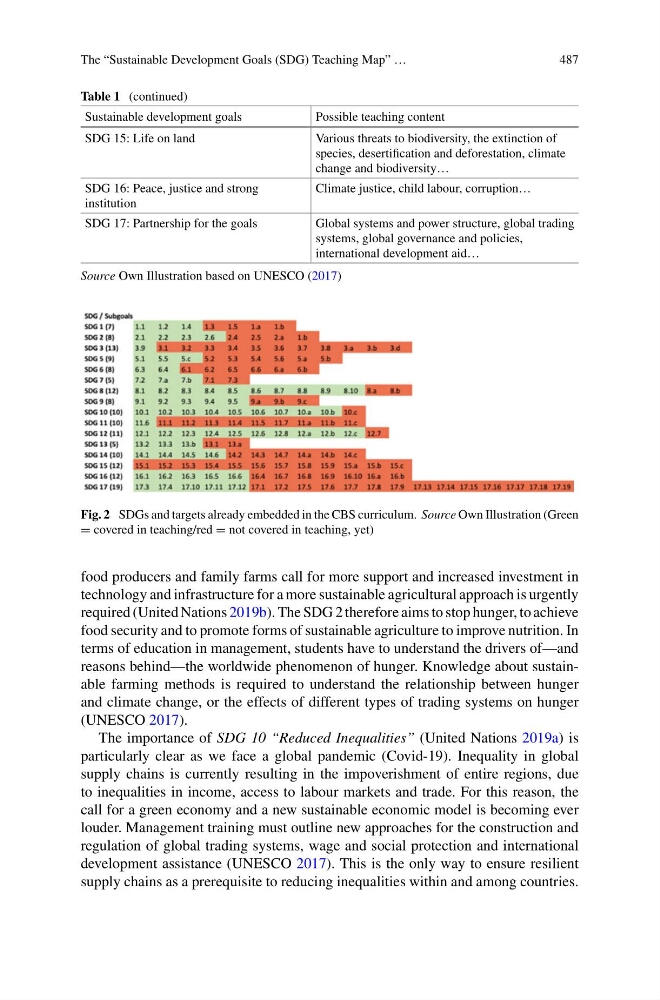
Fig. 2 SDGs and targets already embedded in the CBS curriculum. Source Own Illustration (Green
= covered in teaching/red = not covered in teaching, yet)
food producers and family farms call for more support and increased investment in
technology and infrastructure for a more sustainable agricultural approach is urgently
required (United Nations 2019b). The SDG 2 therefore aims to stop hunger, to achieve
food security and to promote forms of sustainable agriculture to improve nutrition. In
terms of education in management, students have to understand the drivers of—and
reasons behind—the worldwide phenomenon of hunger. Knowledge about sustainable farming methods is required to understand the relationship between hunger
and climate change, or the effects of different types of trading systems on hunger
(UNESCO 2017).
The importance of SDG 10 “Reduced Inequalities” (United Nations 2019a) is
particularly clear as we face a global pandemic (Covid-19). Inequality in global
supply chains is currently resulting in the impoverishment of entire regions, due
to inequalities in income, access to labour markets and trade. For this reason, the
call for a green economy and a new sustainable economic model is becoming ever
louder. Management training must outline new approaches for the construction and
regulation of global trading systems, wage and social protection and international
development assistance (UNESCO 2017). This is the only way to ensure resilient
supply chains as a prerequisite to reducing inequalities within and among countries.
487
Table 1 (continued)
Sustainable development goals
Possible teaching content
SDG 15: Life on land
Various threats to biodiversity, the extinction of
species, desertification and deforestation, climate
change and biodiversity…
SDG 16: Peace, justice and strong
institution
Climate justice, child labour, corruption…
SDG 17: Partnership for the goals
Global systems and power structure, global trading
systems, global governance and policies,
international development aid…
Source Own Illustration based on UNESCO (2017)
Fig. 2 SDGs and targets already embedded in the CBS curriculum. Source Own Illustration (Green
= covered in teaching/red = not covered in teaching, yet)
food producers and family farms call for more support and increased investment in
technology and infrastructure for a more sustainable agricultural approach is urgently
required (United Nations 2019b). The SDG 2 therefore aims to stop hunger, to achieve
food security and to promote forms of sustainable agriculture to improve nutrition. In
terms of education in management, students have to understand the drivers of—and
reasons behind—the worldwide phenomenon of hunger. Knowledge about sustainable farming methods is required to understand the relationship between hunger
and climate change, or the effects of different types of trading systems on hunger
(UNESCO 2017).
The importance of SDG 10 “Reduced Inequalities” (United Nations 2019a) is
particularly clear as we face a global pandemic (Covid-19). Inequality in global
supply chains is currently resulting in the impoverishment of entire regions, due
to inequalities in income, access to labour markets and trade. For this reason, the
call for a green economy and a new sustainable economic model is becoming ever
louder. Management training must outline new approaches for the construction and
regulation of global trading systems, wage and social protection and international
development assistance (UNESCO 2017). This is the only way to ensure resilient
supply chains as a prerequisite to reducing inequalities within and among countries.