

18 Perfluorooctanesulfonate (PFOS), Its Occurrence, Fate …
409
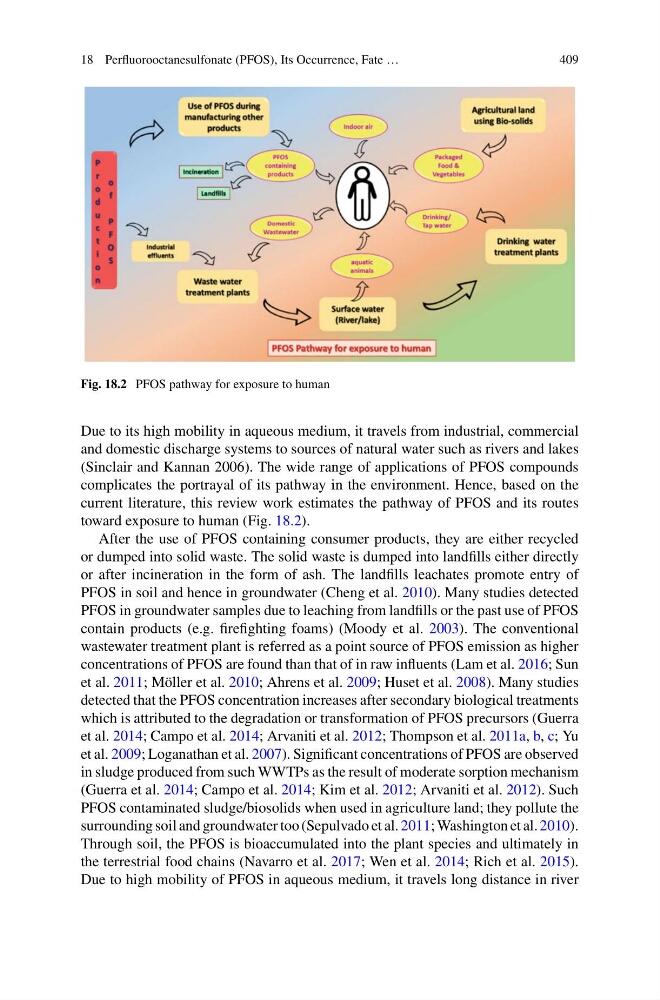
Fig. 18.2 PFOS pathway for exposure to human
Due to its high mobility in aqueous medium, it travels from industrial, commercial
and domestic discharge systems to sources of natural water such as rivers and lakes
(Sinclair and Kannan 2006). The wide range of applications of PFOS compounds
complicates the portrayal of its pathway in the environment. Hence, based on the
current literature, this review work estimates the pathway of PFOS and its routes
toward exposure to human (Fig. 18.2).
After the use of PFOS containing consumer products, they are either recycled
or dumped into solid waste. The solid waste is dumped into landfills either directly
or after incineration in the form of ash. The landfills leachates promote entry of
PFOS in soil and hence in groundwater (Cheng et al. 2010). Many studies detected
PFOS in groundwater samples due to leaching from landfills or the past use of PFOS
contain products (e.g. firefighting foams) (Moody et al. 2003). The conventional
wastewater treatment plant is referred as a point source of PFOS emission as higher
concentrations of PFOS are found than that of in raw influents (Lam et al. 2016; Sun
et al. 2011; Möller et al. 2010; Ahrens et al. 2009; Huset et al. 2008). Many studies
detected that the PFOS concentration increases after secondary biological treatments
which is attributed to the degradation or transformation of PFOS precursors (Guerra
et al. 2014; Campo et al. 2014; Arvaniti et al. 2012; Thompson et al. 2011a, b, c; Yu
et al. 2009; Loganathan et al. 2007). Significant concentrations of PFOS are observed
in sludge produced from such WWTPs as the result of moderate sorption mechanism
(Guerra et al. 2014; Campo et al. 2014; Kim et al. 2012; Arvaniti et al. 2012). Such
PFOS contaminated sludge/biosolids when used in agriculture land; they pollute the
surrounding soil and groundwater too (Sepulvado et al. 2011; Washington et al. 2010).
Through soil, the PFOS is bioaccumulated into the plant species and ultimately in
the terrestrial food chains (Navarro et al. 2017; Wen et al. 2014; Rich et al. 2015).
Due to high mobility of PFOS in aqueous medium, it travels long distance in river
409
Fig. 18.2 PFOS pathway for exposure to human
Due to its high mobility in aqueous medium, it travels from industrial, commercial
and domestic discharge systems to sources of natural water such as rivers and lakes
(Sinclair and Kannan 2006). The wide range of applications of PFOS compounds
complicates the portrayal of its pathway in the environment. Hence, based on the
current literature, this review work estimates the pathway of PFOS and its routes
toward exposure to human (Fig. 18.2).
After the use of PFOS containing consumer products, they are either recycled
or dumped into solid waste. The solid waste is dumped into landfills either directly
or after incineration in the form of ash. The landfills leachates promote entry of
PFOS in soil and hence in groundwater (Cheng et al. 2010). Many studies detected
PFOS in groundwater samples due to leaching from landfills or the past use of PFOS
contain products (e.g. firefighting foams) (Moody et al. 2003). The conventional
wastewater treatment plant is referred as a point source of PFOS emission as higher
concentrations of PFOS are found than that of in raw influents (Lam et al. 2016; Sun
et al. 2011; Möller et al. 2010; Ahrens et al. 2009; Huset et al. 2008). Many studies
detected that the PFOS concentration increases after secondary biological treatments
which is attributed to the degradation or transformation of PFOS precursors (Guerra
et al. 2014; Campo et al. 2014; Arvaniti et al. 2012; Thompson et al. 2011a, b, c; Yu
et al. 2009; Loganathan et al. 2007). Significant concentrations of PFOS are observed
in sludge produced from such WWTPs as the result of moderate sorption mechanism
(Guerra et al. 2014; Campo et al. 2014; Kim et al. 2012; Arvaniti et al. 2012). Such
PFOS contaminated sludge/biosolids when used in agriculture land; they pollute the
surrounding soil and groundwater too (Sepulvado et al. 2011; Washington et al. 2010).
Through soil, the PFOS is bioaccumulated into the plant species and ultimately in
the terrestrial food chains (Navarro et al. 2017; Wen et al. 2014; Rich et al. 2015).
Due to high mobility of PFOS in aqueous medium, it travels long distance in river