

388
A. Srivastava
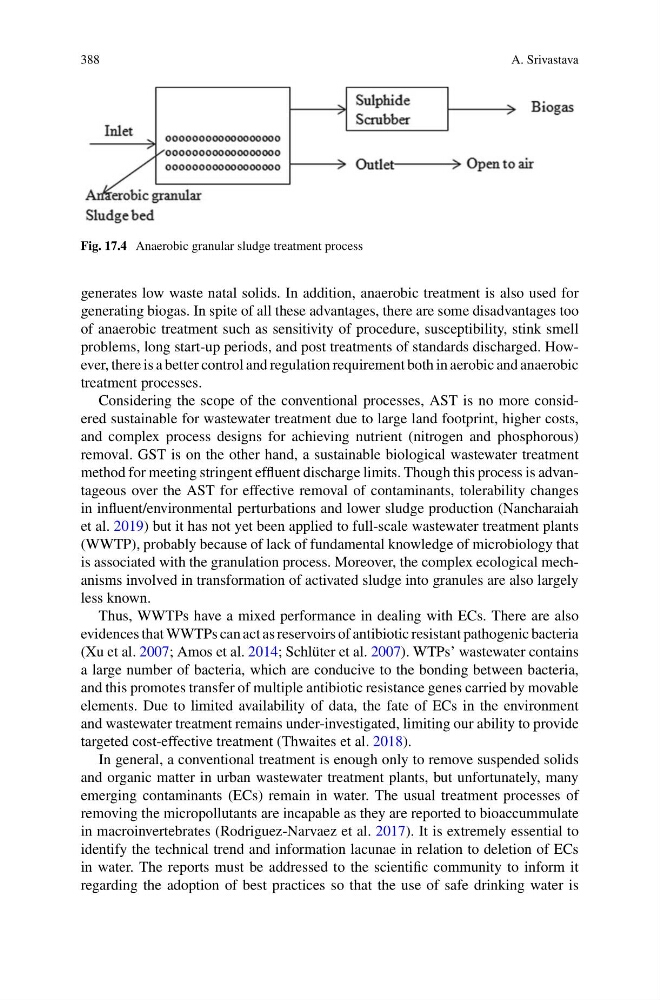
Fig. 17.4 Anaerobic granular sludge treatment process
generates low waste natal solids. In addition, anaerobic treatment is also used for
generating biogas. In spite of all these advantages, there are some disadvantages too
of anaerobic treatment such as sensitivity of procedure, susceptibility, stink smell
problems, long start-up periods, and post treatments of standards discharged. However, there is a better control and regulation requirement both in aerobic and anaerobic
treatment processes.
Considering the scope of the conventional processes, AST is no more considered sustainable for wastewater treatment due to large land footprint, higher costs,
and complex process designs for achieving nutrient (nitrogen and phosphorous)
removal. GST is on the other hand, a sustainable biological wastewater treatment
method for meeting stringent effluent discharge limits. Though this process is advantageous over the AST for effective removal of contaminants, tolerability changes
in influent/environmental perturbations and lower sludge production (Nancharaiah
et al. 2019) but it has not yet been applied to full-scale wastewater treatment plants
(WWTP), probably because of lack of fundamental knowledge of microbiology that
is associated with the granulation process. Moreover, the complex ecological mechanisms involved in transformation of activated sludge into granules are also largely
less known.
Thus, WWTPs have a mixed performance in dealing with ECs. There are also
evidences that WWTPs can act as reservoirs of antibiotic resistant pathogenic bacteria
(Xu et al. 2007; Amos et al. 2014; Schlüter et al. 2007). WTPs’ wastewater contains
a large number of bacteria, which are conducive to the bonding between bacteria,
and this promotes transfer of multiple antibiotic resistance genes carried by movable
elements. Due to limited availability of data, the fate of ECs in the environment
and wastewater treatment remains under-investigated, limiting our ability to provide
targeted cost-effective treatment (Thwaites et al. 2018).
In general, a conventional treatment is enough only to remove suspended solids
and organic matter in urban wastewater treatment plants, but unfortunately, many
emerging contaminants (ECs) remain in water. The usual treatment processes of
removing the micropollutants are incapable as they are reported to bioaccummulate
in macroinvertebrates (Rodriguez-Narvaez et al. 2017). It is extremely essential to
identify the technical trend and information lacunae in relation to deletion of ECs
in water. The reports must be addressed to the scientific community to inform it
regarding the adoption of best practices so that the use of safe drinking water is
A. Srivastava
Fig. 17.4 Anaerobic granular sludge treatment process
generates low waste natal solids. In addition, anaerobic treatment is also used for
generating biogas. In spite of all these advantages, there are some disadvantages too
of anaerobic treatment such as sensitivity of procedure, susceptibility, stink smell
problems, long start-up periods, and post treatments of standards discharged. However, there is a better control and regulation requirement both in aerobic and anaerobic
treatment processes.
Considering the scope of the conventional processes, AST is no more considered sustainable for wastewater treatment due to large land footprint, higher costs,
and complex process designs for achieving nutrient (nitrogen and phosphorous)
removal. GST is on the other hand, a sustainable biological wastewater treatment
method for meeting stringent effluent discharge limits. Though this process is advantageous over the AST for effective removal of contaminants, tolerability changes
in influent/environmental perturbations and lower sludge production (Nancharaiah
et al. 2019) but it has not yet been applied to full-scale wastewater treatment plants
(WWTP), probably because of lack of fundamental knowledge of microbiology that
is associated with the granulation process. Moreover, the complex ecological mechanisms involved in transformation of activated sludge into granules are also largely
less known.
Thus, WWTPs have a mixed performance in dealing with ECs. There are also
evidences that WWTPs can act as reservoirs of antibiotic resistant pathogenic bacteria
(Xu et al. 2007; Amos et al. 2014; Schlüter et al. 2007). WTPs’ wastewater contains
a large number of bacteria, which are conducive to the bonding between bacteria,
and this promotes transfer of multiple antibiotic resistance genes carried by movable
elements. Due to limited availability of data, the fate of ECs in the environment
and wastewater treatment remains under-investigated, limiting our ability to provide
targeted cost-effective treatment (Thwaites et al. 2018).
In general, a conventional treatment is enough only to remove suspended solids
and organic matter in urban wastewater treatment plants, but unfortunately, many
emerging contaminants (ECs) remain in water. The usual treatment processes of
removing the micropollutants are incapable as they are reported to bioaccummulate
in macroinvertebrates (Rodriguez-Narvaez et al. 2017). It is extremely essential to
identify the technical trend and information lacunae in relation to deletion of ECs
in water. The reports must be addressed to the scientific community to inform it
regarding the adoption of best practices so that the use of safe drinking water is