

13 Reigning Technologies and Their Challenges for Antibiotics …
305
Removal
Techniques
Ex-situ techniques
In-situ techniques
Advanced
Conventional
Sorption
Membrane
Filtration
Coagulation
Flocculation
Sedimentation
Biological
treatments
Photocatalysis
Ozonation
Photo-Fenton
Fenton
Microfiltration
Ultrafiltration
Nano-filtration
Reverse Osmosis
Constructed
Wetlands
Integrated
Constructed
Wetlands
Absorption
Adsorption
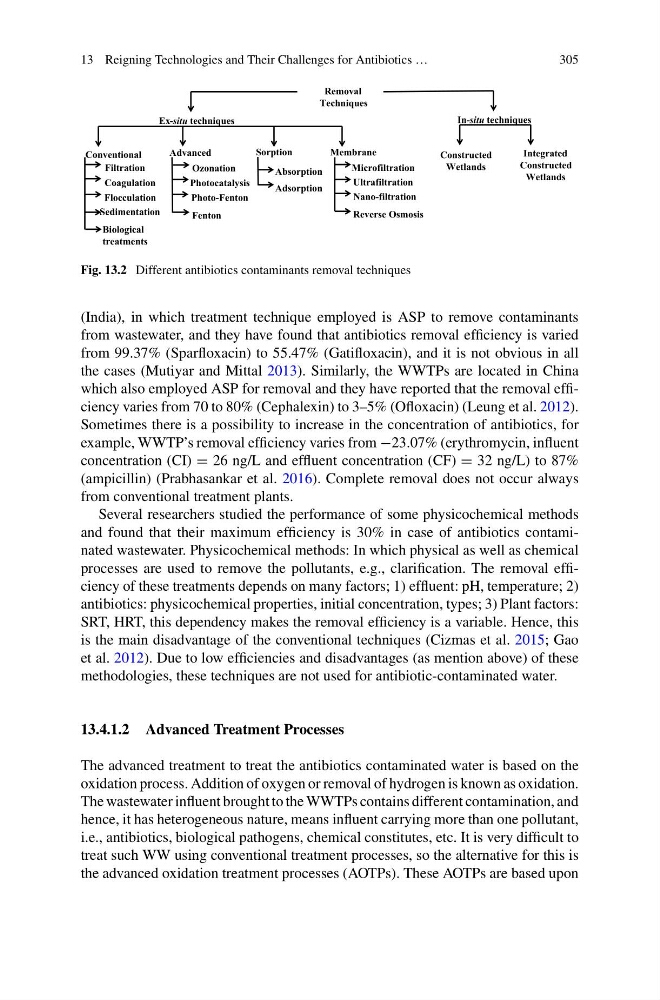
Fig. 13.2 Different antibiotics contaminants removal techniques
(India), in which treatment technique employed is ASP to remove contaminants
from wastewater, and they have found that antibiotics removal efficiency is varied
from 99.37% (Sparfloxacin) to 55.47% (Gatifloxacin), and it is not obvious in all
the cases (Mutiyar and Mittal 2013). Similarly, the WWTPs are located in China
which also employed ASP for removal and they have reported that the removal efficiency varies from 70 to 80% (Cephalexin) to 3–5% (Ofloxacin) (Leung et al. 2012).
Sometimes there is a possibility to increase in the concentration of antibiotics, for
example, WWTP’s removal efficiency varies from −23.07% (erythromycin, influent
concentration (CI) = 26 ng/L and effluent concentration (CF) = 32 ng/L) to 87%
(ampicillin) (Prabhasankar et al. 2016). Complete removal does not occur always
from conventional treatment plants.
Several researchers studied the performance of some physicochemical methods
and found that their maximum efficiency is 30% in case of antibiotics contaminated wastewater. Physicochemical methods: In which physical as well as chemical
processes are used to remove the pollutants, e.g., clarification. The removal efficiency of these treatments depends on many factors; 1) effluent: pH, temperature; 2)
antibiotics: physicochemical properties, initial concentration, types; 3) Plant factors:
SRT, HRT, this dependency makes the removal efficiency is a variable. Hence, this
is the main disadvantage of the conventional techniques (Cizmas et al. 2015; Gao
et al. 2012). Due to low efficiencies and disadvantages (as mention above) of these
methodologies, these techniques are not used for antibiotic-contaminated water.
13.4.1.2 Advanced Treatment Processes
The advanced treatment to treat the antibiotics contaminated water is based on the
oxidation process. Addition of oxygen or removal of hydrogen is known as oxidation.
The wastewater influent brought to the WWTPs contains different contamination, and
hence, it has heterogeneous nature, means influent carrying more than one pollutant,
i.e., antibiotics, biological pathogens, chemical constitutes, etc. It is very difficult to
treat such WW using conventional treatment processes, so the alternative for this is
the advanced oxidation treatment processes (AOTPs). These AOTPs are based upon
305
Removal
Techniques
Ex-situ techniques
In-situ techniques
Advanced
Conventional
Sorption
Membrane
Filtration
Coagulation
Flocculation
Sedimentation
Biological
treatments
Photocatalysis
Ozonation
Photo-Fenton
Fenton
Microfiltration
Ultrafiltration
Nano-filtration
Reverse Osmosis
Constructed
Wetlands
Integrated
Constructed
Wetlands
Absorption
Adsorption
Fig. 13.2 Different antibiotics contaminants removal techniques
(India), in which treatment technique employed is ASP to remove contaminants
from wastewater, and they have found that antibiotics removal efficiency is varied
from 99.37% (Sparfloxacin) to 55.47% (Gatifloxacin), and it is not obvious in all
the cases (Mutiyar and Mittal 2013). Similarly, the WWTPs are located in China
which also employed ASP for removal and they have reported that the removal efficiency varies from 70 to 80% (Cephalexin) to 3–5% (Ofloxacin) (Leung et al. 2012).
Sometimes there is a possibility to increase in the concentration of antibiotics, for
example, WWTP’s removal efficiency varies from −23.07% (erythromycin, influent
concentration (CI) = 26 ng/L and effluent concentration (CF) = 32 ng/L) to 87%
(ampicillin) (Prabhasankar et al. 2016). Complete removal does not occur always
from conventional treatment plants.
Several researchers studied the performance of some physicochemical methods
and found that their maximum efficiency is 30% in case of antibiotics contaminated wastewater. Physicochemical methods: In which physical as well as chemical
processes are used to remove the pollutants, e.g., clarification. The removal efficiency of these treatments depends on many factors; 1) effluent: pH, temperature; 2)
antibiotics: physicochemical properties, initial concentration, types; 3) Plant factors:
SRT, HRT, this dependency makes the removal efficiency is a variable. Hence, this
is the main disadvantage of the conventional techniques (Cizmas et al. 2015; Gao
et al. 2012). Due to low efficiencies and disadvantages (as mention above) of these
methodologies, these techniques are not used for antibiotic-contaminated water.
13.4.1.2 Advanced Treatment Processes
The advanced treatment to treat the antibiotics contaminated water is based on the
oxidation process. Addition of oxygen or removal of hydrogen is known as oxidation.
The wastewater influent brought to the WWTPs contains different contamination, and
hence, it has heterogeneous nature, means influent carrying more than one pollutant,
i.e., antibiotics, biological pathogens, chemical constitutes, etc. It is very difficult to
treat such WW using conventional treatment processes, so the alternative for this is
the advanced oxidation treatment processes (AOTPs). These AOTPs are based upon