

8 Reappraisal of Permeable Reactive Barrier as a Sustainable …
195
Sulphate
Reducing
Bacteria
(SRBs)
KH 2 PO 4
(0.5 g/L)
NH 4 Cl
(1 g/L)
Na 2 SO 4
(1 g/L)
CaCl 2 .6H 2 O
(0.06 g/L)
MgSO 4 .7H 2 O
(0.004 g/L)
Na 3 C 6 H 5 O 7
(0.3 g/L)
C 3 H 5 NaO 3
(6 g/L)
Yeast Extract
(1 g/L)
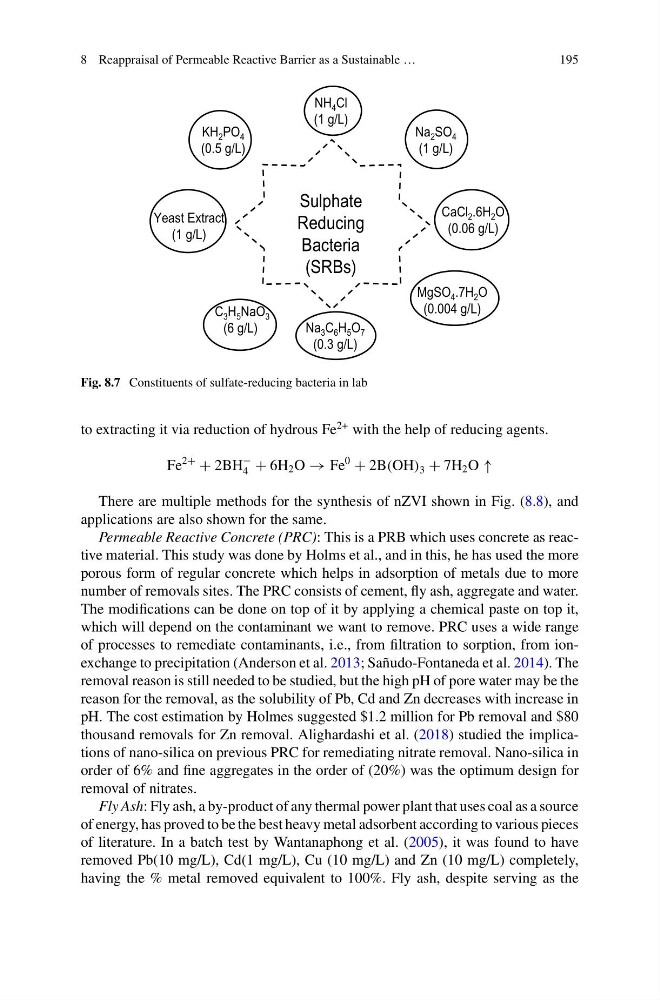
Fig. 8.7 Constituents of sulfate-reducing bacteria in lab
to extracting it via reduction of hydrous Fe
2+ with the help of reducing agents.
Fe
2+
+ 2BH
−
4 + 6H 2 O → Fe
0
+ 2B(OH) 3 + 7H 2 O ↑
There are multiple methods for the synthesis of nZVI shown in Fig. (8.8), and
applications are also shown for the same.
Permeable Reactive Concrete (PRC): This is a PRB which uses concrete as reactive material. This study was done by Holms et al., and in this, he has used the more
porous form of regular concrete which helps in adsorption of metals due to more
number of removals sites. The PRC consists of cement, fly ash, aggregate and water.
The modifications can be done on top of it by applying a chemical paste on top it,
which will depend on the contaminant we want to remove. PRC uses a wide range
of processes to remediate contaminants, i.e., from filtration to sorption, from ionexchange to precipitation (Anderson et al. 2013; Sañudo-Fontaneda et al. 2014). The
removal reason is still needed to be studied, but the high pH of pore water may be the
reason for the removal, as the solubility of Pb, Cd and Zn decreases with increase in
pH. The cost estimation by Holmes suggested $1.2 million for Pb removal and $80
thousand removals for Zn removal. Alighardashi et al. (2018) studied the implications of nano-silica on previous PRC for remediating nitrate removal. Nano-silica in
order of 6% and fine aggregates in the order of (20%) was the optimum design for
removal of nitrates.
Fly Ash: Fly ash, a by-product of any thermal power plant that uses coal as a source
of energy, has proved to be the best heavy metal adsorbent according to various pieces
of literature. In a batch test by Wantanaphong et al. (2005), it was found to have
removed Pb(10 mg/L), Cd(1 mg/L), Cu (10 mg/L) and Zn (10 mg/L) completely,
having the % metal removed equivalent to 100%. Fly ash, despite serving as the
195
Sulphate
Reducing
Bacteria
(SRBs)
KH 2 PO 4
(0.5 g/L)
NH 4 Cl
(1 g/L)
Na 2 SO 4
(1 g/L)
CaCl 2 .6H 2 O
(0.06 g/L)
MgSO 4 .7H 2 O
(0.004 g/L)
Na 3 C 6 H 5 O 7
(0.3 g/L)
C 3 H 5 NaO 3
(6 g/L)
Yeast Extract
(1 g/L)
Fig. 8.7 Constituents of sulfate-reducing bacteria in lab
to extracting it via reduction of hydrous Fe
2+ with the help of reducing agents.
Fe
2+
+ 2BH
−
4 + 6H 2 O → Fe
0
+ 2B(OH) 3 + 7H 2 O ↑
There are multiple methods for the synthesis of nZVI shown in Fig. (8.8), and
applications are also shown for the same.
Permeable Reactive Concrete (PRC): This is a PRB which uses concrete as reactive material. This study was done by Holms et al., and in this, he has used the more
porous form of regular concrete which helps in adsorption of metals due to more
number of removals sites. The PRC consists of cement, fly ash, aggregate and water.
The modifications can be done on top of it by applying a chemical paste on top it,
which will depend on the contaminant we want to remove. PRC uses a wide range
of processes to remediate contaminants, i.e., from filtration to sorption, from ionexchange to precipitation (Anderson et al. 2013; Sañudo-Fontaneda et al. 2014). The
removal reason is still needed to be studied, but the high pH of pore water may be the
reason for the removal, as the solubility of Pb, Cd and Zn decreases with increase in
pH. The cost estimation by Holmes suggested $1.2 million for Pb removal and $80
thousand removals for Zn removal. Alighardashi et al. (2018) studied the implications of nano-silica on previous PRC for remediating nitrate removal. Nano-silica in
order of 6% and fine aggregates in the order of (20%) was the optimum design for
removal of nitrates.
Fly Ash: Fly ash, a by-product of any thermal power plant that uses coal as a source
of energy, has proved to be the best heavy metal adsorbent according to various pieces
of literature. In a batch test by Wantanaphong et al. (2005), it was found to have
removed Pb(10 mg/L), Cd(1 mg/L), Cu (10 mg/L) and Zn (10 mg/L) completely,
having the % metal removed equivalent to 100%. Fly ash, despite serving as the