

196
A. K. Thakur and M. Kumar
Tea Leave
Extract and Iron
Sulphate
Solution
(Kuan et al.)
(2013)
Ferrous Chloride
Tetrahydrate
and Sodium
Borohydride
(Wang et al.)
(1997)
Ultrasonic
shot
Peening
of Iron
(Tao et
al.) (1999)
CarboThermal
Reduction
of Hydrous
Iron Salts
(Hoch et al.
(2008)
Precision milling
of micro iron in
high speed
rotary chamber
with steel shots.
(Li et al. (2009))
Electrolysis
method of
producing nZVI
using Fe salts,
electrode and
current (Chen et
al.) (2004)
Vinyl Chloride
(Wei et al. )
(2010)
PCE (Per Chloro
ethylene), TCE
(Trichloro
Ethylene) (He et
al.) (2010)
Cu (II)
(Li et al.)
(2014)
Arsenic
As(III)
Kanel
et al.
(2005)
UO 2 ,
MoO 4 ,
TcO 4 , CrO 4
Cantrell et
al. (1995)
Eutrophic
Waste water
(Wang et
al.) (2014)
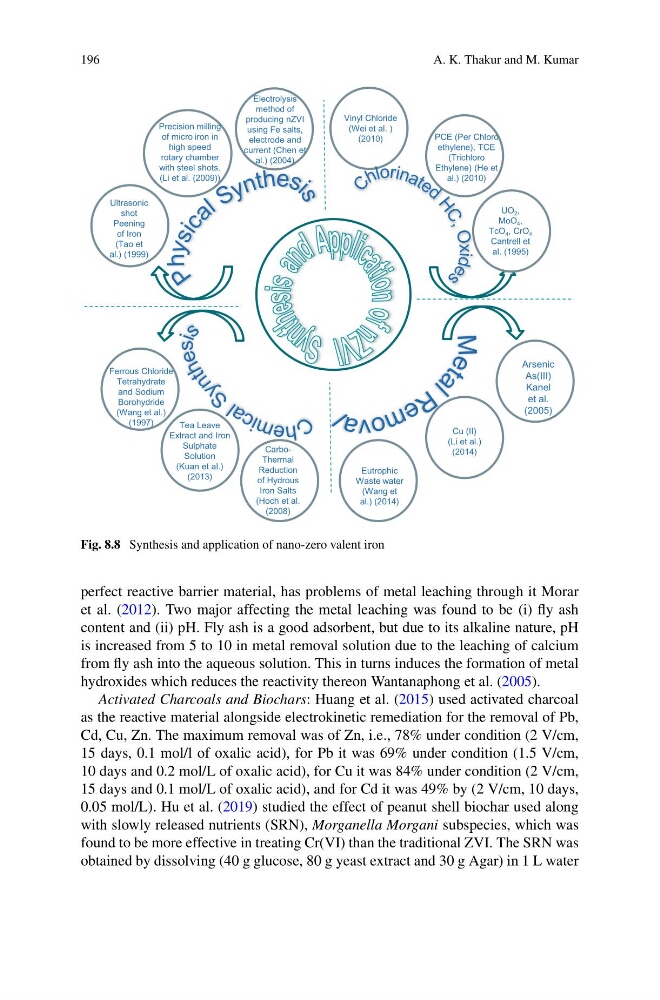
Fig. 8.8 Synthesis and application of nano-zero valent iron
perfect reactive barrier material, has problems of metal leaching through it Morar
et al. (2012). Two major affecting the metal leaching was found to be (i) fly ash
content and (ii) pH. Fly ash is a good adsorbent, but due to its alkaline nature, pH
is increased from 5 to 10 in metal removal solution due to the leaching of calcium
from fly ash into the aqueous solution. This in turns induces the formation of metal
hydroxides which reduces the reactivity thereon Wantanaphong et al. (2005).
Activated Charcoals and Biochars: Huang et al. (2015) used activated charcoal
as the reactive material alongside electrokinetic remediation for the removal of Pb,
Cd, Cu, Zn. The maximum removal was of Zn, i.e., 78% under condition (2 V/cm,
15 days, 0.1 mol/l of oxalic acid), for Pb it was 69% under condition (1.5 V/cm,
10 days and 0.2 mol/L of oxalic acid), for Cu it was 84% under condition (2 V/cm,
15 days and 0.1 mol/L of oxalic acid), and for Cd it was 49% by (2 V/cm, 10 days,
0.05 mol/L). Hu et al. (2019) studied the effect of peanut shell biochar used along
with slowly released nutrients (SRN), Morganella Morgani subspecies, which was
found to be more effective in treating Cr(VI) than the traditional ZVI. The SRN was
obtained by dissolving (40 g glucose, 80 g yeast extract and 30 g Agar) in 1 L water
A. K. Thakur and M. Kumar
Tea Leave
Extract and Iron
Sulphate
Solution
(Kuan et al.)
(2013)
Ferrous Chloride
Tetrahydrate
and Sodium
Borohydride
(Wang et al.)
(1997)
Ultrasonic
shot
Peening
of Iron
(Tao et
al.) (1999)
CarboThermal
Reduction
of Hydrous
Iron Salts
(Hoch et al.
(2008)
Precision milling
of micro iron in
high speed
rotary chamber
with steel shots.
(Li et al. (2009))
Electrolysis
method of
producing nZVI
using Fe salts,
electrode and
current (Chen et
al.) (2004)
Vinyl Chloride
(Wei et al. )
(2010)
PCE (Per Chloro
ethylene), TCE
(Trichloro
Ethylene) (He et
al.) (2010)
Cu (II)
(Li et al.)
(2014)
Arsenic
As(III)
Kanel
et al.
(2005)
UO 2 ,
MoO 4 ,
TcO 4 , CrO 4
Cantrell et
al. (1995)
Eutrophic
Waste water
(Wang et
al.) (2014)
Fig. 8.8 Synthesis and application of nano-zero valent iron
perfect reactive barrier material, has problems of metal leaching through it Morar
et al. (2012). Two major affecting the metal leaching was found to be (i) fly ash
content and (ii) pH. Fly ash is a good adsorbent, but due to its alkaline nature, pH
is increased from 5 to 10 in metal removal solution due to the leaching of calcium
from fly ash into the aqueous solution. This in turns induces the formation of metal
hydroxides which reduces the reactivity thereon Wantanaphong et al. (2005).
Activated Charcoals and Biochars: Huang et al. (2015) used activated charcoal
as the reactive material alongside electrokinetic remediation for the removal of Pb,
Cd, Cu, Zn. The maximum removal was of Zn, i.e., 78% under condition (2 V/cm,
15 days, 0.1 mol/l of oxalic acid), for Pb it was 69% under condition (1.5 V/cm,
10 days and 0.2 mol/L of oxalic acid), for Cu it was 84% under condition (2 V/cm,
15 days and 0.1 mol/L of oxalic acid), and for Cd it was 49% by (2 V/cm, 10 days,
0.05 mol/L). Hu et al. (2019) studied the effect of peanut shell biochar used along
with slowly released nutrients (SRN), Morganella Morgani subspecies, which was
found to be more effective in treating Cr(VI) than the traditional ZVI. The SRN was
obtained by dissolving (40 g glucose, 80 g yeast extract and 30 g Agar) in 1 L water