

194
A. K. Thakur and M. Kumar
Ground water Remediation Methods with help of
PRB(Permeable Reactive Barrier)
Biological Barrier Methods
Sorption Methods
Precipitation methods
Biochars (Organic
Materials)
Iron Oxides
ZVI or Granular Iron
Organic Sources for Bacterial Growth(e.g. SRB)
Limestone
Perlite, Zeolites
Silica Sand
Biodegradable Materials
Wood Chips Composted Leaves
Composted Sheep Manure
Anaerobic Microbes
Palladium Coated Iron
Denitrifying bacteria (e.g. Mulch)
Oxygen releasing Compounds (e.g. MgO 2 )
Natural Pyrite
Bovine Manure and Cowdung
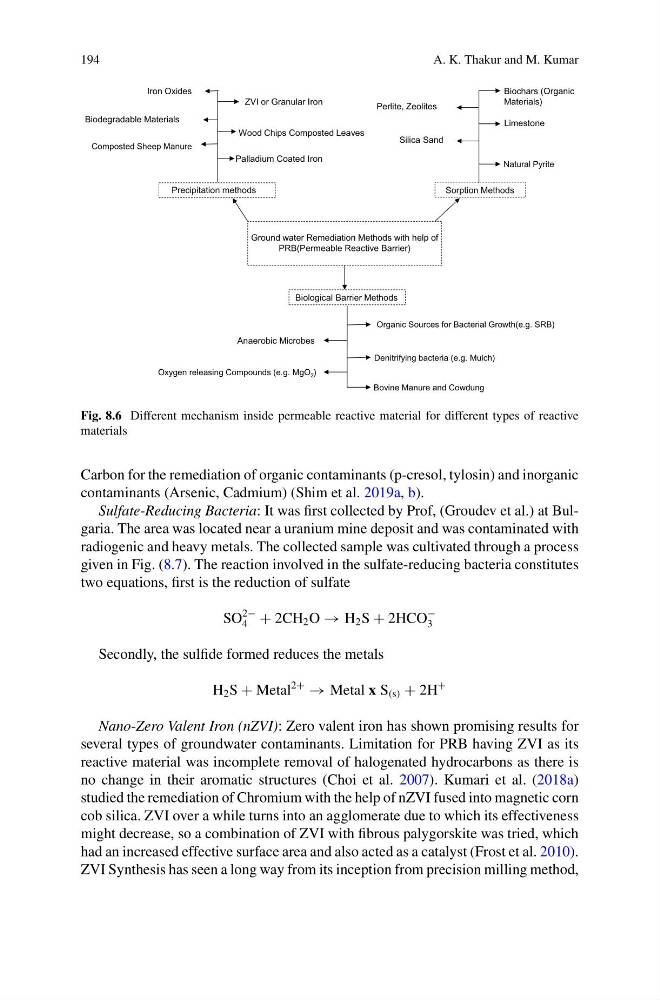
Fig. 8.6 Different mechanism inside permeable reactive material for different types of reactive
materials
Carbon for the remediation of organic contaminants (p-cresol, tylosin) and inorganic
contaminants (Arsenic, Cadmium) (Shim et al. 2019a, b).
Sulfate-Reducing Bacteria: It was first collected by Prof, (Groudev et al.) at Bulgaria. The area was located near a uranium mine deposit and was contaminated with
radiogenic and heavy metals. The collected sample was cultivated through a process
given in Fig. (8.7). The reaction involved in the sulfate-reducing bacteria constitutes
two equations, first is the reduction of sulfate
SO
2−
4 + 2CH 2 O → H 2 S + 2HCO
−
3
Secondly, the sulfide formed reduces the metals
H 2 S + Metal
2+
→ Metal x S (s) + 2H
+
Nano-Zero Valent Iron (nZVI): Zero valent iron has shown promising results for
several types of groundwater contaminants. Limitation for PRB having ZVI as its
reactive material was incomplete removal of halogenated hydrocarbons as there is
no change in their aromatic structures (Choi et al. 2007). Kumari et al. (2018a)
studied the remediation of Chromium with the help of nZVI fused into magnetic corn
cob silica. ZVI over a while turns into an agglomerate due to which its effectiveness
might decrease, so a combination of ZVI with fibrous palygorskite was tried, which
had an increased effective surface area and also acted as a catalyst (Frost et al. 2010).
ZVI Synthesis has seen a long way from its inception from precision milling method,
A. K. Thakur and M. Kumar
Ground water Remediation Methods with help of
PRB(Permeable Reactive Barrier)
Biological Barrier Methods
Sorption Methods
Precipitation methods
Biochars (Organic
Materials)
Iron Oxides
ZVI or Granular Iron
Organic Sources for Bacterial Growth(e.g. SRB)
Limestone
Perlite, Zeolites
Silica Sand
Biodegradable Materials
Wood Chips Composted Leaves
Composted Sheep Manure
Anaerobic Microbes
Palladium Coated Iron
Denitrifying bacteria (e.g. Mulch)
Oxygen releasing Compounds (e.g. MgO 2 )
Natural Pyrite
Bovine Manure and Cowdung
Fig. 8.6 Different mechanism inside permeable reactive material for different types of reactive
materials
Carbon for the remediation of organic contaminants (p-cresol, tylosin) and inorganic
contaminants (Arsenic, Cadmium) (Shim et al. 2019a, b).
Sulfate-Reducing Bacteria: It was first collected by Prof, (Groudev et al.) at Bulgaria. The area was located near a uranium mine deposit and was contaminated with
radiogenic and heavy metals. The collected sample was cultivated through a process
given in Fig. (8.7). The reaction involved in the sulfate-reducing bacteria constitutes
two equations, first is the reduction of sulfate
SO
2−
4 + 2CH 2 O → H 2 S + 2HCO
−
3
Secondly, the sulfide formed reduces the metals
H 2 S + Metal
2+
→ Metal x S (s) + 2H
+
Nano-Zero Valent Iron (nZVI): Zero valent iron has shown promising results for
several types of groundwater contaminants. Limitation for PRB having ZVI as its
reactive material was incomplete removal of halogenated hydrocarbons as there is
no change in their aromatic structures (Choi et al. 2007). Kumari et al. (2018a)
studied the remediation of Chromium with the help of nZVI fused into magnetic corn
cob silica. ZVI over a while turns into an agglomerate due to which its effectiveness
might decrease, so a combination of ZVI with fibrous palygorskite was tried, which
had an increased effective surface area and also acted as a catalyst (Frost et al. 2010).
ZVI Synthesis has seen a long way from its inception from precision milling method,