

100
D. J. Sarkar et al.
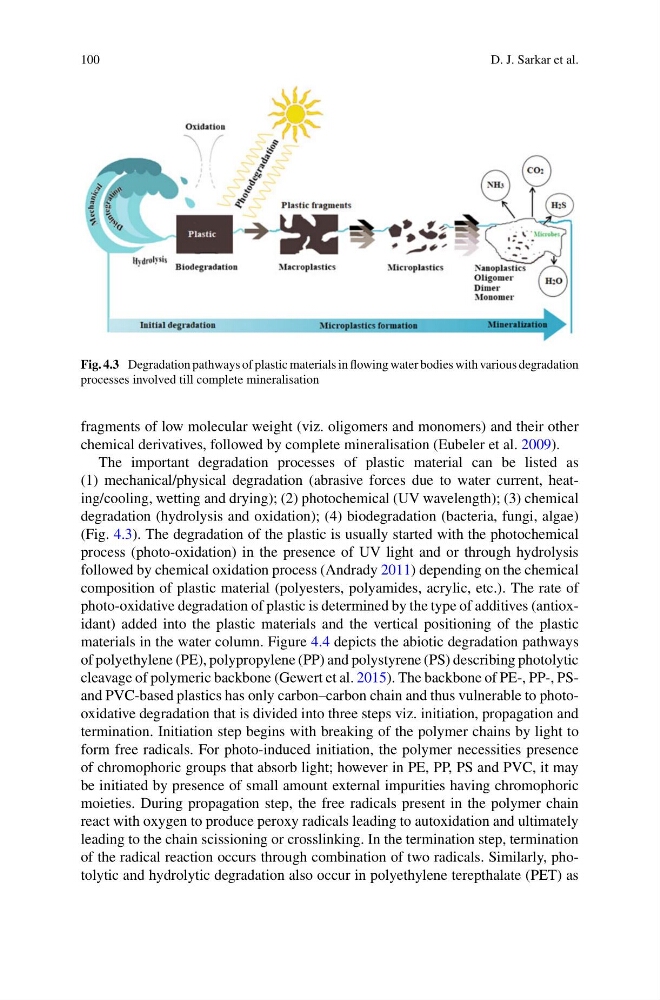
Fig. 4.3 Degradation pathways of plastic materials in flowing water bodies with various degradation
processes involved till complete mineralisation
fragments of low molecular weight (viz. oligomers and monomers) and their other
chemical derivatives, followed by complete mineralisation (Eubeler et al. 2009).
The important degradation processes of plastic material can be listed as
(1) mechanical/physical degradation (abrasive forces due to water current, heating/cooling, wetting and drying); (2) photochemical (UV wavelength); (3) chemical
degradation (hydrolysis and oxidation); (4) biodegradation (bacteria, fungi, algae)
(Fig. 4.3). The degradation of the plastic is usually started with the photochemical
process (photo-oxidation) in the presence of UV light and or through hydrolysis
followed by chemical oxidation process (Andrady 2011) depending on the chemical
composition of plastic material (polyesters, polyamides, acrylic, etc.). The rate of
photo-oxidative degradation of plastic is determined by the type of additives (antioxidant) added into the plastic materials and the vertical positioning of the plastic
materials in the water column. Figure 4.4 depicts the abiotic degradation pathways
of polyethylene (PE), polypropylene (PP) and polystyrene (PS) describing photolytic
cleavage of polymeric backbone (Gewert et al. 2015). The backbone of PE-, PP-, PSand PVC-based plastics has only carbon–carbon chain and thus vulnerable to photooxidative degradation that is divided into three steps viz. initiation, propagation and
termination. Initiation step begins with breaking of the polymer chains by light to
form free radicals. For photo-induced initiation, the polymer necessities presence
of chromophoric groups that absorb light; however in PE, PP, PS and PVC, it may
be initiated by presence of small amount external impurities having chromophoric
moieties. During propagation step, the free radicals present in the polymer chain
react with oxygen to produce peroxy radicals leading to autoxidation and ultimately
leading to the chain scissioning or crosslinking. In the termination step, termination
of the radical reaction occurs through combination of two radicals. Similarly, photolytic and hydrolytic degradation also occur in polyethylene terepthalate (PET) as
D. J. Sarkar et al.
Fig. 4.3 Degradation pathways of plastic materials in flowing water bodies with various degradation
processes involved till complete mineralisation
fragments of low molecular weight (viz. oligomers and monomers) and their other
chemical derivatives, followed by complete mineralisation (Eubeler et al. 2009).
The important degradation processes of plastic material can be listed as
(1) mechanical/physical degradation (abrasive forces due to water current, heating/cooling, wetting and drying); (2) photochemical (UV wavelength); (3) chemical
degradation (hydrolysis and oxidation); (4) biodegradation (bacteria, fungi, algae)
(Fig. 4.3). The degradation of the plastic is usually started with the photochemical
process (photo-oxidation) in the presence of UV light and or through hydrolysis
followed by chemical oxidation process (Andrady 2011) depending on the chemical
composition of plastic material (polyesters, polyamides, acrylic, etc.). The rate of
photo-oxidative degradation of plastic is determined by the type of additives (antioxidant) added into the plastic materials and the vertical positioning of the plastic
materials in the water column. Figure 4.4 depicts the abiotic degradation pathways
of polyethylene (PE), polypropylene (PP) and polystyrene (PS) describing photolytic
cleavage of polymeric backbone (Gewert et al. 2015). The backbone of PE-, PP-, PSand PVC-based plastics has only carbon–carbon chain and thus vulnerable to photooxidative degradation that is divided into three steps viz. initiation, propagation and
termination. Initiation step begins with breaking of the polymer chains by light to
form free radicals. For photo-induced initiation, the polymer necessities presence
of chromophoric groups that absorb light; however in PE, PP, PS and PVC, it may
be initiated by presence of small amount external impurities having chromophoric
moieties. During propagation step, the free radicals present in the polymer chain
react with oxygen to produce peroxy radicals leading to autoxidation and ultimately
leading to the chain scissioning or crosslinking. In the termination step, termination
of the radical reaction occurs through combination of two radicals. Similarly, photolytic and hydrolytic degradation also occur in polyethylene terepthalate (PET) as