

312
D. Haase
Heat, drought,
extreme
insolaƟon, missing
space, pests
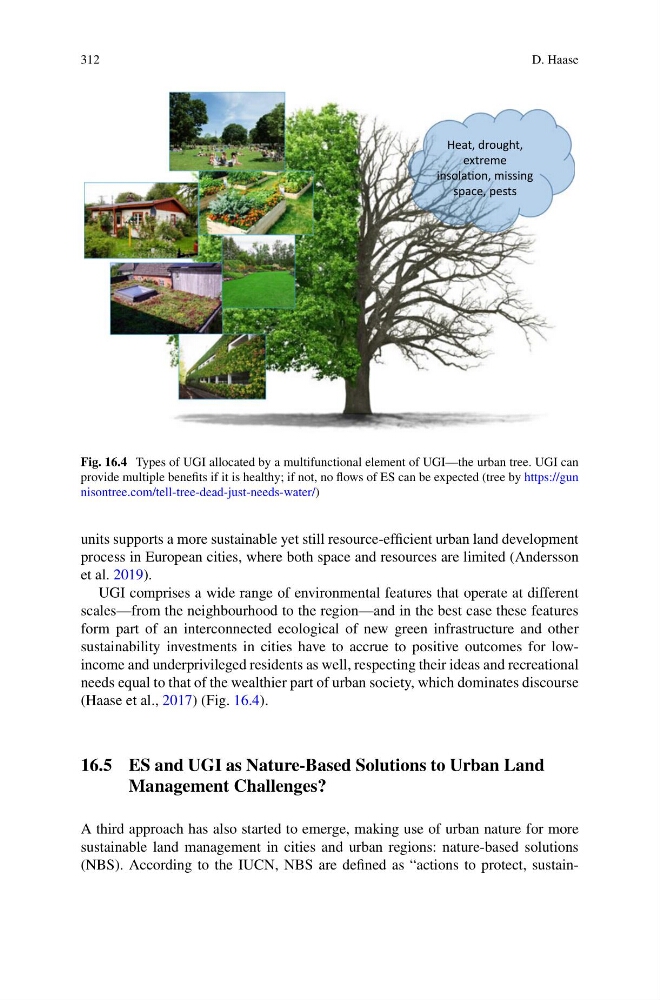
Fig. 16.4 Types of UGI allocated by a multifunctional element of UGI—the urban tree. UGI can
provide multiple benefits if it is healthy; if not, no flows of ES can be expected (tree by https://gun
nisontree.com/tell-tree-dead-just-needs-water/)
units supports a more sustainable yet still resource-efficient urban land development
process in European cities, where both space and resources are limited (Andersson
et al. 2019).
UGI comprises a wide range of environmental features that operate at different
scales—from the neighbourhood to the region—and in the best case these features
form part of an interconnected ecological of new green infrastructure and other
sustainability investments in cities have to accrue to positive outcomes for lowincome and underprivileged residents as well, respecting their ideas and recreational
needs equal to that of the wealthier part of urban society, which dominates discourse
(Haase et al., 2017) (Fig. 16.4).
16.5 ES and UGI as Nature-Based Solutions to Urban Land
Management Challenges?
A third approach has also started to emerge, making use of urban nature for more
sustainable land management in cities and urban regions: nature-based solutions
(NBS). According to the IUCN, NBS are defined as “actions to protect, sustain-
D. Haase
Heat, drought,
extreme
insolaƟon, missing
space, pests
Fig. 16.4 Types of UGI allocated by a multifunctional element of UGI—the urban tree. UGI can
provide multiple benefits if it is healthy; if not, no flows of ES can be expected (tree by https://gun
nisontree.com/tell-tree-dead-just-needs-water/)
units supports a more sustainable yet still resource-efficient urban land development
process in European cities, where both space and resources are limited (Andersson
et al. 2019).
UGI comprises a wide range of environmental features that operate at different
scales—from the neighbourhood to the region—and in the best case these features
form part of an interconnected ecological of new green infrastructure and other
sustainability investments in cities have to accrue to positive outcomes for lowincome and underprivileged residents as well, respecting their ideas and recreational
needs equal to that of the wealthier part of urban society, which dominates discourse
(Haase et al., 2017) (Fig. 16.4).
16.5 ES and UGI as Nature-Based Solutions to Urban Land
Management Challenges?
A third approach has also started to emerge, making use of urban nature for more
sustainable land management in cities and urban regions: nature-based solutions
(NBS). According to the IUCN, NBS are defined as “actions to protect, sustain-