

Apart form manganese oxide and magnetic iron oxides, other oxides have also
found use in dye treatment and removal application. For example, hollow urchin-like
nanostructure of tungsten oxide has been used to adsorb methylene blue dye from
aqueous solution (Jeon and Yong 2010). This nanoadsorbent showed adsorption
capacity of 138.88 mgg
À1 towards methylene blue, which was found to be higher
than that demonstrated by commercial tungsten oxide (12.37 mgg
À1 ) and most other
commercial adsorbents like zeolite MCM-22 (67.3 mgg
À1 ), red mud (2.5 mgg
À1 ),
fly ash (70.37 mgg
À1 ), etc. towards the same dye. Khan et al. (2012) studied the
photocatalytic efficiency of two different oxides, namely ZnO and Al 2 O 3 , in combination with CdS and graphene oxide. The CdS/Al 2 O 3 /graphene oxide
photocatalyst displayed ~90% photodegradation efficiency towards methyl orange
dye while CdS/ZnO/graphene oxide showed ~99% efficiency, both within 60 min.
These high efficiencies were found to be due to the presence of graphene oxide (1 wt
%), with sheet-like structure, that showed high separation of charge carriers formed
upon photo-irradiation, leading to reduced recombination, as well as high surface
area. The involved mechanism of separation and transfer of charge, along with the
degradation of methyl orange, under photo-irradiation using the CdS/ZnO/graphene
oxide photocatalyst has been presented in Fig. 1.3.
In another work, TiO 2 /reduced graphene oxide and SnO 2 /reduced graphene oxide
nanoparticles were synthesized and used to photo-degrade Rhodamine B dye under
irradiated visible light (Zhang et al. 2011). The reduced graphene oxide nanosheet
support was found to be effectively disperse the deposited metal oxide photocatalytic
nanoparticles and increase the photocatalytic efficiency of the photocatalysts. The
photo-degradation efficiency was found to be higher for the SnO 2 /reduced graphene
oxide system, compared to the TiO 2 /reduced graphene oxide and a commercial TiO 2
photocatalyst systems. The better result observed for the former composite was
attributed to higher charge separation and electrical conductivity. In a different
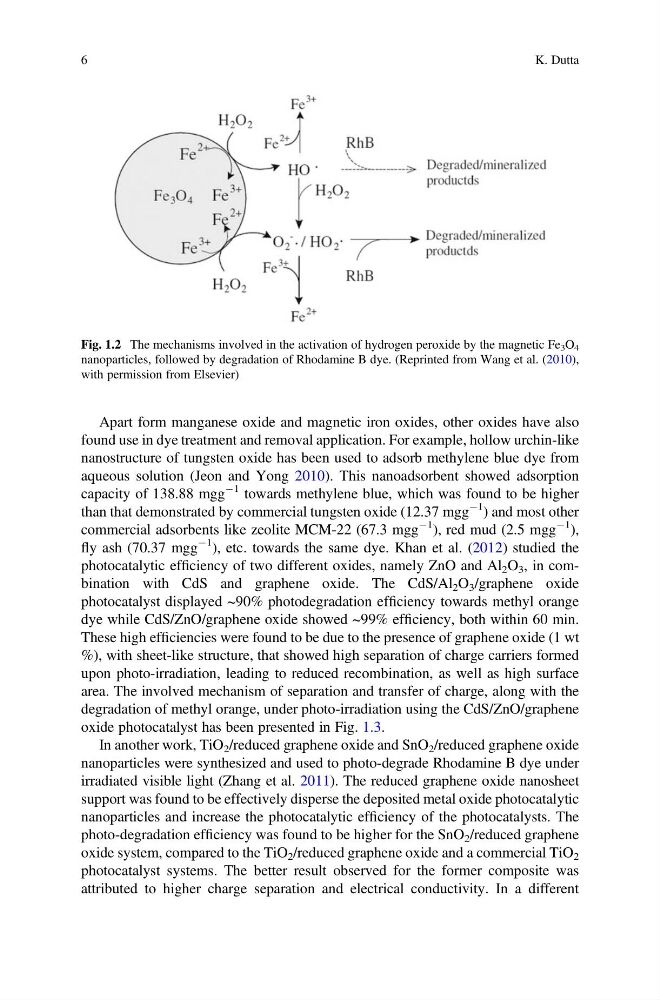
Fig. 1.2 The mechanisms involved in the activation of hydrogen peroxide by the magnetic Fe 3 O 4
nanoparticles, followed by degradation of Rhodamine B dye. (Reprinted from Wang et al. (2010),
with permission from Elsevier)
6
K. Dutta
found use in dye treatment and removal application. For example, hollow urchin-like
nanostructure of tungsten oxide has been used to adsorb methylene blue dye from
aqueous solution (Jeon and Yong 2010). This nanoadsorbent showed adsorption
capacity of 138.88 mgg
À1 towards methylene blue, which was found to be higher
than that demonstrated by commercial tungsten oxide (12.37 mgg
À1 ) and most other
commercial adsorbents like zeolite MCM-22 (67.3 mgg
À1 ), red mud (2.5 mgg
À1 ),
fly ash (70.37 mgg
À1 ), etc. towards the same dye. Khan et al. (2012) studied the
photocatalytic efficiency of two different oxides, namely ZnO and Al 2 O 3 , in combination with CdS and graphene oxide. The CdS/Al 2 O 3 /graphene oxide
photocatalyst displayed ~90% photodegradation efficiency towards methyl orange
dye while CdS/ZnO/graphene oxide showed ~99% efficiency, both within 60 min.
These high efficiencies were found to be due to the presence of graphene oxide (1 wt
%), with sheet-like structure, that showed high separation of charge carriers formed
upon photo-irradiation, leading to reduced recombination, as well as high surface
area. The involved mechanism of separation and transfer of charge, along with the
degradation of methyl orange, under photo-irradiation using the CdS/ZnO/graphene
oxide photocatalyst has been presented in Fig. 1.3.
In another work, TiO 2 /reduced graphene oxide and SnO 2 /reduced graphene oxide
nanoparticles were synthesized and used to photo-degrade Rhodamine B dye under
irradiated visible light (Zhang et al. 2011). The reduced graphene oxide nanosheet
support was found to be effectively disperse the deposited metal oxide photocatalytic
nanoparticles and increase the photocatalytic efficiency of the photocatalysts. The
photo-degradation efficiency was found to be higher for the SnO 2 /reduced graphene
oxide system, compared to the TiO 2 /reduced graphene oxide and a commercial TiO 2
photocatalyst systems. The better result observed for the former composite was
attributed to higher charge separation and electrical conductivity. In a different
Fig. 1.2 The mechanisms involved in the activation of hydrogen peroxide by the magnetic Fe 3 O 4
nanoparticles, followed by degradation of Rhodamine B dye. (Reprinted from Wang et al. (2010),
with permission from Elsevier)
6
K. Dutta