

approach, Khairy and Zakaria (2014) performed doping of TiO 2 by 2 wt% of Cu and
Zn and showed that the type of dopant metal influenced the photodegradation
efficiency of TiO 2 towards methyl orange dye. Performed under both visible and
UV light irradiation, the photocatalytic activity was found to be in the order:
Cu-doped TiO 2 > Zn-doped TiO 2 > undoped TiO 2 . It was inferred that the
Cu-doped TiO 2 was the most efficient in preventing recombination of electronhole, which led to its best performance.
1.3 Heavy Metal
Heavy metals are in general highly toxic contaminants, often leading to serious
health issues if their concentrations are more than safety limits. Therefore, we need
to ensure that we restrict any increase in their concentration in water and remove the
already present metals from water and wastewater to the maximum possible extent.
Metal oxides nanomaterials have been playing a major role in this process of treating
and removing heavy metal ions (Hua et al. 2012; Trivedi and Axe 2000).
Manganese oxide has been used in combination with reduced graphene oxide to
scavenge Hg(II) ions (Sreeprasad et al. 2011). The adsorption process was found to
follow the pseudo-first-order equation, and demonstrated a 100% removal efficiency
towards Hg(II) ions from ground water. In another study, hydrous manganese and
iron oxides were made use of in order to adsorb Pb(II), Cd(II), Tl
+ and Zn(II) (Gadde
and Laitinen 1974). The adsorption of the polluting metals was found to be in the
order Pb(II) > Zn(II) > Cd(II) > Tl
+
. Manganese oxides have been used in several
occasions in combination with iron oxides either as a simple mixture or in a
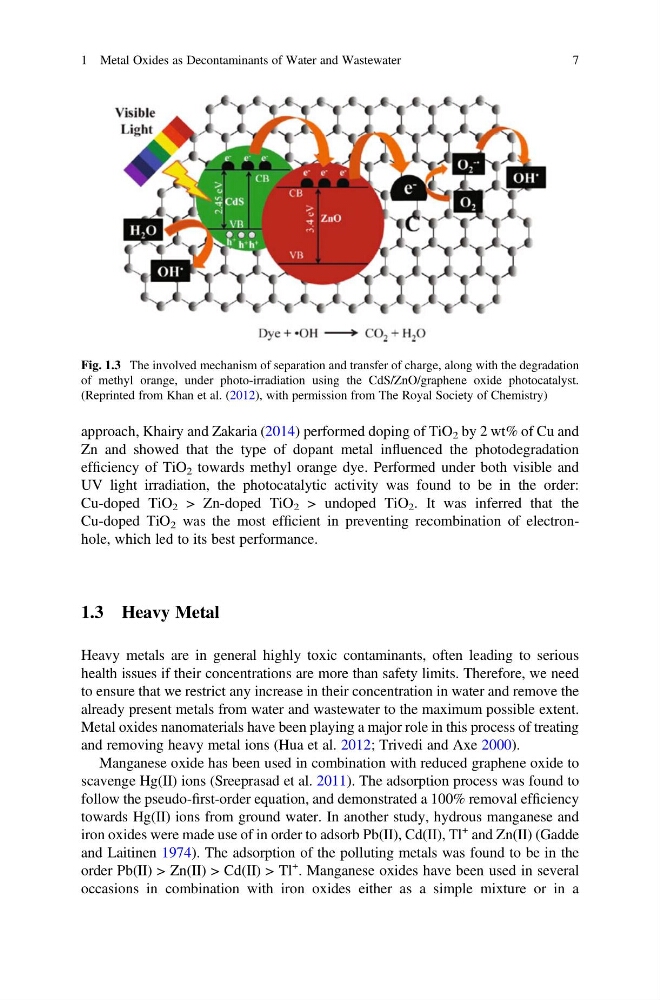
Fig. 1.3 The involved mechanism of separation and transfer of charge, along with the degradation
of methyl orange, under photo-irradiation using the CdS/ZnO/graphene oxide photocatalyst.
(Reprinted from Khan et al. (2012), with permission from The Royal Society of Chemistry)
1 Metal Oxides as Decontaminants of Water and Wastewater
7
Zn and showed that the type of dopant metal influenced the photodegradation
efficiency of TiO 2 towards methyl orange dye. Performed under both visible and
UV light irradiation, the photocatalytic activity was found to be in the order:
Cu-doped TiO 2 > Zn-doped TiO 2 > undoped TiO 2 . It was inferred that the
Cu-doped TiO 2 was the most efficient in preventing recombination of electronhole, which led to its best performance.
1.3 Heavy Metal
Heavy metals are in general highly toxic contaminants, often leading to serious
health issues if their concentrations are more than safety limits. Therefore, we need
to ensure that we restrict any increase in their concentration in water and remove the
already present metals from water and wastewater to the maximum possible extent.
Metal oxides nanomaterials have been playing a major role in this process of treating
and removing heavy metal ions (Hua et al. 2012; Trivedi and Axe 2000).
Manganese oxide has been used in combination with reduced graphene oxide to
scavenge Hg(II) ions (Sreeprasad et al. 2011). The adsorption process was found to
follow the pseudo-first-order equation, and demonstrated a 100% removal efficiency
towards Hg(II) ions from ground water. In another study, hydrous manganese and
iron oxides were made use of in order to adsorb Pb(II), Cd(II), Tl
+ and Zn(II) (Gadde
and Laitinen 1974). The adsorption of the polluting metals was found to be in the
order Pb(II) > Zn(II) > Cd(II) > Tl
+
. Manganese oxides have been used in several
occasions in combination with iron oxides either as a simple mixture or in a
Fig. 1.3 The involved mechanism of separation and transfer of charge, along with the degradation
of methyl orange, under photo-irradiation using the CdS/ZnO/graphene oxide photocatalyst.
(Reprinted from Khan et al. (2012), with permission from The Royal Society of Chemistry)
1 Metal Oxides as Decontaminants of Water and Wastewater
7