

and archaea counting methanogens. Eukaryotes, i.e. anaerobic fungi, along with
viruses, have also been discovered. Representatives of the bacterial phyla,
i.e. Firmicutes and Bacteroidetes are dominant in the production of biogas. However, members of the phyla Chloroflexi and Proteobacteria are likewise identified in
the process, though less abundant (Schnürer et al. 2016). Methanogens found in the
biogas process belong to phylum Euryarchaeota, whereas fungi identified belong to
Neocallimastigomycota. Some microorganisms existing are still not being identified
as of today.
Usually, microorganisms that can be typically seen in the AD process comprise
Clostridium spp., Actinomyces, Escherichia coli, Micrococcus spp., Peptococcus
anaerobius, Desulfovibrio spp., Lactobacillus, Bifidobacterium spp., Staphylococcus spp., Corynebacterium spp., Bacillus spp., Methanospirillum,
Methanobacterium,
Methanosarcina,
Methanobacillus,
Methanothrix
Methanococcus, and Methanosaeta (Grangeiro et al. 2019).
2.4.5 Biofuel Generations
There are a few biofuel generations that have been developed over time based on the
substrate material being utilized. The first generation of biofuel was formed by
employing starch, edible oil, and sugars; then comes the second generation of
biofuels that being contrarily generated by utilizing non-edible biomass; next, third
biofuel generation is formed by using algae; whereas fourth biofuel generational
group is formed by the capturing of CO 2 or by employing certain other innovative
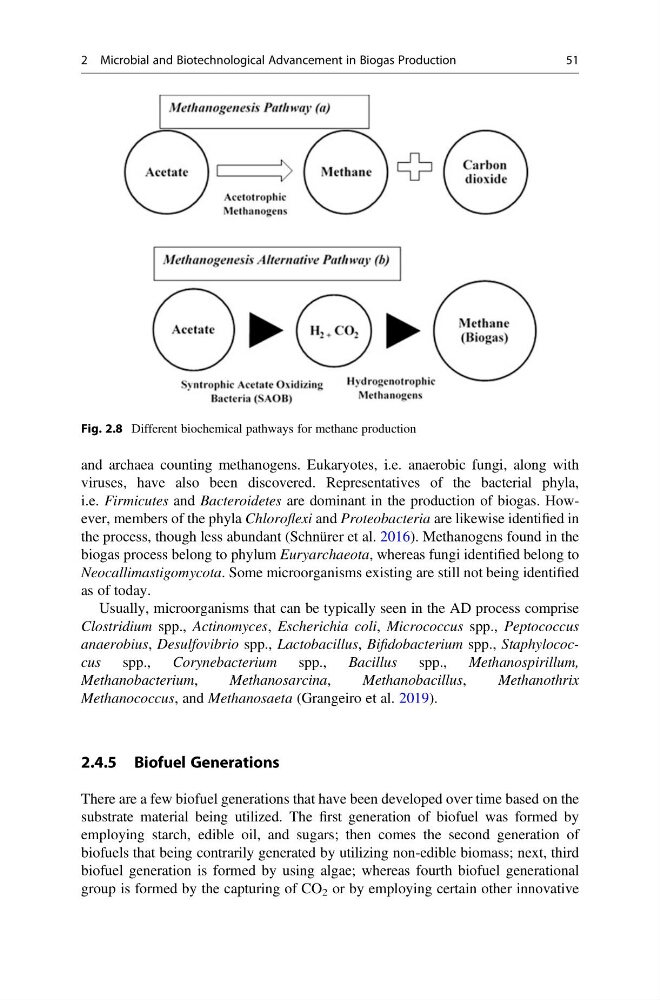
Fig. 2.8 Different biochemical pathways for methane production
2 Microbial and Biotechnological Advancement in Biogas Production
51
viruses, have also been discovered. Representatives of the bacterial phyla,
i.e. Firmicutes and Bacteroidetes are dominant in the production of biogas. However, members of the phyla Chloroflexi and Proteobacteria are likewise identified in
the process, though less abundant (Schnürer et al. 2016). Methanogens found in the
biogas process belong to phylum Euryarchaeota, whereas fungi identified belong to
Neocallimastigomycota. Some microorganisms existing are still not being identified
as of today.
Usually, microorganisms that can be typically seen in the AD process comprise
Clostridium spp., Actinomyces, Escherichia coli, Micrococcus spp., Peptococcus
anaerobius, Desulfovibrio spp., Lactobacillus, Bifidobacterium spp., Staphylococcus spp., Corynebacterium spp., Bacillus spp., Methanospirillum,
Methanobacterium,
Methanosarcina,
Methanobacillus,
Methanothrix
Methanococcus, and Methanosaeta (Grangeiro et al. 2019).
2.4.5 Biofuel Generations
There are a few biofuel generations that have been developed over time based on the
substrate material being utilized. The first generation of biofuel was formed by
employing starch, edible oil, and sugars; then comes the second generation of
biofuels that being contrarily generated by utilizing non-edible biomass; next, third
biofuel generation is formed by using algae; whereas fourth biofuel generational
group is formed by the capturing of CO 2 or by employing certain other innovative
Fig. 2.8 Different biochemical pathways for methane production
2 Microbial and Biotechnological Advancement in Biogas Production
51