

129
regional processing plants, a timeline for connecting the well to the midstream system, and proof that local gas processors are aware of the proposed new well
(USDOE 2019).
The North Dakota Oil and Gas Research Program is a state/industry initiative of
the North Dakota Industrial Commission (NDIC) that has been focusing on methods to reduce natural gas flaring by investigating small-scale processes that can be
used at well sites to save the gas by compressing it, liquefying it, or creating methanol and other easily transportable materials by using gas-to-liquids technology. A
parallel effort is looking into the use of miniature gas turbines for small-scale electrical generation on well pads. Power lines are run many miles to supply electricity
to operate the pump jacks. If this could be generated on site, it would save money
and utilize an existing resource that would otherwise be wasted (USDOE 2019).
In addition to state efforts, the federal government is trying to reduce flaring.
U.S. EPA regulation 40 CFR, Part 60, Subpart OOOO requires tight oil and shale
gas wells to be handled as reduced-emissions completions unless granted an exception (HEI 2019). Although this rule has been in effect since August 2011, how well
it is enforced across the vast Bakken production area far from Washington,
D.C. remains an open question.
Despite the presence of the Watford City gas plant and other plants in the production area, significant amounts of Bakken gas are still being flared. A rather spectacular satellite night image of the contiguous United States was released by NASA in
2017 and caused an Internet sensation when people noticed a bright “city” in the
northern Great Plains where no city should exist (Fig. 7.5). The East Coast and the
Great Lakes are clearly outlined in this image by their sprawling city lights, and
even isolated large cities like Las Vegas, Denver, and Minneapolis-St. Paul were
easily identifiable. The bright lights in North Dakota were of course the Bakken gas
flares. They appeared on the satellite image to be as big and bright as Denver or
Minneapolis, and actually outshone places like St. Louis and Kansas City. This was
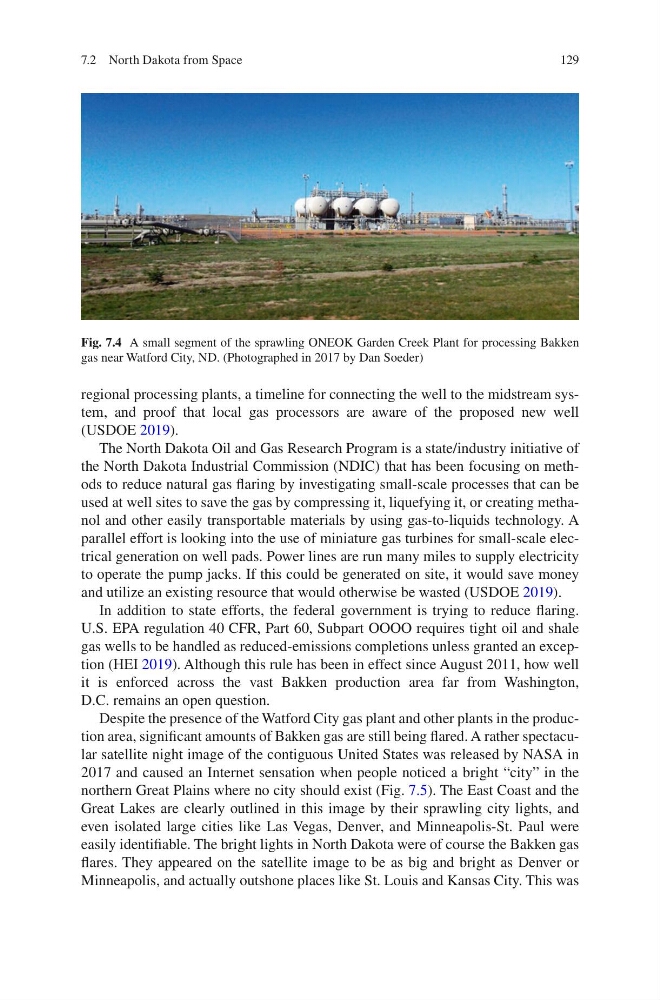
Fig. 7.4 A small segment of the sprawling ONEOK Garden Creek Plant for processing Bakken
gas near Watford City, ND. (Photographed in 2017 by Dan Soeder)
7.2 North Dakota from Space
regional processing plants, a timeline for connecting the well to the midstream system, and proof that local gas processors are aware of the proposed new well
(USDOE 2019).
The North Dakota Oil and Gas Research Program is a state/industry initiative of
the North Dakota Industrial Commission (NDIC) that has been focusing on methods to reduce natural gas flaring by investigating small-scale processes that can be
used at well sites to save the gas by compressing it, liquefying it, or creating methanol and other easily transportable materials by using gas-to-liquids technology. A
parallel effort is looking into the use of miniature gas turbines for small-scale electrical generation on well pads. Power lines are run many miles to supply electricity
to operate the pump jacks. If this could be generated on site, it would save money
and utilize an existing resource that would otherwise be wasted (USDOE 2019).
In addition to state efforts, the federal government is trying to reduce flaring.
U.S. EPA regulation 40 CFR, Part 60, Subpart OOOO requires tight oil and shale
gas wells to be handled as reduced-emissions completions unless granted an exception (HEI 2019). Although this rule has been in effect since August 2011, how well
it is enforced across the vast Bakken production area far from Washington,
D.C. remains an open question.
Despite the presence of the Watford City gas plant and other plants in the production area, significant amounts of Bakken gas are still being flared. A rather spectacular satellite night image of the contiguous United States was released by NASA in
2017 and caused an Internet sensation when people noticed a bright “city” in the
northern Great Plains where no city should exist (Fig. 7.5). The East Coast and the
Great Lakes are clearly outlined in this image by their sprawling city lights, and
even isolated large cities like Las Vegas, Denver, and Minneapolis-St. Paul were
easily identifiable. The bright lights in North Dakota were of course the Bakken gas
flares. They appeared on the satellite image to be as big and bright as Denver or
Minneapolis, and actually outshone places like St. Louis and Kansas City. This was
Fig. 7.4 A small segment of the sprawling ONEOK Garden Creek Plant for processing Bakken
gas near Watford City, ND. (Photographed in 2017 by Dan Soeder)
7.2 North Dakota from Space