

128
producers like Alaska, Oklahoma, Louisiana, and California. Only Texas remains
ahead of it in first place, thanks to production from the Eagle Ford Shale and the
stacked plays of the Permian Basin (Source: U.S. Energy Information Administration
websites). The vast quantities of petroleum being recovered from the Bakken Shale
are accompanied by equally vast quantities of natural gas that must be dealt with
somehow at the wellsite.
Marketing the gas produced from the Bakken is complicated because more than
just a pipeline is needed. The recovered gas is loaded with condensate, and these
NGLs boost the Btu value of the gas far above the limits allowed by pipelines. So in
addition to pipelines, gas plants are needed to remove the NGLs and reduce the Btu
value of the gas. Pipeline companies have very strict specifications for the energy or
heating value of any gas they will accept. This is because natural gas appliances and
other uses for gas are engineered with the Btu value of methane in mind. Methane
is the major component of natural gas, and it has an energy value of about 1000 Btu
per cubic foot, or a million Btu per MCF. Allowing NGLs like propane, butane,
hexane, etc. to enter the pipeline would significantly raise this Btu value and create
a fire hazard in any natural gas appliances attempting to burn the gas.
Fortunately, the NGLs have value in their own right. In addition to processing the
natural gas to meet pipeline specifications, a gas plant can also provide a revenue
stream from the sale of propane and other condensates recovered from the gas.
Because of the boom nature of gas and oil production, the gas plants are often late
arrivals to the scene, and a great deal of gas may be flared before they get constructed. However, some large facilities have been brought online in North Dakota,
such as the giant ONEOK Garden Creek Plant near Watford City (Fig. 7.4) that is
processing substantial amounts of Bakken gas.
Flaring on Bakken wells is limited by North Dakota state laws to a maximum of
one year. The state requires operators to submit gas capture plans with permit applications. These are required to include information on gas system connections and
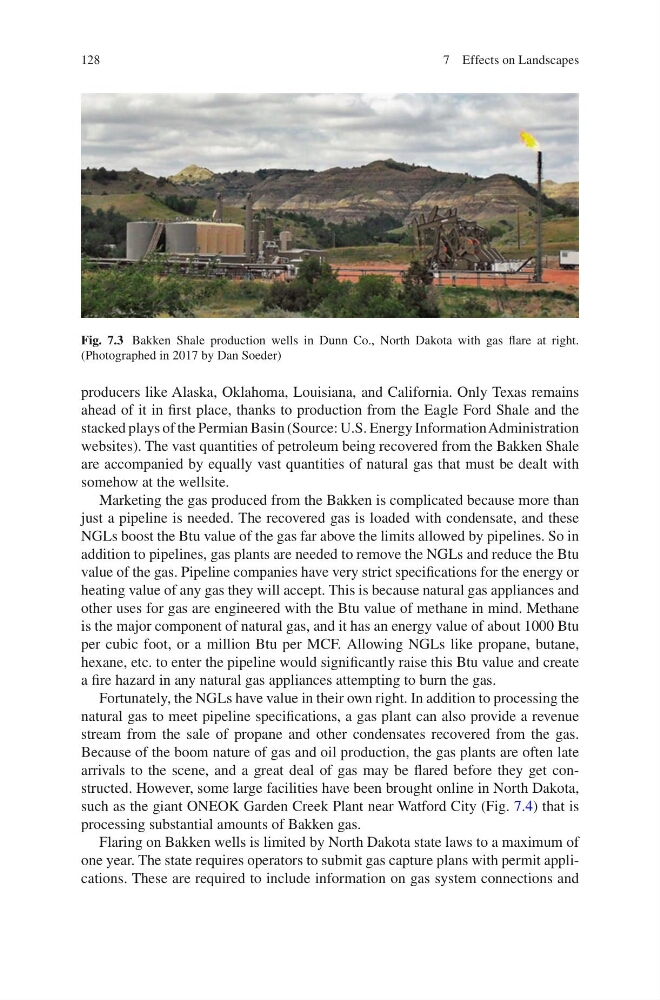
Fig. 7.3 Bakken Shale production wells in Dunn Co., North Dakota with gas flare at right.
(Photographed in 2017 by Dan Soeder)
7 Effects on Landscapes
producers like Alaska, Oklahoma, Louisiana, and California. Only Texas remains
ahead of it in first place, thanks to production from the Eagle Ford Shale and the
stacked plays of the Permian Basin (Source: U.S. Energy Information Administration
websites). The vast quantities of petroleum being recovered from the Bakken Shale
are accompanied by equally vast quantities of natural gas that must be dealt with
somehow at the wellsite.
Marketing the gas produced from the Bakken is complicated because more than
just a pipeline is needed. The recovered gas is loaded with condensate, and these
NGLs boost the Btu value of the gas far above the limits allowed by pipelines. So in
addition to pipelines, gas plants are needed to remove the NGLs and reduce the Btu
value of the gas. Pipeline companies have very strict specifications for the energy or
heating value of any gas they will accept. This is because natural gas appliances and
other uses for gas are engineered with the Btu value of methane in mind. Methane
is the major component of natural gas, and it has an energy value of about 1000 Btu
per cubic foot, or a million Btu per MCF. Allowing NGLs like propane, butane,
hexane, etc. to enter the pipeline would significantly raise this Btu value and create
a fire hazard in any natural gas appliances attempting to burn the gas.
Fortunately, the NGLs have value in their own right. In addition to processing the
natural gas to meet pipeline specifications, a gas plant can also provide a revenue
stream from the sale of propane and other condensates recovered from the gas.
Because of the boom nature of gas and oil production, the gas plants are often late
arrivals to the scene, and a great deal of gas may be flared before they get constructed. However, some large facilities have been brought online in North Dakota,
such as the giant ONEOK Garden Creek Plant near Watford City (Fig. 7.4) that is
processing substantial amounts of Bakken gas.
Flaring on Bakken wells is limited by North Dakota state laws to a maximum of
one year. The state requires operators to submit gas capture plans with permit applications. These are required to include information on gas system connections and
Fig. 7.3 Bakken Shale production wells in Dunn Co., North Dakota with gas flare at right.
(Photographed in 2017 by Dan Soeder)
7 Effects on Landscapes