

12 Climate Change Adaptation Strategies in Primary Health Care
221
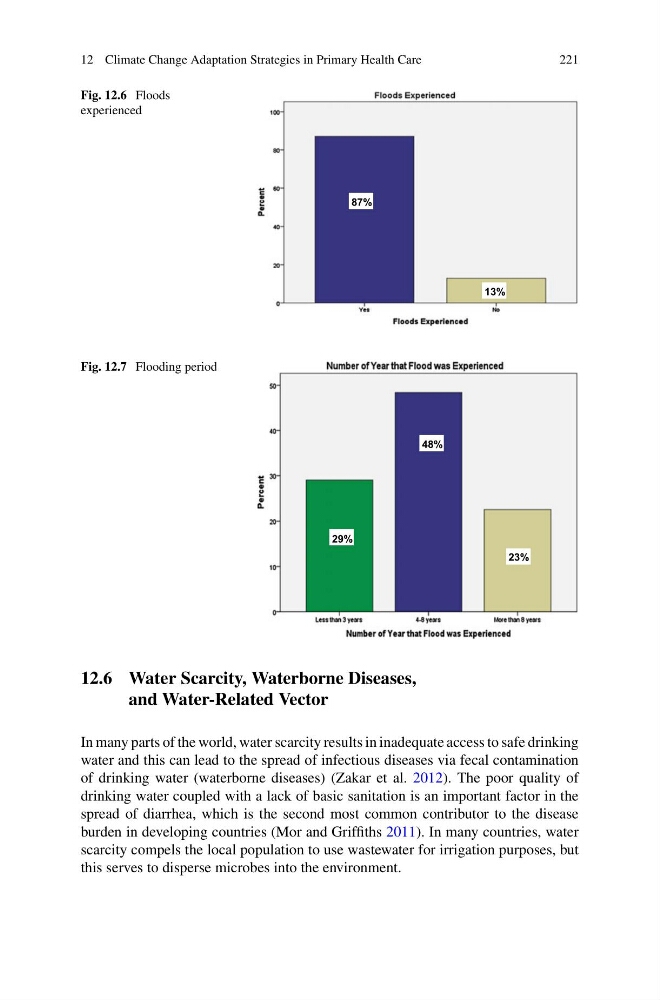
Fig. 12.6 Floods
experienced
87%
13%
Fig. 12.7 Flooding period
23%
48%
29%
12.6 Water Scarcity, Waterborne Diseases,
and Water-Related Vector
In many parts of the world, water scarcity results in inadequate access to safe drinking
water and this can lead to the spread of infectious diseases via fecal contamination
of drinking water (waterborne diseases) (Zakar et al. 2012). The poor quality of
drinking water coupled with a lack of basic sanitation is an important factor in the
spread of diarrhea, which is the second most common contributor to the disease
burden in developing countries (Mor and Griffiths 2011). In many countries, water
scarcity compels the local population to use wastewater for irrigation purposes, but
this serves to disperse microbes into the environment.
221
Fig. 12.6 Floods
experienced
87%
13%
Fig. 12.7 Flooding period
23%
48%
29%
12.6 Water Scarcity, Waterborne Diseases,
and Water-Related Vector
In many parts of the world, water scarcity results in inadequate access to safe drinking
water and this can lead to the spread of infectious diseases via fecal contamination
of drinking water (waterborne diseases) (Zakar et al. 2012). The poor quality of
drinking water coupled with a lack of basic sanitation is an important factor in the
spread of diarrhea, which is the second most common contributor to the disease
burden in developing countries (Mor and Griffiths 2011). In many countries, water
scarcity compels the local population to use wastewater for irrigation purposes, but
this serves to disperse microbes into the environment.