

3.2 Soil Forming Factors
The soil formation factors in Libya, like soil in any given
region of the world, are limited to five main factors, which
are climate, biota (the most important in Libya is vegetation), parent material, topography, and time. These factors
have different influences that interact with each other to form
the soils of Libya, causing different soil horizons to form.
The following are two kinds of these factors that contribute
to soil formation in Libya:
• Active soil forming factors: These include climate and
biology (vegetation), as they are responsible for all
weathering and formation processes that occur in the soil
(within the soil profile).
• Passive soil forming factors: These include the parent
material, topography, and time (i.e., the existing factors).
These factors represent the mass of the earth, its various
rocks, and minerals, as well as the state in which it
exists in terms of shape and topography at a certain
time.
It is worth mentioning here that these factors interact with
one another at the same time, where they not only directly
influence the soils but also have an effect on each other. For
example, the climate affects the vegetation status, and vegetation cover in turn also affects the effectiveness and impact
of the climate. Relief also affects the redistribution of climate
(local climate). The impact of these factors on the type of
soil formed in Libya varies from one place to another. In the
southern regions, the factors of parent material, topography,
and time are the prevailing soil forming factors, while in the
Al Jabal Al Akhdar the climate and the parent material are
the main responsible factors for the soil formation processes
(Ben Mahmoud 1995).
3.2.1 Climate
The climate, with its various elements (i.e., precipitation,
temperature, wind, and relative humidity), affects the type of
soil formed wherever it is found, and it contributes directly
and effectively to the weathering and the soil formation
processes. Libya is subject to the desert climate that prevails
in the northern part of the African continent, aside from the
Al Jabal Al Akhdar and a portion of the Tripoli Mountains
(i.e., Jabal Nafusa) where these areas have an arid to
semi-arid climate (i.e., Mediterranean climate “Xeric”) with
rainfall in the winter and almost no precipitation in the
summer (Zurqani et al. 2019). These areas do not exceed 2%
of the total area of the country (Sharaf 1971; and Al Hajjaji
1989). Figure 3.2 shows the classification of climate zones
in Libya.
The following is a brief review of the most basic elements
of the Libyan climate, which have a significant influence on
the types of soils that formed, and the manner in which they
form, in different geographic areas of the country.
3.2.1.1 Precipitation
In fact, apart from about 3 million hectares in the northern
part of Libya which receives precipitation of more than
200 mm/year and exposed to the Mediterranean climate, all
the other regions have a hot and arid climate (desert climate)
which is characterized by low precipitation and bad distribution (monthly and yearly) with high variability from one
region to another.
It is also noteworthy to mention that the average precipitation rate varies across Libyan regions. Consequently,
while the average precipitation at the coastline area and
especially at the Al Jabal Al Akhdar region may reach
600 mm/year (this high precipitation can be linked to the
fact that the edge of the mountain is interrupted by water
from the Mediterranean Sea), in Tripoli Mountain regions,
the average precipitation fluctuates from 200 to
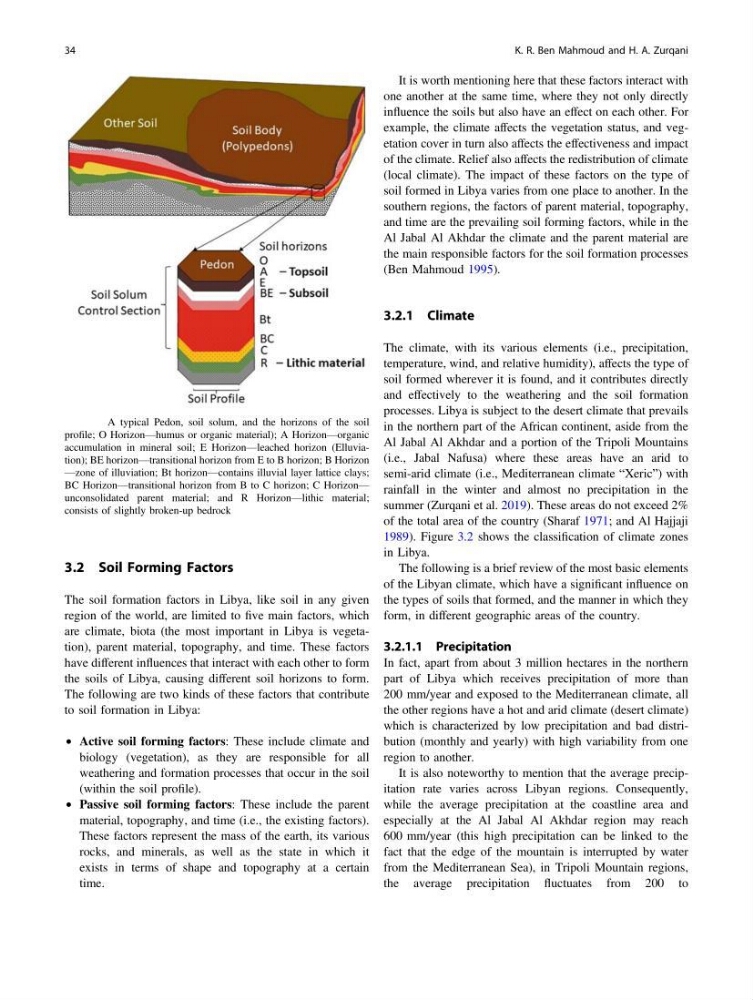
Fig. 3.1 A typical Pedon, soil solum, and the horizons of the soil
profile; O Horizon—humus or organic material); A Horizon—organic
accumulation in mineral soil; E Horizon—leached horizon (Elluviation); BE horizon—transitional horizon from E to B horizon; B Horizon
—zone of illuviation; Bt horizon—contains illuvial layer lattice clays;
BC Horizon—transitional horizon from B to C horizon; C Horizon—
unconsolidated parent material; and R Horizon—lithic material;
consists of slightly broken-up bedrock
34
K. R. Ben Mahmoud and H. A. Zurqani
The soil formation factors in Libya, like soil in any given
region of the world, are limited to five main factors, which
are climate, biota (the most important in Libya is vegetation), parent material, topography, and time. These factors
have different influences that interact with each other to form
the soils of Libya, causing different soil horizons to form.
The following are two kinds of these factors that contribute
to soil formation in Libya:
• Active soil forming factors: These include climate and
biology (vegetation), as they are responsible for all
weathering and formation processes that occur in the soil
(within the soil profile).
• Passive soil forming factors: These include the parent
material, topography, and time (i.e., the existing factors).
These factors represent the mass of the earth, its various
rocks, and minerals, as well as the state in which it
exists in terms of shape and topography at a certain
time.
It is worth mentioning here that these factors interact with
one another at the same time, where they not only directly
influence the soils but also have an effect on each other. For
example, the climate affects the vegetation status, and vegetation cover in turn also affects the effectiveness and impact
of the climate. Relief also affects the redistribution of climate
(local climate). The impact of these factors on the type of
soil formed in Libya varies from one place to another. In the
southern regions, the factors of parent material, topography,
and time are the prevailing soil forming factors, while in the
Al Jabal Al Akhdar the climate and the parent material are
the main responsible factors for the soil formation processes
(Ben Mahmoud 1995).
3.2.1 Climate
The climate, with its various elements (i.e., precipitation,
temperature, wind, and relative humidity), affects the type of
soil formed wherever it is found, and it contributes directly
and effectively to the weathering and the soil formation
processes. Libya is subject to the desert climate that prevails
in the northern part of the African continent, aside from the
Al Jabal Al Akhdar and a portion of the Tripoli Mountains
(i.e., Jabal Nafusa) where these areas have an arid to
semi-arid climate (i.e., Mediterranean climate “Xeric”) with
rainfall in the winter and almost no precipitation in the
summer (Zurqani et al. 2019). These areas do not exceed 2%
of the total area of the country (Sharaf 1971; and Al Hajjaji
1989). Figure 3.2 shows the classification of climate zones
in Libya.
The following is a brief review of the most basic elements
of the Libyan climate, which have a significant influence on
the types of soils that formed, and the manner in which they
form, in different geographic areas of the country.
3.2.1.1 Precipitation
In fact, apart from about 3 million hectares in the northern
part of Libya which receives precipitation of more than
200 mm/year and exposed to the Mediterranean climate, all
the other regions have a hot and arid climate (desert climate)
which is characterized by low precipitation and bad distribution (monthly and yearly) with high variability from one
region to another.
It is also noteworthy to mention that the average precipitation rate varies across Libyan regions. Consequently,
while the average precipitation at the coastline area and
especially at the Al Jabal Al Akhdar region may reach
600 mm/year (this high precipitation can be linked to the
fact that the edge of the mountain is interrupted by water
from the Mediterranean Sea), in Tripoli Mountain regions,
the average precipitation fluctuates from 200 to
Fig. 3.1 A typical Pedon, soil solum, and the horizons of the soil
profile; O Horizon—humus or organic material); A Horizon—organic
accumulation in mineral soil; E Horizon—leached horizon (Elluviation); BE horizon—transitional horizon from E to B horizon; B Horizon
—zone of illuviation; Bt horizon—contains illuvial layer lattice clays;
BC Horizon—transitional horizon from B to C horizon; C Horizon—
unconsolidated parent material; and R Horizon—lithic material;
consists of slightly broken-up bedrock
34
K. R. Ben Mahmoud and H. A. Zurqani