

Fezzan is a part of the region that occupies a large area of
southern Libya where wild pastures are spread, such as wild
grass and pastoral legumes (Fig. 7.10). In order to visualize
the natural image of Fezzan, the region must be described
from the climatic and biological aspects to set expectations
for the type of life in this region. Fezzan is a very large area
of sand interspersed with some dry mountains and valleys,
with scattered oases in which Libyans are living and which
depend upon ground water. The desert climate is prevalent,
and there is a significant difference between the temperatures. In the summer, sometimes it can reach 46 °C, while in
winter, it drops to less than zero. Rainfall is scarce and does
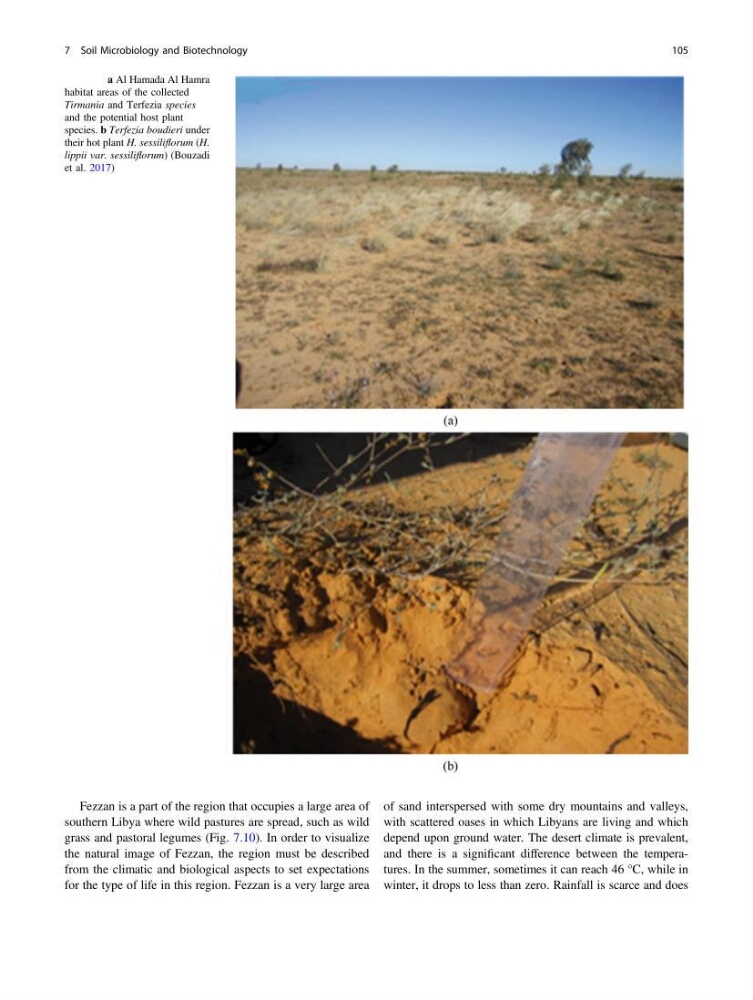
Fig. 7.9 a Al Hamada Al Hamra
habitat areas of the collected
Tirmania and Terfezia species
and the potential host plant
species. b Terfezia boudieri under
their hot plant H. sessiliflorum (H.
lippii var. sessiliflorum) (Bouzadi
et al. 2017)
7 Soil Microbiology and Biotechnology
105
southern Libya where wild pastures are spread, such as wild
grass and pastoral legumes (Fig. 7.10). In order to visualize
the natural image of Fezzan, the region must be described
from the climatic and biological aspects to set expectations
for the type of life in this region. Fezzan is a very large area
of sand interspersed with some dry mountains and valleys,
with scattered oases in which Libyans are living and which
depend upon ground water. The desert climate is prevalent,
and there is a significant difference between the temperatures. In the summer, sometimes it can reach 46 °C, while in
winter, it drops to less than zero. Rainfall is scarce and does
Fig. 7.9 a Al Hamada Al Hamra
habitat areas of the collected
Tirmania and Terfezia species
and the potential host plant
species. b Terfezia boudieri under
their hot plant H. sessiliflorum (H.
lippii var. sessiliflorum) (Bouzadi
et al. 2017)
7 Soil Microbiology and Biotechnology
105