

number of species (Al-Idrissi et al. 1996). These plants are
distributed in four main regions: Al Jabal Al Akhdar, the
coastal belt, the Fezzan region (especially in some mountain
valleys such as Al Hasawneh Al Harouj, Tebasti), and Ghat
(see Fig. 2.1, Chap. 2). These leguminous plants do not form
natural forests but rather are dispersed in valleys and on the
foothills of the mountains in the form of annuals and a few
perennials.
Astragalus, Medicago, Trigonella, Lupinus, Retama, and
Acacia plants are among the most widespread leguminous
plants and are distributed in the mentioned areas. These
plants, like legumes and other wild plants, play an important
role in the Libyan environment, represented by providing
other non-leguminous plants with nitrogen, maintaining
biological diversity in the Libyan desert, stabilizing sand
dunes, protecting soil from erosion and corrosion, and preserving the vegetation of the lands in addition to its use as
fodder and pastoral crops for livestock by herders (Atallah
et al. 2008).
Acacia species, which are members of the Leguminosae
family, can grow on barren soils and dry sites that are not
suitable for many plant crops. Acacia are widespread and
cultivated throughout the country, mainly for stabilizing
soils and building wind-breaks. Acaci tortilis (subsp. raddiana) grows naturally in arid areas at south of Libya (Fezzan,
Wadi-Eshati and Soukna). It is used as fodder for goats and
camels in areas where natural grazing vegetation is rare. A.
cyclops is restricted to the Mediterranean Sea coast (north of
Libya), growing in the areas subjected to sea winds.
Meanwhile, Acacia karroo is cultivated around the farms to
form an impenetrable barrier to livestock. Acacia cyclops are
also common in Libya, and other Acacia spp. such as Acacia
nilotica, Faidherbia albida, and Acacia farensiana can
occur, but in limited numbers (Jafri 1978). Another advantage of the acacia that encourages its cultivation is that it
improves the properties of the soil and raises its fertility due
to its ability to enter into symbiosis with rhizobia and
vesicular arbuscular mycorrhizal (VAM) fungi.
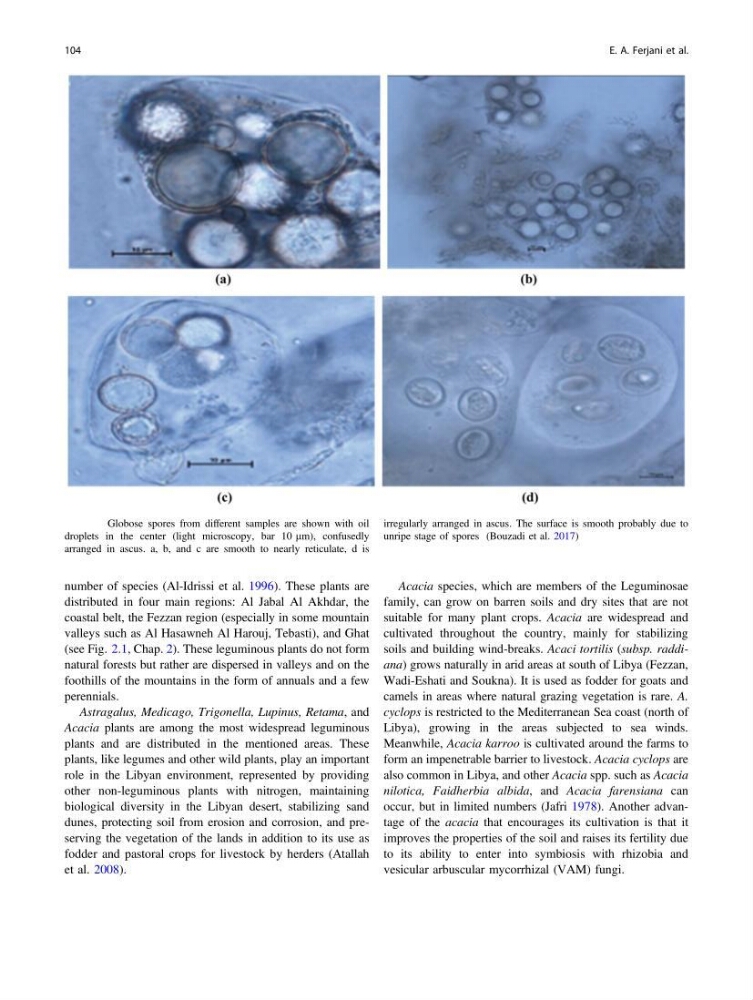
Fig. 7.8 Globose spores from different samples are shown with oil
droplets in the center (light microscopy, bar 10 lm), confusedly
arranged in ascus. a, b, and c are smooth to nearly reticulate, d is
irregularly arranged in ascus. The surface is smooth probably due to
unripe stage of spores (Bouzadi et al. 2017)
104
E. A. Ferjani et al.
distributed in four main regions: Al Jabal Al Akhdar, the
coastal belt, the Fezzan region (especially in some mountain
valleys such as Al Hasawneh Al Harouj, Tebasti), and Ghat
(see Fig. 2.1, Chap. 2). These leguminous plants do not form
natural forests but rather are dispersed in valleys and on the
foothills of the mountains in the form of annuals and a few
perennials.
Astragalus, Medicago, Trigonella, Lupinus, Retama, and
Acacia plants are among the most widespread leguminous
plants and are distributed in the mentioned areas. These
plants, like legumes and other wild plants, play an important
role in the Libyan environment, represented by providing
other non-leguminous plants with nitrogen, maintaining
biological diversity in the Libyan desert, stabilizing sand
dunes, protecting soil from erosion and corrosion, and preserving the vegetation of the lands in addition to its use as
fodder and pastoral crops for livestock by herders (Atallah
et al. 2008).
Acacia species, which are members of the Leguminosae
family, can grow on barren soils and dry sites that are not
suitable for many plant crops. Acacia are widespread and
cultivated throughout the country, mainly for stabilizing
soils and building wind-breaks. Acaci tortilis (subsp. raddiana) grows naturally in arid areas at south of Libya (Fezzan,
Wadi-Eshati and Soukna). It is used as fodder for goats and
camels in areas where natural grazing vegetation is rare. A.
cyclops is restricted to the Mediterranean Sea coast (north of
Libya), growing in the areas subjected to sea winds.
Meanwhile, Acacia karroo is cultivated around the farms to
form an impenetrable barrier to livestock. Acacia cyclops are
also common in Libya, and other Acacia spp. such as Acacia
nilotica, Faidherbia albida, and Acacia farensiana can
occur, but in limited numbers (Jafri 1978). Another advantage of the acacia that encourages its cultivation is that it
improves the properties of the soil and raises its fertility due
to its ability to enter into symbiosis with rhizobia and
vesicular arbuscular mycorrhizal (VAM) fungi.
Fig. 7.8 Globose spores from different samples are shown with oil
droplets in the center (light microscopy, bar 10 lm), confusedly
arranged in ascus. a, b, and c are smooth to nearly reticulate, d is
irregularly arranged in ascus. The surface is smooth probably due to
unripe stage of spores (Bouzadi et al. 2017)
104
E. A. Ferjani et al.