

Japan, 58% of which is a citrus fruit orchard (Table 9.5).
The cultivated areas of citrus trees in Ehime and Wakayama
Prefectures, the main production areas for citrus in Japan, are
14,030 ha and 9840 ha, respectively, which together
accounts for 35% of the citrus cultivation area in Japan
(Ministry of Agriculture, Forestry and Fisheries 2017i).
Meanwhile, the area of Japanese apricot (Ume) cultivation in
Wakayama Prefecture, which has cultivated a high yield
cultivar, accounts for 34% of the area of Japanese apricot
cultivation in Japan, while the area of persimmon cultivation
in Wakayama and Nara Prefectures accounts for 22% of its
cultivation area in the whole of Japan. Accordingly, the area
of orchards in the Kinki, Chugoku, and Shikoku regions as a
percentage of the total in Japan is 51% for citrus, 40% for
Japanese apricot, 33% for persimmon, 23% for chestnut,
22% for loquat, 16% for peach, 16% for grape, and 14% for
Japanese pear. Meanwhile, tea cultivation requires about
1500 mm of annual rainfall, and tea plantations are therefore
located in the Yamashiro area in Kyoto Prefecture and
Yamato Kogen in Nara Prefecture; the total area of these
plantations (2271 ha) accounts for about 5% of the total area
of tea plantations in Japan.
The total area of fruit and tea cultivation in the Kinki,
Chugoku, and Shikoku regions is 61,548 ha, which accounts
for 24% of the total area of fruit and tea cultivation in Japan.
However, this percentage is only 13% of the cultivated land
area, and 75% of the area in the three regions is paddy fields
(Ministry of Agriculture, Forestry and Fisheries 2017j).
2. Nutrient accumulation in Regosols
The geology of the Kinki, Chugoku, and Shikoku regions is
different to the north and south of the MTL in the east–west
direction. To the south of the MTL, the soil originates
mainly from sedimentary rocks, and in Wakayama Prefecture, 64% of orchards are occupied by Brown Forest soils,
11% by Red-Yellow soils, and 11% by Fluvic soils
(Wakayama Prefecture 2011a). On the other hand, to the
north of the MTL, the soil is derived from igneous rocks, and
in Shiga Prefecture, 48% of orchards are occupied by Fluvic
soils, 19% by Brown Forest soils, 11% by Red-Yellow soils,
and 11% by Andosols (Shiga Prefecture 2001). The soils in
the hilly and mountainous areas that are used as orchards are
immature, and more than 60% of the citrus orchard soils in
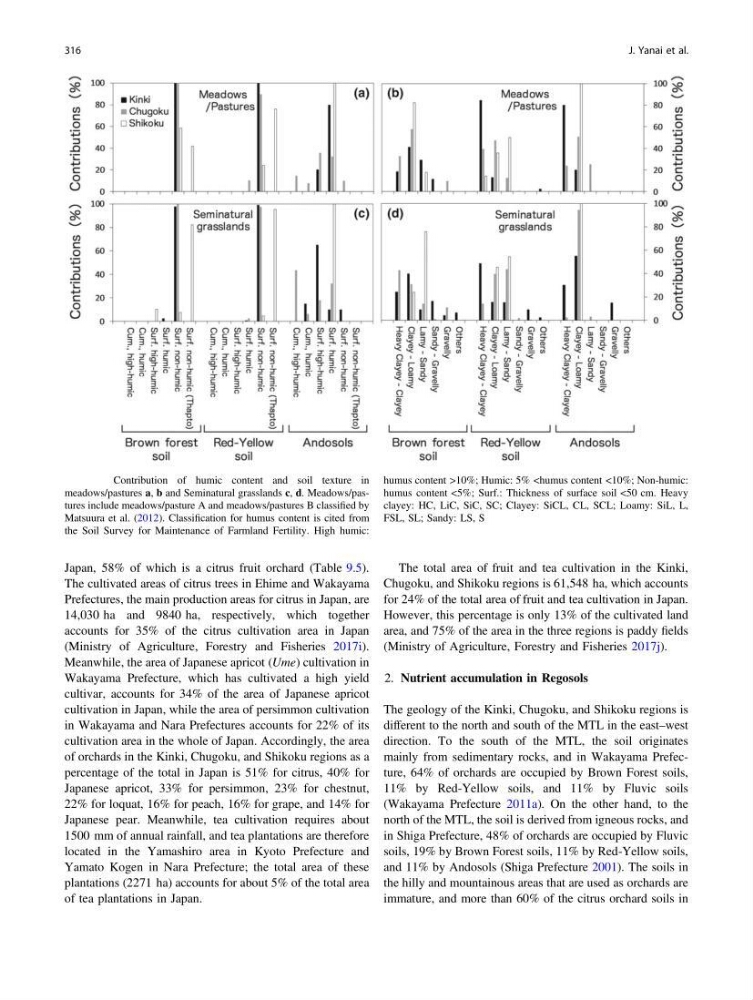
Fig. 9.10 Contribution of humic content and soil texture in
meadows/pastures a, b and Seminatural grasslands c, d. Meadows/pastures include meadows/pasture A and meadows/pastures B classified by
Matsuura et al. (2012). Classification for humus content is cited from
the Soil Survey for Maintenance of Farmland Fertility. High humic:
humus content >10%; Humic: 5%
clayey: HC, LiC, SiC, SC; Clayey: SiCL, CL, SCL; Loamy: SiL, L,
FSL, SL; Sandy: LS, S
316
J. Yanai et al.
The cultivated areas of citrus trees in Ehime and Wakayama
Prefectures, the main production areas for citrus in Japan, are
14,030 ha and 9840 ha, respectively, which together
accounts for 35% of the citrus cultivation area in Japan
(Ministry of Agriculture, Forestry and Fisheries 2017i).
Meanwhile, the area of Japanese apricot (Ume) cultivation in
Wakayama Prefecture, which has cultivated a high yield
cultivar, accounts for 34% of the area of Japanese apricot
cultivation in Japan, while the area of persimmon cultivation
in Wakayama and Nara Prefectures accounts for 22% of its
cultivation area in the whole of Japan. Accordingly, the area
of orchards in the Kinki, Chugoku, and Shikoku regions as a
percentage of the total in Japan is 51% for citrus, 40% for
Japanese apricot, 33% for persimmon, 23% for chestnut,
22% for loquat, 16% for peach, 16% for grape, and 14% for
Japanese pear. Meanwhile, tea cultivation requires about
1500 mm of annual rainfall, and tea plantations are therefore
located in the Yamashiro area in Kyoto Prefecture and
Yamato Kogen in Nara Prefecture; the total area of these
plantations (2271 ha) accounts for about 5% of the total area
of tea plantations in Japan.
The total area of fruit and tea cultivation in the Kinki,
Chugoku, and Shikoku regions is 61,548 ha, which accounts
for 24% of the total area of fruit and tea cultivation in Japan.
However, this percentage is only 13% of the cultivated land
area, and 75% of the area in the three regions is paddy fields
(Ministry of Agriculture, Forestry and Fisheries 2017j).
2. Nutrient accumulation in Regosols
The geology of the Kinki, Chugoku, and Shikoku regions is
different to the north and south of the MTL in the east–west
direction. To the south of the MTL, the soil originates
mainly from sedimentary rocks, and in Wakayama Prefecture, 64% of orchards are occupied by Brown Forest soils,
11% by Red-Yellow soils, and 11% by Fluvic soils
(Wakayama Prefecture 2011a). On the other hand, to the
north of the MTL, the soil is derived from igneous rocks, and
in Shiga Prefecture, 48% of orchards are occupied by Fluvic
soils, 19% by Brown Forest soils, 11% by Red-Yellow soils,
and 11% by Andosols (Shiga Prefecture 2001). The soils in
the hilly and mountainous areas that are used as orchards are
immature, and more than 60% of the citrus orchard soils in
Fig. 9.10 Contribution of humic content and soil texture in
meadows/pastures a, b and Seminatural grasslands c, d. Meadows/pastures include meadows/pasture A and meadows/pastures B classified by
Matsuura et al. (2012). Classification for humus content is cited from
the Soil Survey for Maintenance of Farmland Fertility. High humic:
humus content >10%; Humic: 5%
clayey: HC, LiC, SiC, SC; Clayey: SiCL, CL, SCL; Loamy: SiL, L,
FSL, SL; Sandy: LS, S
316
J. Yanai et al.