

Wakayama Prefecture required soil improvement for low
productivity (Wakayama Prefecture 2011b). For this reason,
deep plowing has been carried out and organic materials,
phosphate materials, and green mulch have been applied. As
a result, the content of organic matter in these soils exceeded
the target value, 3 g/100 g dry soil, in more than 90% of the
orchard and tea plantation soils in Japan (Ministry of Agriculture, Forestry and Fisheries 2008a). Furthermore, the soils
in half of the orchards had an excess of calcium and over
30% had an excess of potassium, although 70% were found
to be deficient in magnesium. Additionally, the soils of
nearly 90% of tea plantations had an excess of potassium,
while 60% were deficient in calcium and 70% were deficient
in magnesium (Ministry of Agriculture, Forestry and Fisheries 2008b). Levels of soil available phosphate exceed the
target value, 30 mg/100 g, in 80% of orchards and 90% of
tea plantations, and increased from the 1980s to the 1990s
(Ministry of Agriculture, Forestry and Fisheries 2008c). As
groundwater pollution due to fertilizer nitrogen was identified, the reduction of fertilizer amount was promoted in
consideration of the environment (Umemiya 2004).
9.2.7 Forest Soil and Forestry
The Kinki–Chugoku–Shikoku region is small, but it includes
all of the major climate regions in Japan due to large
variations in precipitation and distance from the sea. The
southern parts of the Kinki and Shikoku regions border the
Pacific Ocean, the northern parts of the Kinki and Chugoku
regions border the Sea of Japan, and the southern part of the
Chugoku region and the northern part of the Shikoku region
are close to the Seto Inland Sea. This results in climatic
variation. Snow occurs during winter in the region close to
the Sea of Japan, which is subject to a coastal climate, and
snowfall is very heavy in the northern part of the Kinki
region. Along the Seto Inland Sea, precipitation is low all
year. The region of heavy snow in the northern part of the
Kinki region along the Sea of Japan, and the regions that
experience heavy rain, including Mt. Odaigahara on the Kii
Peninsula and Kochi Prefecture, receive the highest levels of
precipitation in Japan.
These climates are related to topography. For example, in
the Seto Inland Sea area, the winter seasonal wind is blocked
by the Chugoku mountains and the summer seasonal wind
from the Pacific Ocean is blocked by the Shikoku mountains. Consequently, the air is dry all year and precipitation
is low.
Mean annual temperatures are relatively high throughout
the Kinki–Chugoku–Shikoku region, with temperatures of
16.3, 14.3, and 16.2 °C in the cities of Osaka, Matsue, and
Hiroshima, respectively. The soil temperature regime is
thermic along the coast and mesic in the mountainous areas
(Takata et al. 2011).
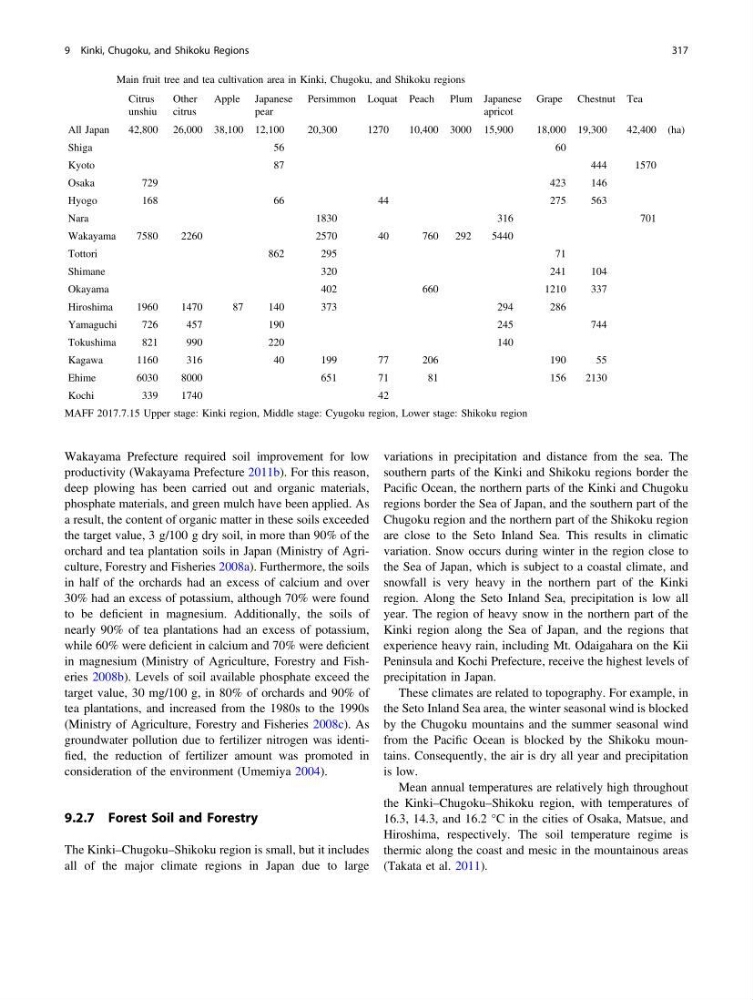
Table 9.5 Main fruit tree and tea cultivation area in Kinki, Chugoku, and Shikoku regions
Citrus
unshiu
Other
citrus
Apple Japanese
pear
Persimmon Loquat Peach Plum Japanese
apricot
Grape Chestnut Tea
All Japan
42,800 26,000 38,100 12,100
20,300
1270
10,400 3000 15,900
18,000 19,300
42,400 (ha)
Shiga
56
60
Kyoto
87
444
1570
Osaka
729
423
146
Hyogo
168
66
44
275
563
Nara
1830
316
701
Wakayama
7580
2260
2570
40
760
292
5440
Tottori
862
295
71
Shimane
320
241
104
Okayama
402
660
1210
337
Hiroshima
1960
1470
87
140
373
294
286
Yamaguchi
726
457
190
245
744
Tokushima
821
990
220
140
Kagawa
1160
316
40
199
77
206
190
55
Ehime
6030
8000
651
71
81
156
2130
Kochi
339
1740
42
MAFF 2017.7.15 Upper stage: Kinki region, Middle stage: Cyugoku region, Lower stage: Shikoku region
9 Kinki, Chugoku, and Shikoku Regions
317
productivity (Wakayama Prefecture 2011b). For this reason,
deep plowing has been carried out and organic materials,
phosphate materials, and green mulch have been applied. As
a result, the content of organic matter in these soils exceeded
the target value, 3 g/100 g dry soil, in more than 90% of the
orchard and tea plantation soils in Japan (Ministry of Agriculture, Forestry and Fisheries 2008a). Furthermore, the soils
in half of the orchards had an excess of calcium and over
30% had an excess of potassium, although 70% were found
to be deficient in magnesium. Additionally, the soils of
nearly 90% of tea plantations had an excess of potassium,
while 60% were deficient in calcium and 70% were deficient
in magnesium (Ministry of Agriculture, Forestry and Fisheries 2008b). Levels of soil available phosphate exceed the
target value, 30 mg/100 g, in 80% of orchards and 90% of
tea plantations, and increased from the 1980s to the 1990s
(Ministry of Agriculture, Forestry and Fisheries 2008c). As
groundwater pollution due to fertilizer nitrogen was identified, the reduction of fertilizer amount was promoted in
consideration of the environment (Umemiya 2004).
9.2.7 Forest Soil and Forestry
The Kinki–Chugoku–Shikoku region is small, but it includes
all of the major climate regions in Japan due to large
variations in precipitation and distance from the sea. The
southern parts of the Kinki and Shikoku regions border the
Pacific Ocean, the northern parts of the Kinki and Chugoku
regions border the Sea of Japan, and the southern part of the
Chugoku region and the northern part of the Shikoku region
are close to the Seto Inland Sea. This results in climatic
variation. Snow occurs during winter in the region close to
the Sea of Japan, which is subject to a coastal climate, and
snowfall is very heavy in the northern part of the Kinki
region. Along the Seto Inland Sea, precipitation is low all
year. The region of heavy snow in the northern part of the
Kinki region along the Sea of Japan, and the regions that
experience heavy rain, including Mt. Odaigahara on the Kii
Peninsula and Kochi Prefecture, receive the highest levels of
precipitation in Japan.
These climates are related to topography. For example, in
the Seto Inland Sea area, the winter seasonal wind is blocked
by the Chugoku mountains and the summer seasonal wind
from the Pacific Ocean is blocked by the Shikoku mountains. Consequently, the air is dry all year and precipitation
is low.
Mean annual temperatures are relatively high throughout
the Kinki–Chugoku–Shikoku region, with temperatures of
16.3, 14.3, and 16.2 °C in the cities of Osaka, Matsue, and
Hiroshima, respectively. The soil temperature regime is
thermic along the coast and mesic in the mountainous areas
(Takata et al. 2011).
Table 9.5 Main fruit tree and tea cultivation area in Kinki, Chugoku, and Shikoku regions
Citrus
unshiu
Other
citrus
Apple Japanese
pear
Persimmon Loquat Peach Plum Japanese
apricot
Grape Chestnut Tea
All Japan
42,800 26,000 38,100 12,100
20,300
1270
10,400 3000 15,900
18,000 19,300
42,400 (ha)
Shiga
56
60
Kyoto
87
444
1570
Osaka
729
423
146
Hyogo
168
66
44
275
563
Nara
1830
316
701
Wakayama
7580
2260
2570
40
760
292
5440
Tottori
862
295
71
Shimane
320
241
104
Okayama
402
660
1210
337
Hiroshima
1960
1470
87
140
373
294
286
Yamaguchi
726
457
190
245
744
Tokushima
821
990
220
140
Kagawa
1160
316
40
199
77
206
190
55
Ehime
6030
8000
651
71
81
156
2130
Kochi
339
1740
42
MAFF 2017.7.15 Upper stage: Kinki region, Middle stage: Cyugoku region, Lower stage: Shikoku region
9 Kinki, Chugoku, and Shikoku Regions
317