

(2) Proper fertilization using livestock manure in
upland fields
The application of organic matter is an essential agricultural
practice in Red-Yellow soils with poor soil physical properties and soil fertility. In the Red-Yellow soil vegetable
fields of the Atsumi Peninsula, the application of livestock
manure compost originating from animal husbandry is
widely conducted. Due to the high contents of beneficial
nutrients, the application of livestock manure compost has
the potential to reduce the amount of chemical fertilizer,
which can lower environmental loads without decreasing
productivity.
Aichi-ken Agricultural Research Center investigated the
dynamics of nutrients in soil and crop yields in a vegetable
upland field where cattle or pig manure compost was applied
repeatedly in a field experiment and suggested a method for
reducing the amount of chemical fertilizer to a field with
continuous application of compost (Table 8.2; Tsuji et al.
2018). The details of this investigation are introduced in the
following two paragraphs.
In the field experiment, a cattle manure compost plot, a pig
manure compost plot, and a no-compost plot were prepared.
Composts were applied in August, and cabbage and maize
were cultivated from September to February and from May to
July, respectively. The amounts of composts applied were
chosen according to the recommended standard of the Aichi
Prefectural government (Aichi Prefecture 2016), that is, cattle
manure compost was applied at 15 Mg-DW (dry weight)
ha
−1 y
−1 , while pig manure compost was applied at
10 Mg-DW ha
−1 y
−1 . During the first three-year period, the
same amount of chemical fertilizer was applied to all the
three plots to confirm the increase in yield due to the additional nutrient supply from the composts. Then, assuming
that an increase in the available N content in the soil had
resulted from the repeated application of compost, the
amount of N fertilizer was reduced in a stepwise manner. The
rate of application of N fertilizer was determined based on the
apparent utilization ratio of compost derived N by crops in
the previous year, which was calculated using N balance data
(Table 8.2). The N balance was evaluated from crop yield,
the amount of N absorbed by crops, soil N content, and the
amount of N leached in each crop season. As a result, surplus
N was largely reduced without decreasing crop yield relative
to the first 3-year records before successive fertilizer reduction was started. Since a portion of surplus N accumulated in
the soil, particularly in the cattle manure compost plot, the N
elution into groundwater could be largely decreased.
Phosphorus and potassium (K) in manure compost have
the following characteristics: (1) the whole amount in
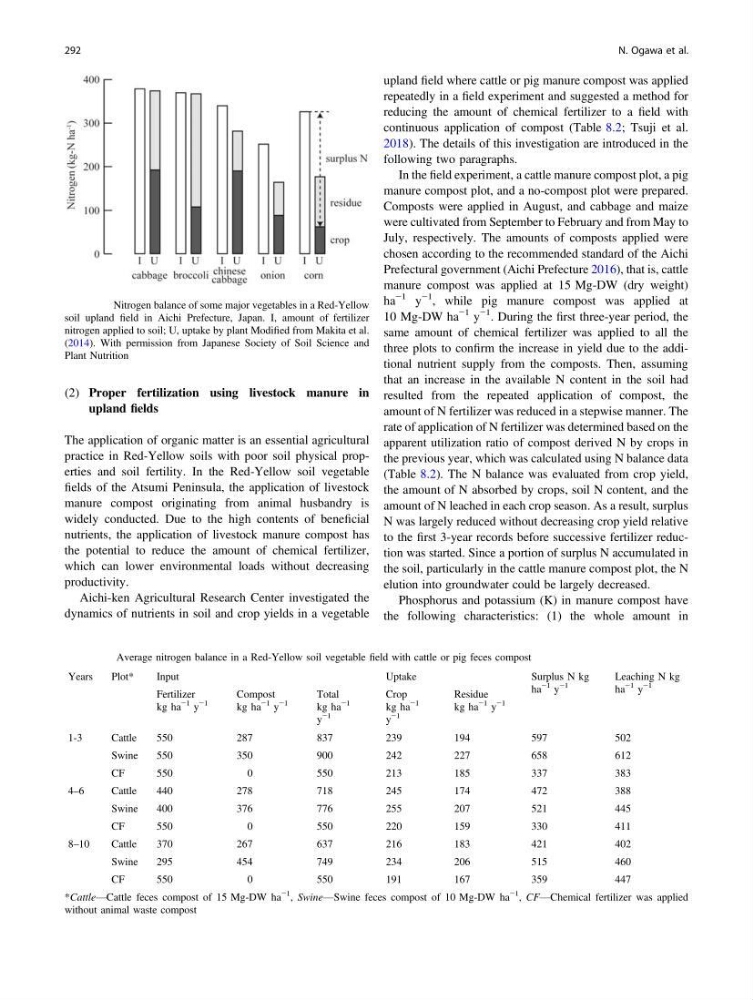
Fig. 8.21 Nitrogen balance of some major vegetables in a Red-Yellow
soil upland field in Aichi Prefecture, Japan. I, amount of fertilizer
nitrogen applied to soil; U, uptake by plant Modified from Makita et al.
(2014). With permission from Japanese Society of Soil Science and
Plant Nutrition
Table 8.2 Average nitrogen balance in a Red-Yellow soil vegetable field with cattle or pig feces compost
Years
Plot*
Input
Uptake
Surplus N kg
ha
−1 y
−1
Leaching N kg
ha
−1 y
−1
Fertilizer
kg ha
−1 y
−1
Compost
kg ha
−1 y
−1
Total
kg ha
−1
y
−1
Crop
kg ha
−1
y
−1
Residue
kg ha
−1 y
−1
1-3
Cattle
550
287
837
239
194
597
502
Swine
550
350
900
242
227
658
612
CF
550
0
550
213
185
337
383
4–6
Cattle
440
278
718
245
174
472
388
Swine
400
376
776
255
207
521
445
CF
550
0
550
220
159
330
411
8–10
Cattle
370
267
637
216
183
421
402
Swine
295
454
749
234
206
515
460
CF
550
0
550
191
167
359
447
*Cattle—Cattle feces compost of 15 Mg-DW ha
−1
, Swine—Swine feces compost of 10 Mg-DW ha
−1
, CF—Chemical fertilizer was applied
without animal waste compost
292
N. Ogawa et al.
upland fields
The application of organic matter is an essential agricultural
practice in Red-Yellow soils with poor soil physical properties and soil fertility. In the Red-Yellow soil vegetable
fields of the Atsumi Peninsula, the application of livestock
manure compost originating from animal husbandry is
widely conducted. Due to the high contents of beneficial
nutrients, the application of livestock manure compost has
the potential to reduce the amount of chemical fertilizer,
which can lower environmental loads without decreasing
productivity.
Aichi-ken Agricultural Research Center investigated the
dynamics of nutrients in soil and crop yields in a vegetable
upland field where cattle or pig manure compost was applied
repeatedly in a field experiment and suggested a method for
reducing the amount of chemical fertilizer to a field with
continuous application of compost (Table 8.2; Tsuji et al.
2018). The details of this investigation are introduced in the
following two paragraphs.
In the field experiment, a cattle manure compost plot, a pig
manure compost plot, and a no-compost plot were prepared.
Composts were applied in August, and cabbage and maize
were cultivated from September to February and from May to
July, respectively. The amounts of composts applied were
chosen according to the recommended standard of the Aichi
Prefectural government (Aichi Prefecture 2016), that is, cattle
manure compost was applied at 15 Mg-DW (dry weight)
ha
−1 y
−1 , while pig manure compost was applied at
10 Mg-DW ha
−1 y
−1 . During the first three-year period, the
same amount of chemical fertilizer was applied to all the
three plots to confirm the increase in yield due to the additional nutrient supply from the composts. Then, assuming
that an increase in the available N content in the soil had
resulted from the repeated application of compost, the
amount of N fertilizer was reduced in a stepwise manner. The
rate of application of N fertilizer was determined based on the
apparent utilization ratio of compost derived N by crops in
the previous year, which was calculated using N balance data
(Table 8.2). The N balance was evaluated from crop yield,
the amount of N absorbed by crops, soil N content, and the
amount of N leached in each crop season. As a result, surplus
N was largely reduced without decreasing crop yield relative
to the first 3-year records before successive fertilizer reduction was started. Since a portion of surplus N accumulated in
the soil, particularly in the cattle manure compost plot, the N
elution into groundwater could be largely decreased.
Phosphorus and potassium (K) in manure compost have
the following characteristics: (1) the whole amount in
Fig. 8.21 Nitrogen balance of some major vegetables in a Red-Yellow
soil upland field in Aichi Prefecture, Japan. I, amount of fertilizer
nitrogen applied to soil; U, uptake by plant Modified from Makita et al.
(2014). With permission from Japanese Society of Soil Science and
Plant Nutrition
Table 8.2 Average nitrogen balance in a Red-Yellow soil vegetable field with cattle or pig feces compost
Years
Plot*
Input
Uptake
Surplus N kg
ha
−1 y
−1
Leaching N kg
ha
−1 y
−1
Fertilizer
kg ha
−1 y
−1
Compost
kg ha
−1 y
−1
Total
kg ha
−1
y
−1
Crop
kg ha
−1
y
−1
Residue
kg ha
−1 y
−1
1-3
Cattle
550
287
837
239
194
597
502
Swine
550
350
900
242
227
658
612
CF
550
0
550
213
185
337
383
4–6
Cattle
440
278
718
245
174
472
388
Swine
400
376
776
255
207
521
445
CF
550
0
550
220
159
330
411
8–10
Cattle
370
267
637
216
183
421
402
Swine
295
454
749
234
206
515
460
CF
550
0
550
191
167
359
447
*Cattle—Cattle feces compost of 15 Mg-DW ha
−1
, Swine—Swine feces compost of 10 Mg-DW ha
−1
, CF—Chemical fertilizer was applied
without animal waste compost
292
N. Ogawa et al.