

The mean contents of minerals in soils of upland vegetable fields have either increased significantly, been relatively stable, or decreased significantly. For instance, the
content of exchangeable magnesium has experienced a great
decline since the third round of surveys. Additionally, the
content of available phosphate has increased remarkably
since the first round of surveys, and although no increase
was observed between the fifth and sixth round of surveys,
its content is still high, and it will therefore be advisable to
dress a reasonable amount of fertilizers.
7.3.3 Niigata Prefecture
The total area of agricultural land in Niigata Prefecture is
about 174,000 ha, about 90% of which is occupied by paddy
fields. Approximately 70% of paddy field soils in the prefecture are classified as Gley Fluvic soils, and about 15% are
classified as Gray Fluvic soils. Large areas of the alluvial
plains which constitute the flatland (such as the Niigata
Plain, Kashiwazaki Plain, Takada Plain) are occupied by
heavy clay soils with poor drainage.
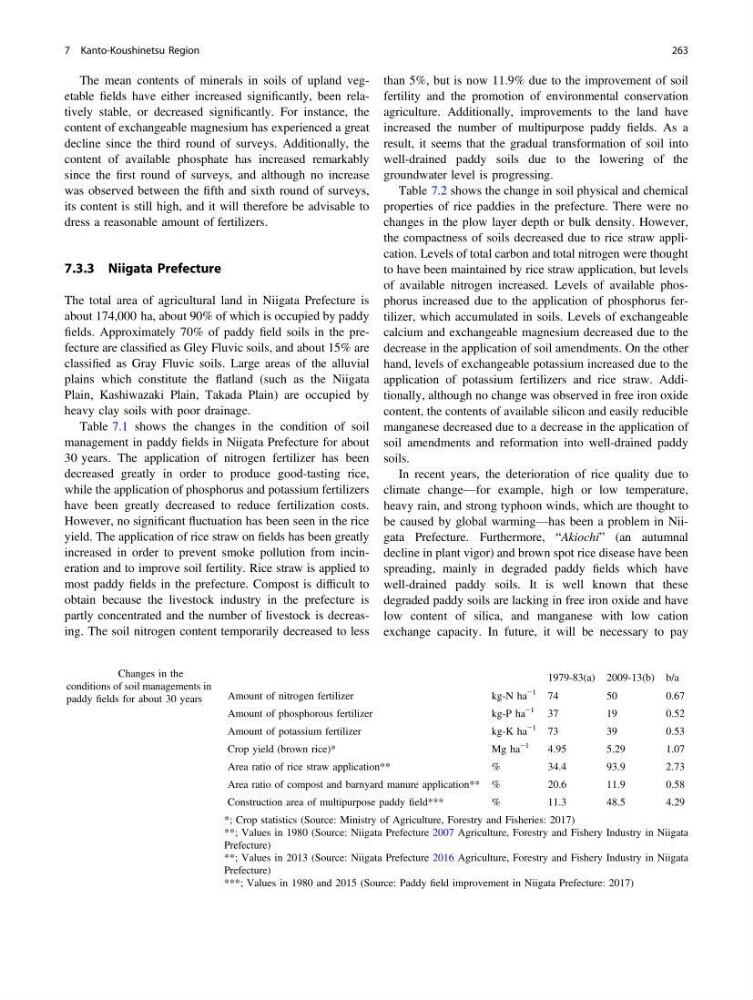
Table 7.1 shows the changes in the condition of soil
management in paddy fields in Niigata Prefecture for about
30 years. The application of nitrogen fertilizer has been
decreased greatly in order to produce good-tasting rice,
while the application of phosphorus and potassium fertilizers
have been greatly decreased to reduce fertilization costs.
However, no significant fluctuation has been seen in the rice
yield. The application of rice straw on fields has been greatly
increased in order to prevent smoke pollution from incineration and to improve soil fertility. Rice straw is applied to
most paddy fields in the prefecture. Compost is difficult to
obtain because the livestock industry in the prefecture is
partly concentrated and the number of livestock is decreasing. The soil nitrogen content temporarily decreased to less
than 5%, but is now 11.9% due to the improvement of soil
fertility and the promotion of environmental conservation
agriculture. Additionally, improvements to the land have
increased the number of multipurpose paddy fields. As a
result, it seems that the gradual transformation of soil into
well-drained paddy soils due to the lowering of the
groundwater level is progressing.
Table 7.2 shows the change in soil physical and chemical
properties of rice paddies in the prefecture. There were no
changes in the plow layer depth or bulk density. However,
the compactness of soils decreased due to rice straw application. Levels of total carbon and total nitrogen were thought
to have been maintained by rice straw application, but levels
of available nitrogen increased. Levels of available phosphorus increased due to the application of phosphorus fertilizer, which accumulated in soils. Levels of exchangeable
calcium and exchangeable magnesium decreased due to the
decrease in the application of soil amendments. On the other
hand, levels of exchangeable potassium increased due to the
application of potassium fertilizers and rice straw. Additionally, although no change was observed in free iron oxide
content, the contents of available silicon and easily reducible
manganese decreased due to a decrease in the application of
soil amendments and reformation into well-drained paddy
soils.
In recent years, the deterioration of rice quality due to
climate change—for example, high or low temperature,
heavy rain, and strong typhoon winds, which are thought to
be caused by global warming—has been a problem in Niigata Prefecture. Furthermore, “Akiochi” (an autumnal
decline in plant vigor) and brown spot rice disease have been
spreading, mainly in degraded paddy fields which have
well-drained paddy soils. It is well known that these
degraded paddy soils are lacking in free iron oxide and have
low content of silica, and manganese with low cation
exchange capacity. In future, it will be necessary to pay
Table 7.1 Changes in the
conditions of soil managements in
paddy fields for about 30 years
1979-83(a) 2009-13(b) b/a
Amount of nitrogen fertilizer
kg-N ha
−1
74
50
0.67
Amount of phosphorous fertilizer
kg-P ha
−1
37
19
0.52
Amount of potassium fertilizer
kg-K ha
−1
73
39
0.53
Crop yield (brown rice)*
Mg ha
−1
4.95
5.29
1.07
Area ratio of rice straw application**
%
34.4
93.9
2.73
Area ratio of compost and barnyard manure application** %
20.6
11.9
0.58
Construction area of multipurpose paddy field***
%
11.3
48.5
4.29
*; Crop statistics (Source: Ministry of Agriculture, Forestry and Fisheries: 2017)
**; Values in 1980 (Source: Niigata Prefecture 2007 Agriculture, Forestry and Fishery Industry in Niigata
Prefecture)
**; Values in 2013 (Source: Niigata Prefecture 2016 Agriculture, Forestry and Fishery Industry in Niigata
Prefecture)
***; Values in 1980 and 2015 (Source: Paddy field improvement in Niigata Prefecture: 2017)
7 Kanto-Koushinetsu Region
263
content of exchangeable magnesium has experienced a great
decline since the third round of surveys. Additionally, the
content of available phosphate has increased remarkably
since the first round of surveys, and although no increase
was observed between the fifth and sixth round of surveys,
its content is still high, and it will therefore be advisable to
dress a reasonable amount of fertilizers.
7.3.3 Niigata Prefecture
The total area of agricultural land in Niigata Prefecture is
about 174,000 ha, about 90% of which is occupied by paddy
fields. Approximately 70% of paddy field soils in the prefecture are classified as Gley Fluvic soils, and about 15% are
classified as Gray Fluvic soils. Large areas of the alluvial
plains which constitute the flatland (such as the Niigata
Plain, Kashiwazaki Plain, Takada Plain) are occupied by
heavy clay soils with poor drainage.
Table 7.1 shows the changes in the condition of soil
management in paddy fields in Niigata Prefecture for about
30 years. The application of nitrogen fertilizer has been
decreased greatly in order to produce good-tasting rice,
while the application of phosphorus and potassium fertilizers
have been greatly decreased to reduce fertilization costs.
However, no significant fluctuation has been seen in the rice
yield. The application of rice straw on fields has been greatly
increased in order to prevent smoke pollution from incineration and to improve soil fertility. Rice straw is applied to
most paddy fields in the prefecture. Compost is difficult to
obtain because the livestock industry in the prefecture is
partly concentrated and the number of livestock is decreasing. The soil nitrogen content temporarily decreased to less
than 5%, but is now 11.9% due to the improvement of soil
fertility and the promotion of environmental conservation
agriculture. Additionally, improvements to the land have
increased the number of multipurpose paddy fields. As a
result, it seems that the gradual transformation of soil into
well-drained paddy soils due to the lowering of the
groundwater level is progressing.
Table 7.2 shows the change in soil physical and chemical
properties of rice paddies in the prefecture. There were no
changes in the plow layer depth or bulk density. However,
the compactness of soils decreased due to rice straw application. Levels of total carbon and total nitrogen were thought
to have been maintained by rice straw application, but levels
of available nitrogen increased. Levels of available phosphorus increased due to the application of phosphorus fertilizer, which accumulated in soils. Levels of exchangeable
calcium and exchangeable magnesium decreased due to the
decrease in the application of soil amendments. On the other
hand, levels of exchangeable potassium increased due to the
application of potassium fertilizers and rice straw. Additionally, although no change was observed in free iron oxide
content, the contents of available silicon and easily reducible
manganese decreased due to a decrease in the application of
soil amendments and reformation into well-drained paddy
soils.
In recent years, the deterioration of rice quality due to
climate change—for example, high or low temperature,
heavy rain, and strong typhoon winds, which are thought to
be caused by global warming—has been a problem in Niigata Prefecture. Furthermore, “Akiochi” (an autumnal
decline in plant vigor) and brown spot rice disease have been
spreading, mainly in degraded paddy fields which have
well-drained paddy soils. It is well known that these
degraded paddy soils are lacking in free iron oxide and have
low content of silica, and manganese with low cation
exchange capacity. In future, it will be necessary to pay
Table 7.1 Changes in the
conditions of soil managements in
paddy fields for about 30 years
1979-83(a) 2009-13(b) b/a
Amount of nitrogen fertilizer
kg-N ha
−1
74
50
0.67
Amount of phosphorous fertilizer
kg-P ha
−1
37
19
0.52
Amount of potassium fertilizer
kg-K ha
−1
73
39
0.53
Crop yield (brown rice)*
Mg ha
−1
4.95
5.29
1.07
Area ratio of rice straw application**
%
34.4
93.9
2.73
Area ratio of compost and barnyard manure application** %
20.6
11.9
0.58
Construction area of multipurpose paddy field***
%
11.3
48.5
4.29
*; Crop statistics (Source: Ministry of Agriculture, Forestry and Fisheries: 2017)
**; Values in 1980 (Source: Niigata Prefecture 2007 Agriculture, Forestry and Fishery Industry in Niigata
Prefecture)
**; Values in 2013 (Source: Niigata Prefecture 2016 Agriculture, Forestry and Fishery Industry in Niigata
Prefecture)
***; Values in 1980 and 2015 (Source: Paddy field improvement in Niigata Prefecture: 2017)
7 Kanto-Koushinetsu Region
263