

The presence of radiocesium in brown rice produced in
Fukushima Prefecture has been monitored by testing the
entire volume and all the bags (over 10 million bags per year
and 30 kg of brown rice per bag) of rice produced since the
2012 cropping season (Nihei et al. 2015), which have been
confirmed to be within the standard limit. Following
decontamination and countermeasures to reduce the radiocesium transfer, there were no reports of the standard limit
level having been exceeded in later years. On the other hand,
it is difficult to remove all the radiocesium from the field by
decontamination. And further decrease of radiocesium concentration in the soil will be very slow, because of the long
half-life of
137 Cs. Because there is still a high risk of
increasing the transfer factor if the soil Ex-K level decreases
by a substantial amount, continuous countermeasures against
radiocesium transfer to crops should be performed. Further
investigation will be required to elucidate what level of soil
Ex-K is needed to prevent radiocesium transfer to rice based
on the soil type, that is, the K adsorption ability, the natural
K supply of the soil, and the soil radiocesium concentration.
6.6.6 Behavior of Radiocesium in Japanese
Cedar Forest Soil
Both agricultural lands and forests in the Tohoku region
were extensively contaminated with radioactive fallout,
mostly radiocesium (
137 Cs), derived from the accident at the
FDNPP in 2011. The proportion of forest in the contaminated area was as high as 60% in Miyagi Prefecture and as
high as 70% in Fukushima Prefecture. Between 30 and 50%
of the contaminated forest was a man-made planted forest,
most of which was the Japanese cedar forest (Forest Agency
2013). When the incident happened, in March, it was still
cold in the north of the Tohoku region, and some parts of the
contaminated forest were still covered with snow. In the
deciduous forest, trees were free of leaves, while evergreen
coniferous trees held their leaves. These differences between
deciduous and coniferous tree species affected the distribution of radiocesium in forest environments; in deciduous
forest, the radiocesium fallout directly precipitated on the
forest floor, while in the coniferous forest of Japanese cedar,
a large part of the radiocesium fallout precipitated on
aboveground parts of trees (Forestry Agency 2011).
Thus, tree species and their phenology not only largely
affect the distribution of precipitated radiocesium, but may
also affect its dynamic behavior, such as leaching to soil. To
mitigate the risk of environmental radiocesium contamination, it is important to understand the behavior of radiocesium in the forest, over the years, after the incident.
Therefore, we surveyed changes in radiocesium distribution
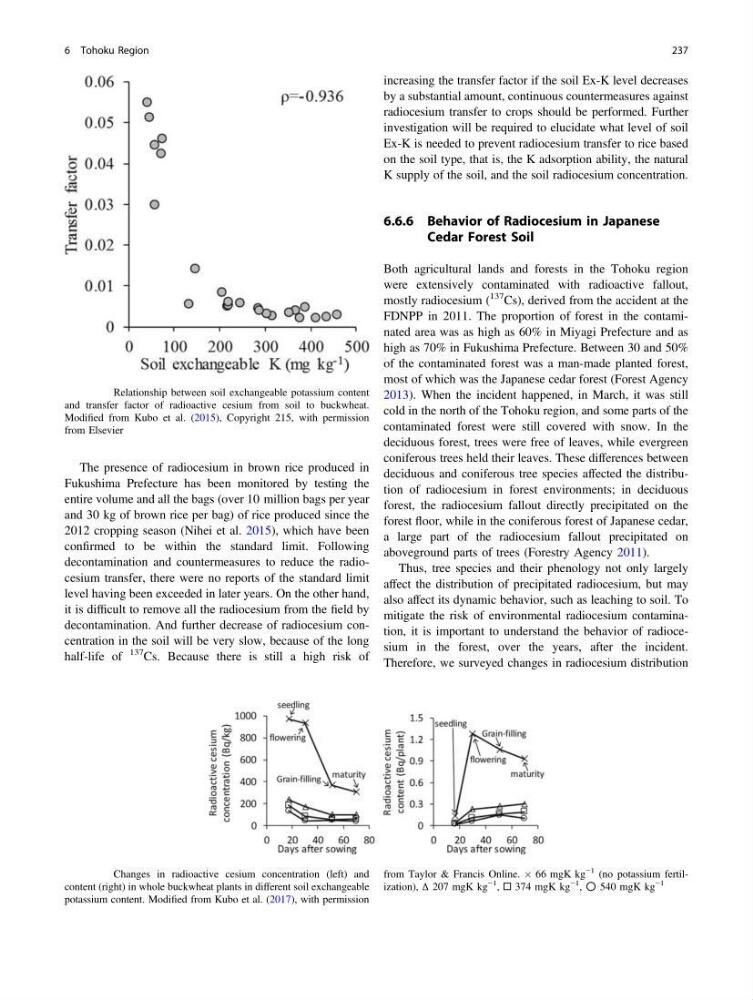
Fig. 6.46 Relationship between soil exchangeable potassium content
and transfer factor of radioactive cesium from soil to buckwheat.
Modified from Kubo et al. (2015), Copyright 215, with permission
from Elsevier
Fig. 6.47 Changes in radioactive cesium concentration (left) and
content (right) in whole buckwheat plants in different soil exchangeable
potassium content. Modified from Kubo et al. (2017), with permission
from Taylor & Francis Online. Â 66 mgK kg
−1 (no potassium fertilization), Δ 207 mgK kg
−1
, □ 374 mgK kg
−1
, 〇 540 mgK kg
−1
6 Tohoku Region
237
Fukushima Prefecture has been monitored by testing the
entire volume and all the bags (over 10 million bags per year
and 30 kg of brown rice per bag) of rice produced since the
2012 cropping season (Nihei et al. 2015), which have been
confirmed to be within the standard limit. Following
decontamination and countermeasures to reduce the radiocesium transfer, there were no reports of the standard limit
level having been exceeded in later years. On the other hand,
it is difficult to remove all the radiocesium from the field by
decontamination. And further decrease of radiocesium concentration in the soil will be very slow, because of the long
half-life of
137 Cs. Because there is still a high risk of
increasing the transfer factor if the soil Ex-K level decreases
by a substantial amount, continuous countermeasures against
radiocesium transfer to crops should be performed. Further
investigation will be required to elucidate what level of soil
Ex-K is needed to prevent radiocesium transfer to rice based
on the soil type, that is, the K adsorption ability, the natural
K supply of the soil, and the soil radiocesium concentration.
6.6.6 Behavior of Radiocesium in Japanese
Cedar Forest Soil
Both agricultural lands and forests in the Tohoku region
were extensively contaminated with radioactive fallout,
mostly radiocesium (
137 Cs), derived from the accident at the
FDNPP in 2011. The proportion of forest in the contaminated area was as high as 60% in Miyagi Prefecture and as
high as 70% in Fukushima Prefecture. Between 30 and 50%
of the contaminated forest was a man-made planted forest,
most of which was the Japanese cedar forest (Forest Agency
2013). When the incident happened, in March, it was still
cold in the north of the Tohoku region, and some parts of the
contaminated forest were still covered with snow. In the
deciduous forest, trees were free of leaves, while evergreen
coniferous trees held their leaves. These differences between
deciduous and coniferous tree species affected the distribution of radiocesium in forest environments; in deciduous
forest, the radiocesium fallout directly precipitated on the
forest floor, while in the coniferous forest of Japanese cedar,
a large part of the radiocesium fallout precipitated on
aboveground parts of trees (Forestry Agency 2011).
Thus, tree species and their phenology not only largely
affect the distribution of precipitated radiocesium, but may
also affect its dynamic behavior, such as leaching to soil. To
mitigate the risk of environmental radiocesium contamination, it is important to understand the behavior of radiocesium in the forest, over the years, after the incident.
Therefore, we surveyed changes in radiocesium distribution
Fig. 6.46 Relationship between soil exchangeable potassium content
and transfer factor of radioactive cesium from soil to buckwheat.
Modified from Kubo et al. (2015), Copyright 215, with permission
from Elsevier
Fig. 6.47 Changes in radioactive cesium concentration (left) and
content (right) in whole buckwheat plants in different soil exchangeable
potassium content. Modified from Kubo et al. (2017), with permission
from Taylor & Francis Online. Â 66 mgK kg
−1 (no potassium fertilization), Δ 207 mgK kg
−1
, □ 374 mgK kg
−1
, 〇 540 mgK kg
−1
6 Tohoku Region
237