

(3) Estimates of silica uptake in rice
Between 2015 and 2016, a survey was performed to determine the influence of the amount of available silicate in
irrigation water on silicate uptake by cultivated rice plants.
Samples of paddy soils were collected at the same 42 survey
sites where water samples were collected (see Sect. 5.2.4.2).
The amount of available silicate in the soils was determined
by the flooded-thermal-incubation method, while the silicate
uptake by maturing rice plants was determined using the
gravimetric method. The cultivation of Seiten no Hekireki
rice was limited (eight sites); therefore, we also surveyed
locations where the rice varieties ‘Tsugaru-roman’ (20
sites), ‘Masshigura’ (11 sites), and other varieties (three
sites) were being grown. Figure 6.10 shows the relationship
between amount of available silicate and silicate uptake in
maturing rice plants; an increase in available silicate concentrations in soils tended to increase the amount of silicate
uptake by growing rice plants (Fig. 6.10). Our multiple
regression analysis, which used the concentration of silicic
acid in irrigation water and the available silicate content of
soils as explanatory variables and the amount of silicate
uptake in maturing rice plants as the dependent variable,
revealed a multiple correlation coefficient of r = 0.98. The
amount of silicate uptake (kg ha
−1 ) in maturing plants is
equal to [4.10 Â available silicate amount (mg kg
−1 )] +
[10.7 Â silicic acid concentration (mg SiO 2 L
−1 ) in irrigation water] (correlation coefficient: r = 0.98**). Based on
this equation, we surmise that silicate uptake in maturing rice
plants can be reasonably estimated for cultivated fields from
measurements of silicic acid concentration in irrigation water
and the available silicate content of soils.
(4) Development of fertilizer application standards
The amount of silicate amendment required in a particular
soil is determined based on the amount needed to supplement
a shortage in silicate supply in a given year. This shortage is
determined by the target amount of silicate needed by rice
plants for growth, minus the concentration of silicate available in the soil, and the amount provided by irrigation water
(if the difference is negative). We were able to estimate the
amount of silicate absorption from the irrigation water silicic
acid concentration and available silicate content, and by
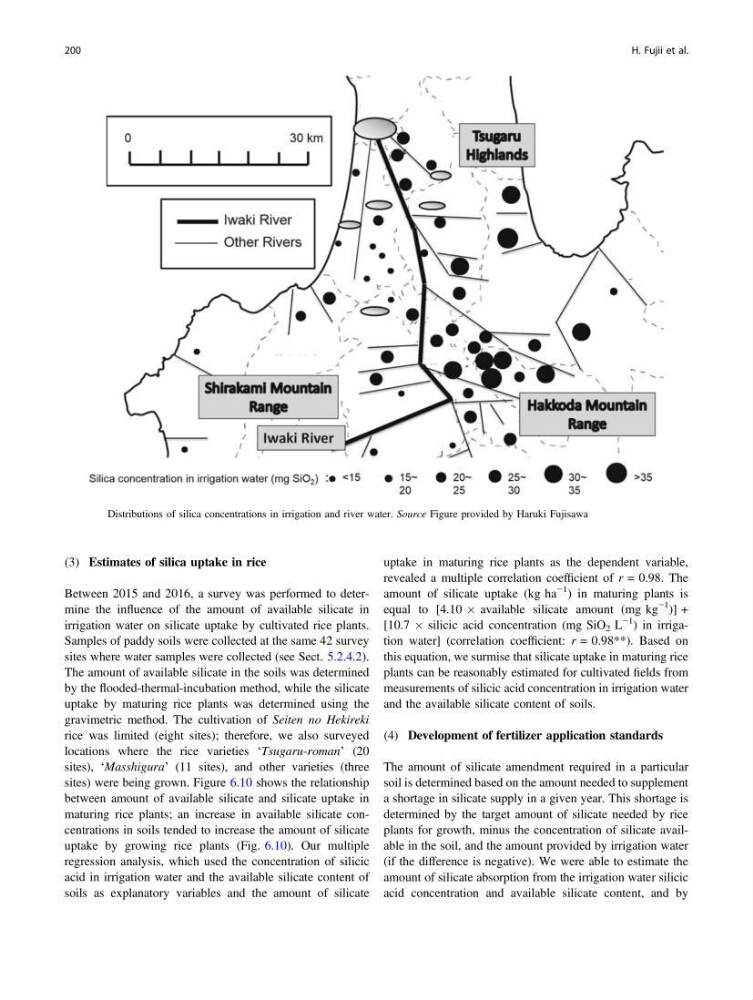
Fig. 6.8 Distributions of silica concentrations in irrigation and river water. Source Figure provided by Haruki Fujisawa
200
H. Fujii et al.
Between 2015 and 2016, a survey was performed to determine the influence of the amount of available silicate in
irrigation water on silicate uptake by cultivated rice plants.
Samples of paddy soils were collected at the same 42 survey
sites where water samples were collected (see Sect. 5.2.4.2).
The amount of available silicate in the soils was determined
by the flooded-thermal-incubation method, while the silicate
uptake by maturing rice plants was determined using the
gravimetric method. The cultivation of Seiten no Hekireki
rice was limited (eight sites); therefore, we also surveyed
locations where the rice varieties ‘Tsugaru-roman’ (20
sites), ‘Masshigura’ (11 sites), and other varieties (three
sites) were being grown. Figure 6.10 shows the relationship
between amount of available silicate and silicate uptake in
maturing rice plants; an increase in available silicate concentrations in soils tended to increase the amount of silicate
uptake by growing rice plants (Fig. 6.10). Our multiple
regression analysis, which used the concentration of silicic
acid in irrigation water and the available silicate content of
soils as explanatory variables and the amount of silicate
uptake in maturing rice plants as the dependent variable,
revealed a multiple correlation coefficient of r = 0.98. The
amount of silicate uptake (kg ha
−1 ) in maturing plants is
equal to [4.10 Â available silicate amount (mg kg
−1 )] +
[10.7 Â silicic acid concentration (mg SiO 2 L
−1 ) in irrigation water] (correlation coefficient: r = 0.98**). Based on
this equation, we surmise that silicate uptake in maturing rice
plants can be reasonably estimated for cultivated fields from
measurements of silicic acid concentration in irrigation water
and the available silicate content of soils.
(4) Development of fertilizer application standards
The amount of silicate amendment required in a particular
soil is determined based on the amount needed to supplement
a shortage in silicate supply in a given year. This shortage is
determined by the target amount of silicate needed by rice
plants for growth, minus the concentration of silicate available in the soil, and the amount provided by irrigation water
(if the difference is negative). We were able to estimate the
amount of silicate absorption from the irrigation water silicic
acid concentration and available silicate content, and by
Fig. 6.8 Distributions of silica concentrations in irrigation and river water. Source Figure provided by Haruki Fujisawa
200
H. Fujii et al.